Positive Writer
  • Inspiration
  • Writer’s Doubt
  • Free eBook Good Enough
  • Contact
    • Guest Post Guidelines for Positive Writer
  • Resources
  • Archives
  • About
    • The Wee-Jees Book Launch Team
      • Picture Files for the Book The Wee-Jees
    • Privacy Policy
    • Free Book
  • Inspiration
  • Writer’s Doubt
  • Free eBook Good Enough
  • Contact
    • Guest Post Guidelines for Positive Writer
  • Resources
  • Archives
  • About
    • The Wee-Jees Book Launch Team
      • Picture Files for the Book The Wee-Jees
    • Privacy Policy
    • Free Book

Positive Writer

Category:

blogging

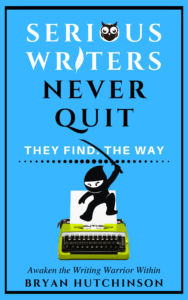
Serious Writers Never Quit

Serious Writers Never Quit

written by Bryan Hutchinson

If you’re a writer or artist who wants to activate the unlimited potential within you, this book will show you the way!

A heartfelt thanks to everyone who has reviewed Serious Writers Never Quit so far. A collection of blurbs from reviewers across the web are below, along with the links to their full reviews.

Any author could be proud to have their work remarked upon. Thank you so very much. I’m glad my work has meant enough for your time and consideration.

If you’ve reviewed Serious Writers Never Quit on your blog and the link to your review isn’t below, please let me know and I’ll be happy to add it.

'Serious Writers Never Quit' Can Bring You Mindblowing Revelations @IreneAprile #amwriting #onwriting Click To Tweet

Reviews From The Blogosphere

“You will be using the lessons from this book daily for the rest of your life as a writer.” ―Alisa Russell, blog: Thriving in Grace

“I love the encouragement in this book and the straight talk we all need to hear. This book is PACKED with valuable advice!” ―Edie Melson, blog: The Write Conversation

“Hutchinson rips off the band-aid and shares why we must fight the urge to quit, whatever the reason, and dig deeper into why we wanted to write in the first place. A must-read that you will continually reference to stay on track and keep doing what you do—WRITE.” Harley Christensen, full review.

“I gotta say, this was one of the most enjoyable books about the writer’s mindset I have read. I found it encouraging, practical, and intuitive with insights and suggestions. I love the way it got me to thinking.” ―Blog: Juneta Key

“‘Serious Writers Never Quit’ is a valuable resource for any writer’s library. You will feel inspired to creative action by this book. It belongs on your bookshelf next to The War of Art.” ―Josh Pack, blog: Etched in Gold

“Chapter Eight is my favorite, The Way is To Design Your Own Plan. All my life I’ve been ‘the product of someone else’s version’ and I’ve come to resent that. I’m encouraged to keep writing.” ―Judy Blackburn, blog: Listening to my Characters

“This book will help you win the battle for your mind and your will.” ―Frank McKinley, blog: Thriving Writers

“‘Serious Writers Never Quit’ is about the psychological mechanism that underlies the writing process. It can bring you mindblowing revelations.” ―Irene April, blog: Turning Passion Into Words

“He gets me, seems to know exactly how I feel and what keeps me from writing. Extraordinary. Usually, I speed read, but this time I had to go back, and read every line, with focused attention and mindfulness.” ―Blog: Ursula Nieuwoudt

“‘Serious Writers Never Quit’ is a manual for writers and can help you get motivated or unstuck.” ―Bandi, blog: The B Word

“I highly recommend ‘Serious Writers Never Quit.’ That is, if you’re really serious.” ―Blog: Anne Peterson

Read this Book to Feel Better about your Writing and Improve It, too! ―Debbie De Louise, blog: Mysteries & more

“Refreshing and Empowering ‘Serious Writers Never Quit’ offers a different view than other writing books I’ve read. I think every writer needs to read this book.” ―blog: Danielle Bernock

“I love where he says that a writer’s biggest enemy is failure; so true, but everything he shares is about passing past that failure, and going on to the finish line, and to pursue your calling as a writer!” ―Del, blog: Pen 4 The Lord

“I like the way Bryan inserts motivation with cinematic sports themes. Well, it is inspiring. Try plugging in Survivor’s Eye of the Tiger on Spotify and you’ll feel the effect.” ―Blog, The Fed Up Declaration

“This Kindle ebook is a major shot in the arm that could lead you to write your bestselling book (or launch your successful farm or restaurant). Bryan’s tips for getting out from under perfectionism, and sticking with what you are serious about, are good advice for living in general. Though aimed at writers, Bryan’s advice is spot-on for anyone who aspires to be a success at what they do.” ―Blog, Jenny Nazak

“First of all, it was highly readable. I felt the author had taken me aside, put his arm around my shoulder and imparted all of his hard-won wisdom about “The Way” to the writing life. The simple list of 21 key points of “The Way” near the end of the book was, alone, worth the low price of the Kindle version I read.” ―Elizabeth Cottrell, blog, Heartspoken

“A must book for every writer. I love chapter eight, design your own plan… don’t write what we think others want to read but what you’re passionate about.” ―Jon Bates

“I confess that the author’s take on what readers want was definitely something I needed to see and he did it in a preachy-free way.” ―Stella Carrier

“Rather than feeling put down by what I would need to do in order to be a ‘serious writer’ (which has happened before), I instead felt uplifted albeit with moments where I shook my head saying ‘Don’t tell me that, it’ll be too easy and then I won’t have a good excuse not to anymore’.” ―Jocelyn Nielson

“Loved this book! Packed with practical “put in practice today” tips. I fell off my chair laughing when the author suggested I learn to procrastinate wisely.” ―La McCoy

“If you’ve struggled to write consistently, pick up Bryan’s book. It’ll help you get over your objections and begin to write.” ―J. Lalonde

“If you’re looking for a bit of encouragement, this book is a quick read that could fit the bill and get you motivated to start writing again. (Actually, there are tips here that could apply to other careers, as well.)”  ―Blog, Leslie L. McKee

“I hear it all the time in the workshops I teach. “I don’t have time.” “I’m not good enough to be published.” The reasons, the excuses, the self-doubt… “Serious Writers Never Quit” is your answer… I should be handing this book out at every writing class I teach.”  ―Mary Potter Kenyon

“Boom, there it was!  For weeks I felt behind schedule and disappointed in my writing progress. But no more.  I let those feelings go immediately. The day after reading Serious Writers Never Quit, I starting writing my book again.” ―Blog, Karen Brown Tyson

“I’ve recently found a kindred spirit in Bryan Hutchinson, author of Serious Writers Never Quit–They find: The Way. His ebook captures much of what I was trying to convey to my students. If this had been around back then, I would have made it required reading.”  ―Blog, Laura Denooyer

“This book should be included with the purchase of any writing or editing program because it addresses the real issues, the issues that go on internally. There are books galore to help us with writing our craft, but none as eloquent that addresses self-doubt and how to overcome it. In fact, his process can be used for almost anything.” ―Blog, Angie McMann Writes
How To Make An Animated Book Cover That Rocks!

How To Make An Animated Book Cover That Rocks!

written by Bryan Hutchinson

I wanted to create something different―something special, a cover that tells a story in motion. You see animated images on social media all the time, so I thought why not create an animated cover for my new book? I didn’t realize it would cause such a ruckus. But hey, that’s what marketing is all about, getting people to take notice.

Here’s how I did it and you can, too!

Think about it, you work on your book for years, perhaps even decades, and yet you’re forced to do your best to sum up the entire story in one single, static image. Not anymore!

What if you could create a moving story on your book’s cover?

I did exactly that with my most recent book Serious Writers Never Quit, and since posting it on Facebook, and in my sidebar here on Positive Writer, I’ve received a tremendous amount of inquiries as to how I did it.

Before we get to the creation steps, here’s the result that’s causing all the ruckus:

(What’s also cool about this animated cover is that even though it’s in motion, it’s still possible to add a link to a sales page just as you would to a static image, such as a jpeg or png. Click on it to see it in action!)

Let’s Get To The Gif Of It

You see animated gifs all the time on social media, especially on Facebook. So why not make a book cover gif?

This isn’t exactly new, but almost all of the current gif book covers are gimmicky and do not take the time to tell a real story. You don’t want to create a forgettable gimmick if you can help it. I’ll explain what I did to try and avoid this problem.

First, it’s a good idea to understand how this works. A gif is basically several images on top of each other in one file that gives the perception of a single moving image. It’s like a flipbook.

In order to create an animated book cover, you’ll actually need about 5 to 10 individual covers. Don’t worry, though, it’s easier than it sounds.

The Design Steps

Usually, I hire a professional book cover designer, but for this experiment, I decided for my own sanity, and the sanity of whomever I would have hired, I should try this myself first.

1) Tell A Clear And Compelling Story

The story should be able to be told with as few images as necessary and should clearly visualize what the book is about with as little guesswork as possible on the viewer’s part. This is what separates the forgettable from the memorable.

The story I decided on is, well, what the book is about:

A writer becoming serious about (his or) her writing and in order to do that she must discover The Way to awaken the warrior within. Warriors have a mindset that drives them to achieve their goals. This book is about that mindset.

That’s a serious story and needed to be broken down into simple steps. I originally had 10 individual covers and finally got it down to 6.

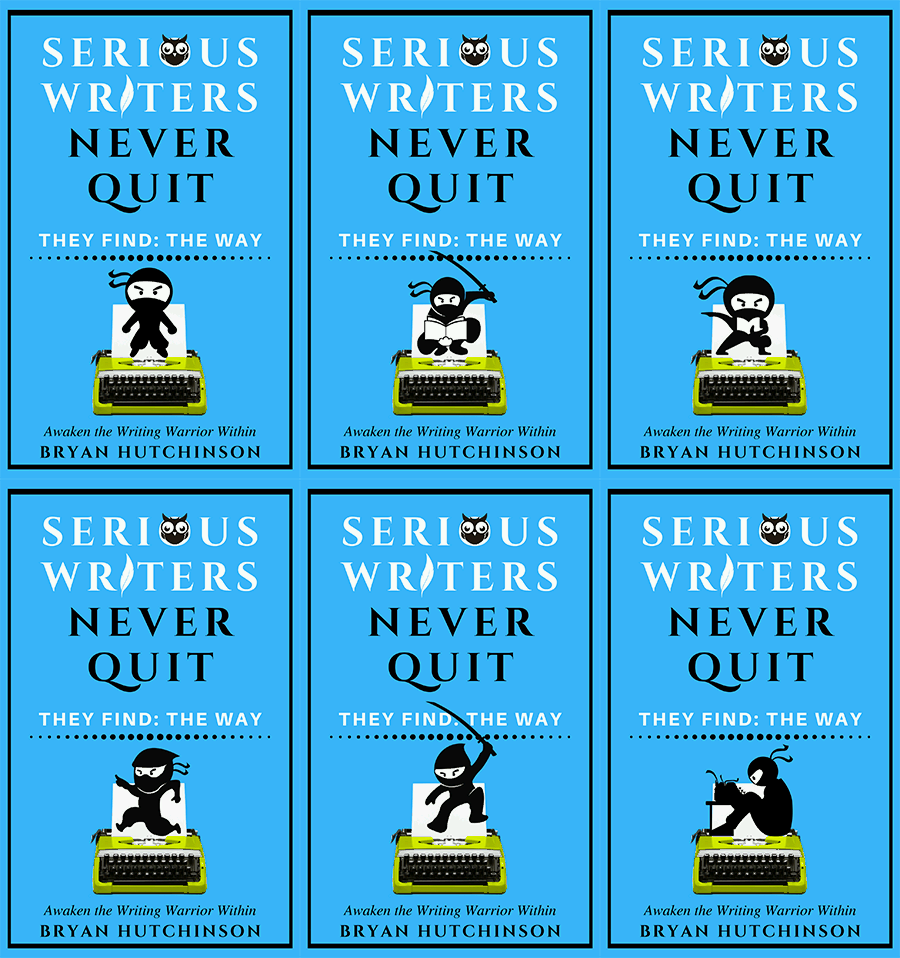
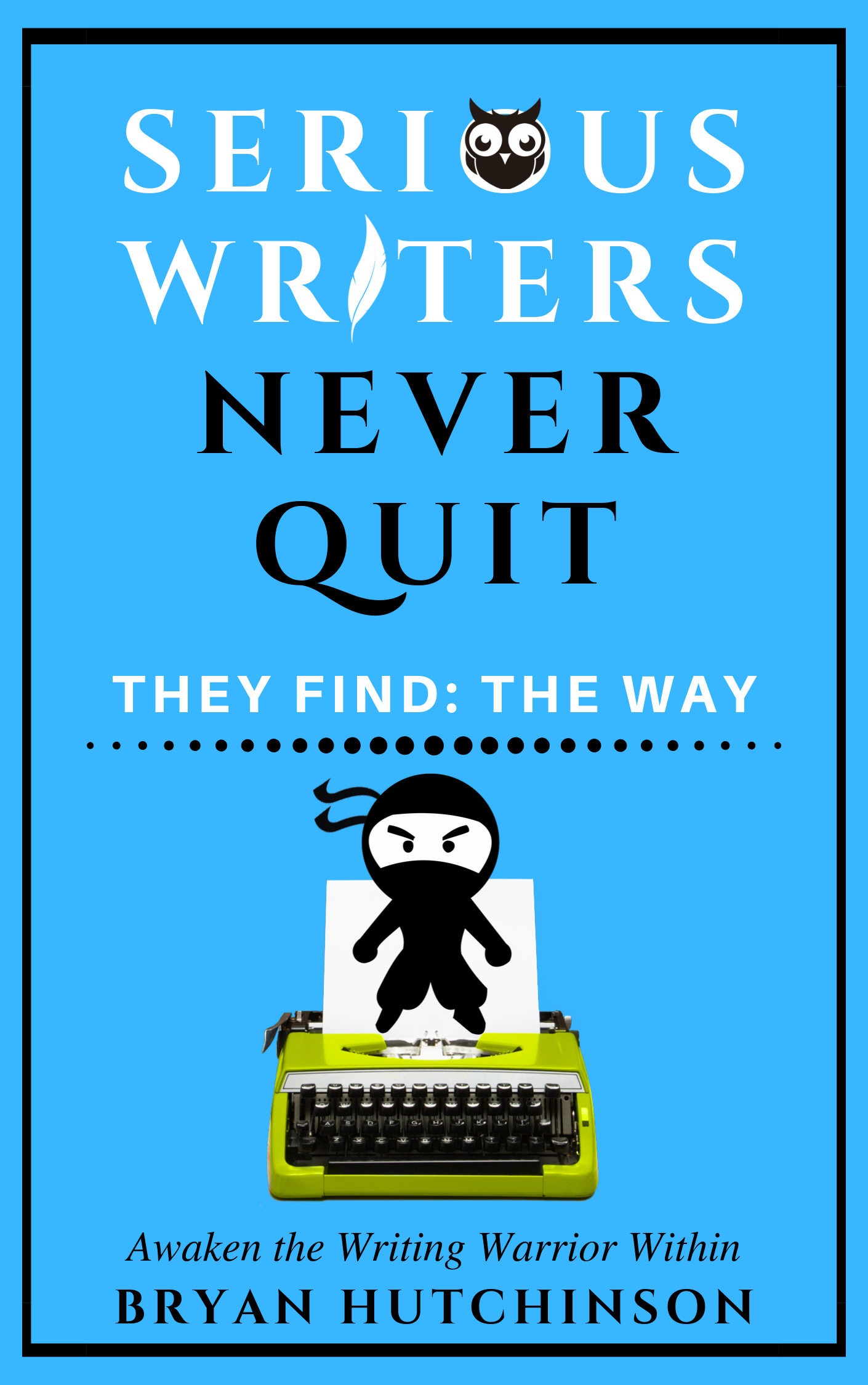
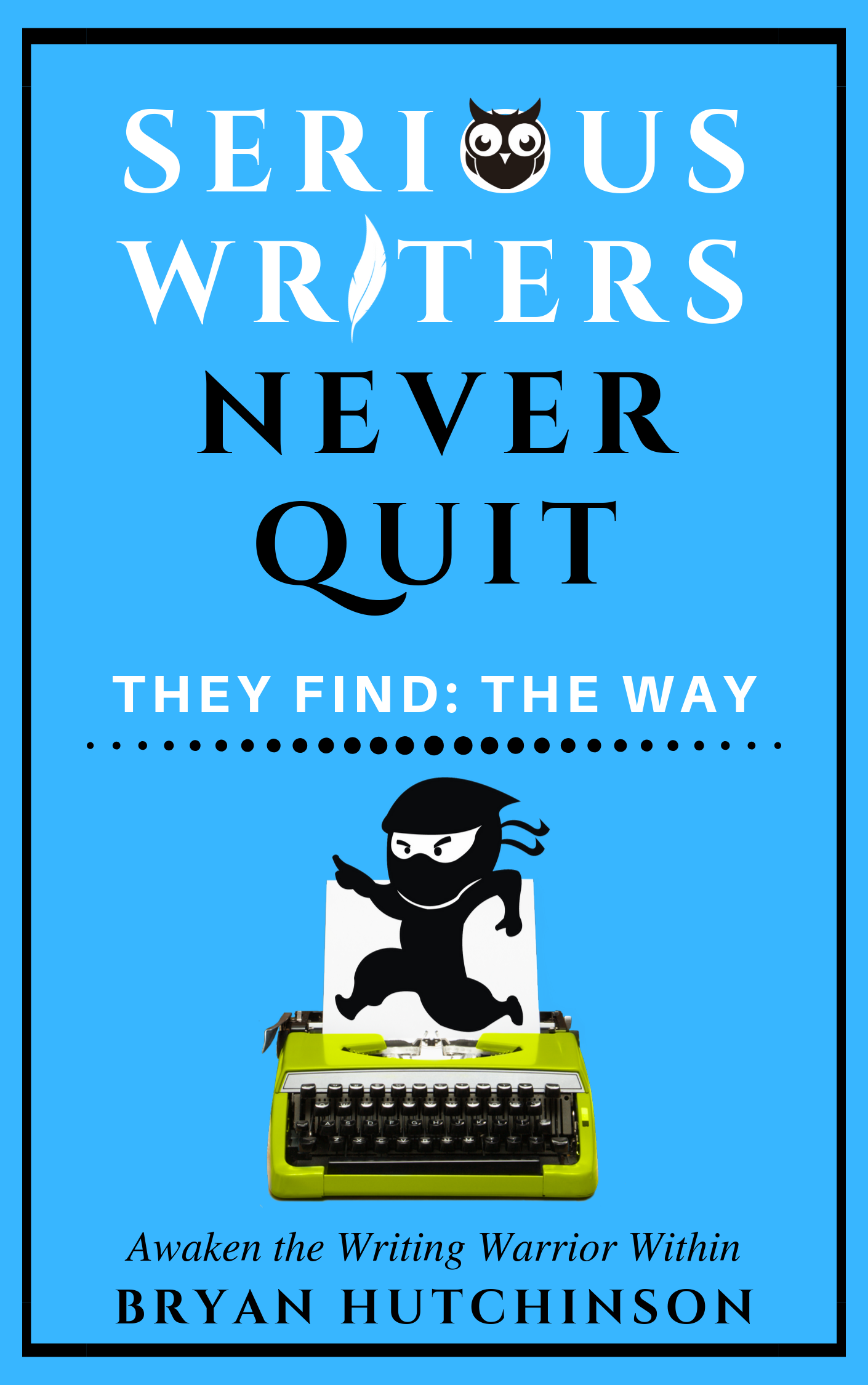
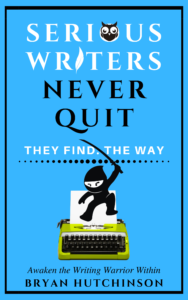
Cover 1. A writer ready to make the all-important mental shift all of us writers must eventually come to make: Quit or take our writing seriously!

(Click images to see larger versions.)

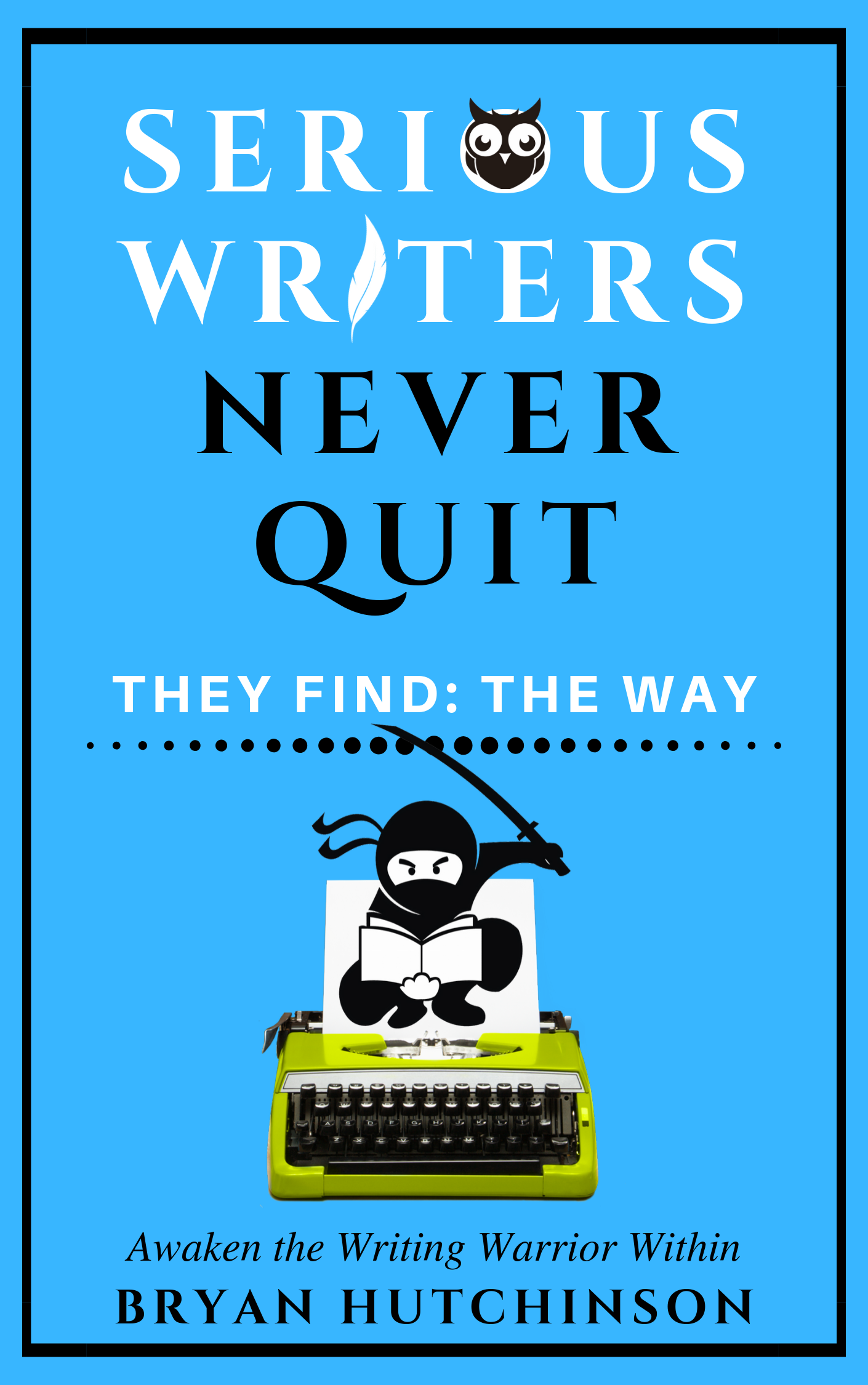
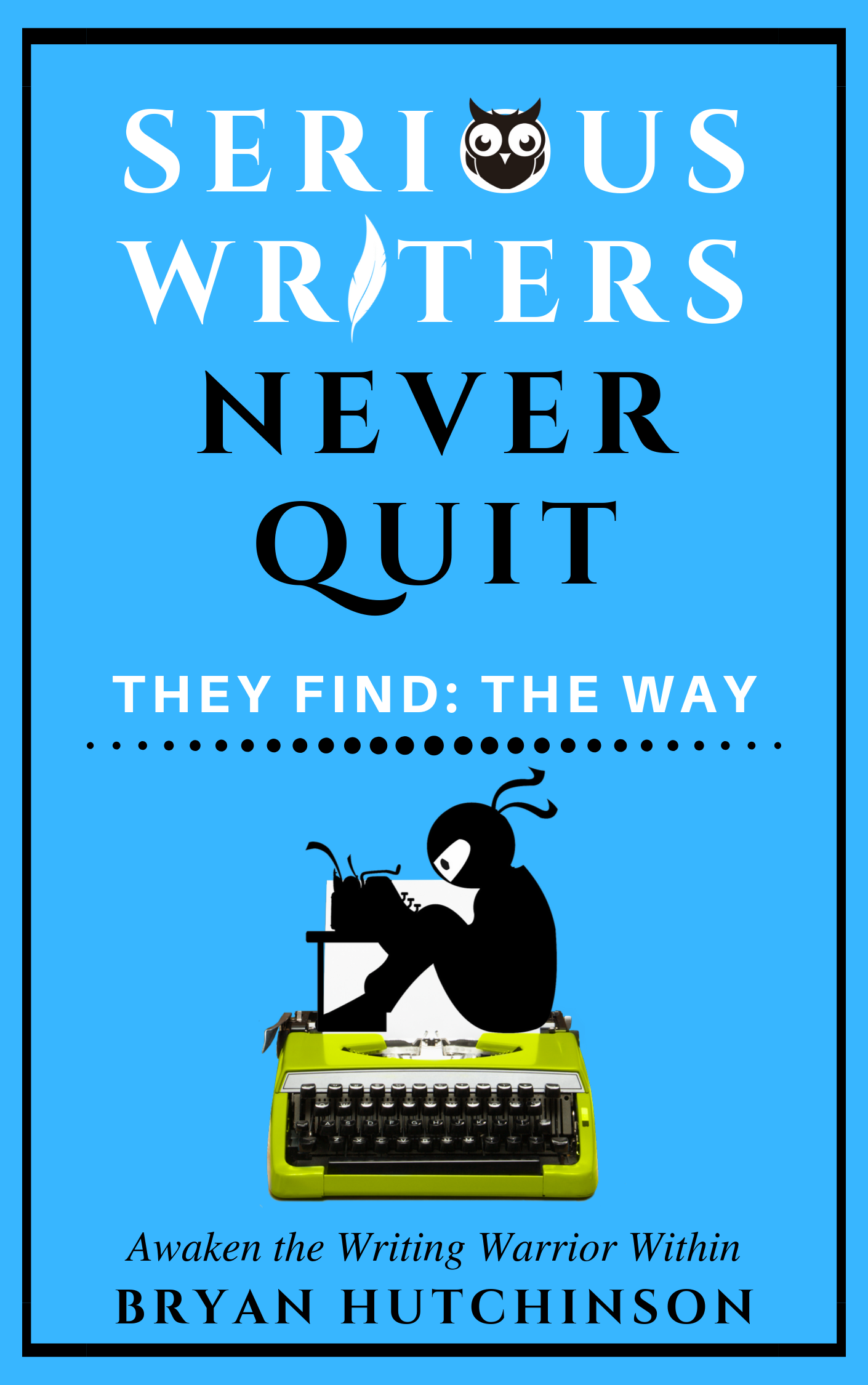
Cover 2. Again, like the rest of us, she’s not exactly sure how to go about it at first, so she finds a manual (ahem, Serious Writers Never Quit).

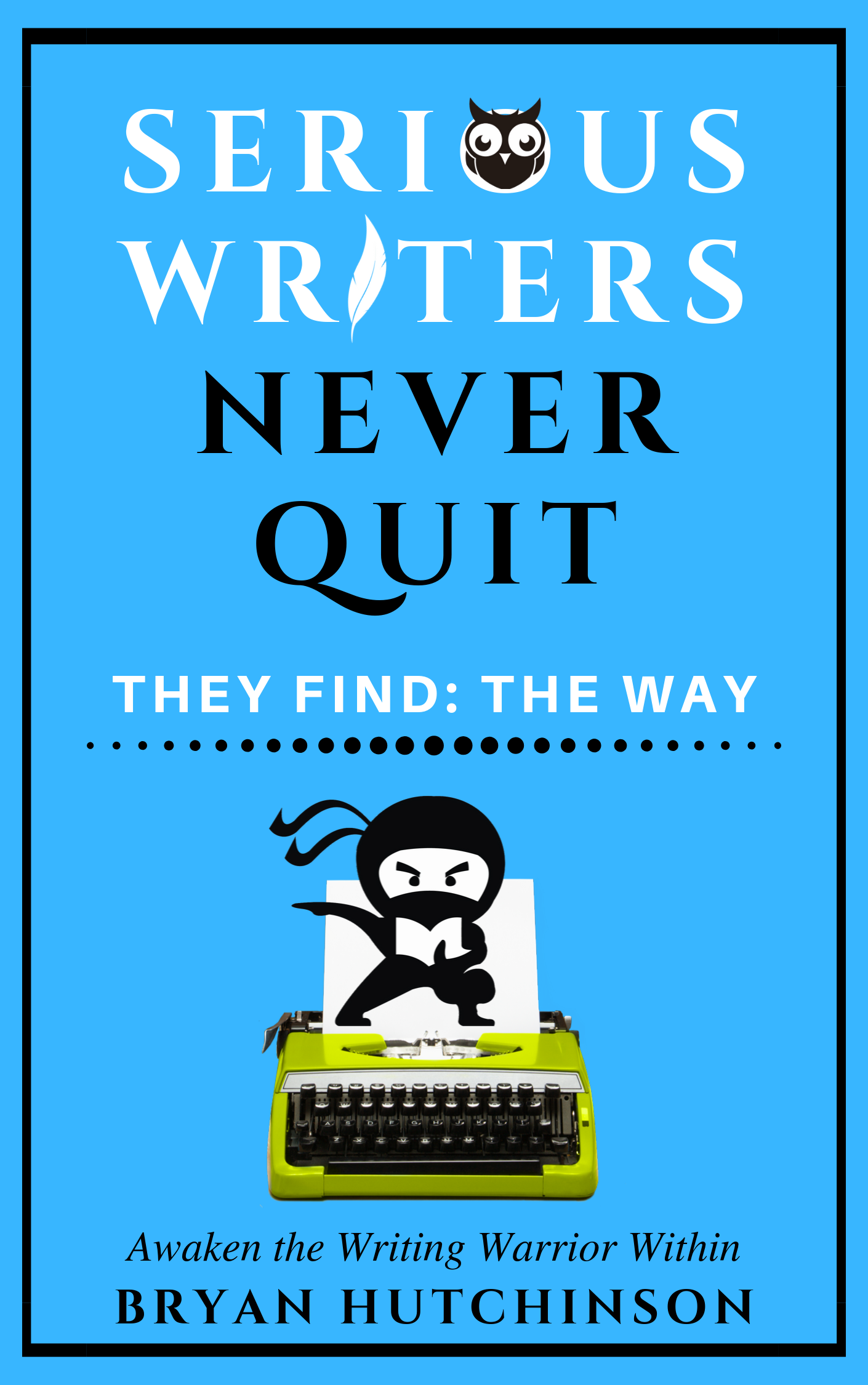
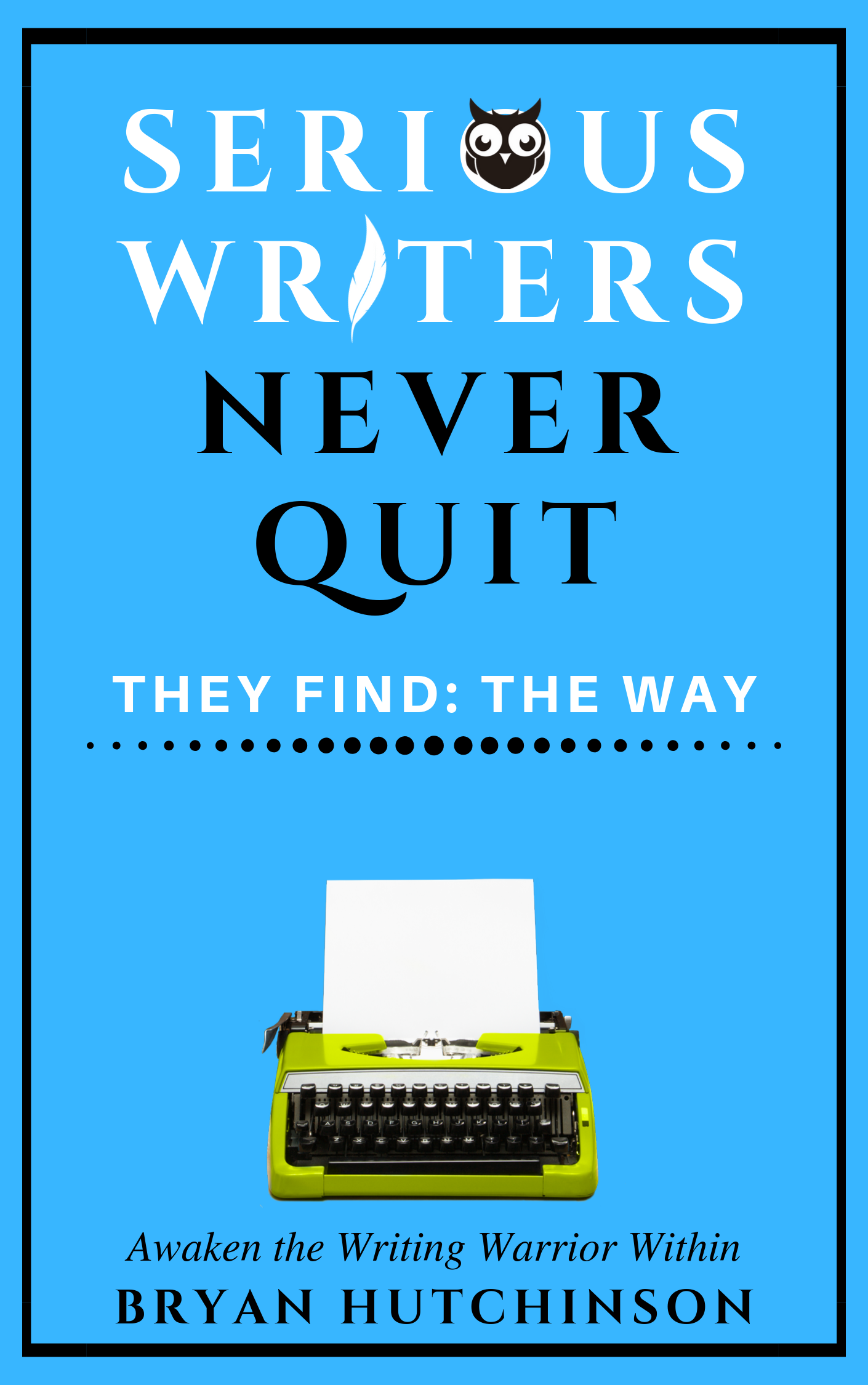
Cover 3. She finds The Way. (The Way isn’t too complex to learn for anyone, but what makes it scarce is that not everyone takes the time to learn what it is and how to use it. So those who do, they gain the edge and become more enthusiastic about their work.)

Cover 4. Now that she understands The Way, she chooses her new direction with great enthusiasm!

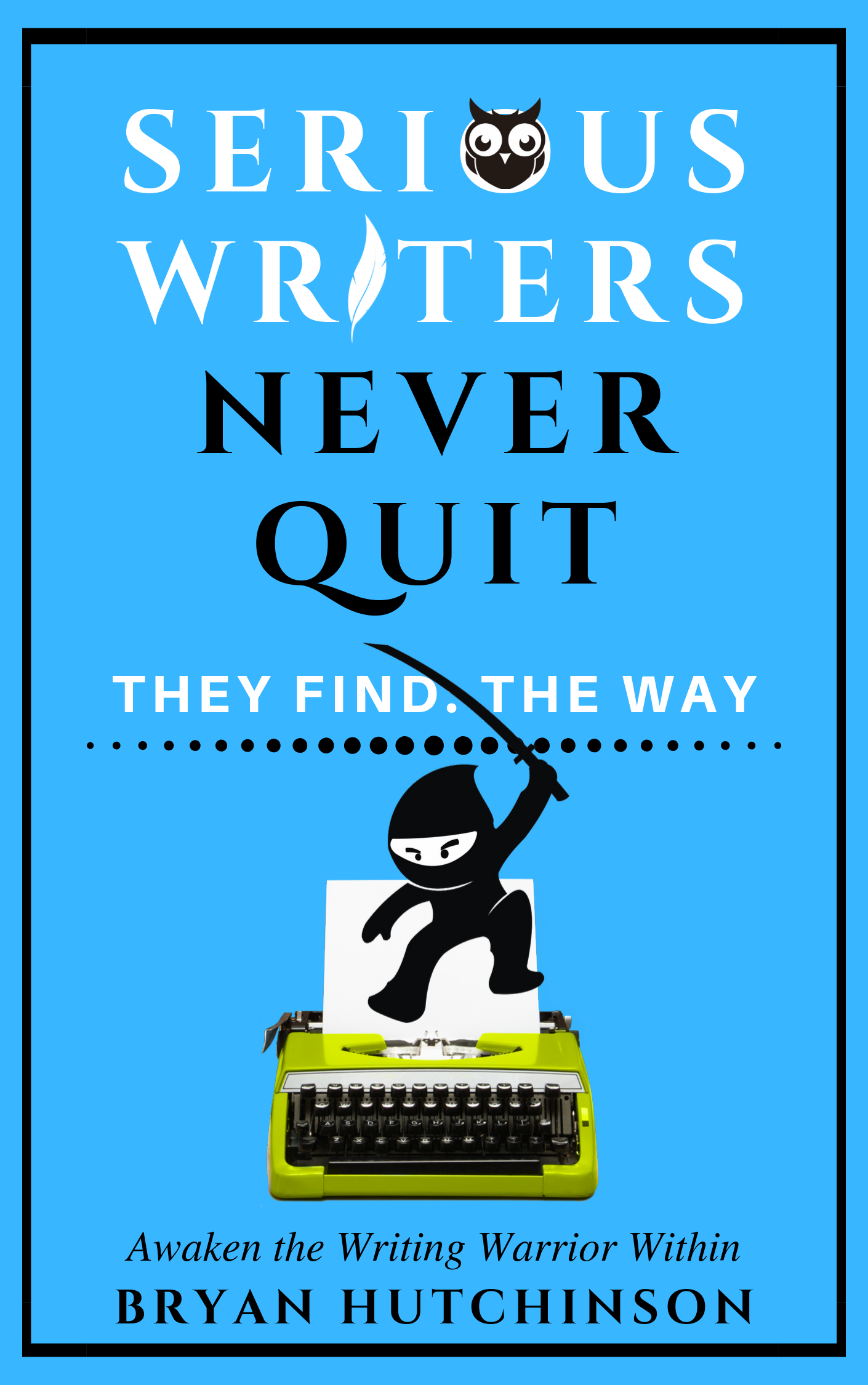
Cover 5. She’s getting very serious and will attack her writing with her newfound way of being a writer, an artist, and if I dare say, a person. She’s becoming a writing warrior and nothing and no one will stop her now!

Cover 6. She is now a serious writer, armed with The Way, who will never quit!

2) Keep It Simple

I figured if I am going to do this on my own I would need to keep it as simple as possible. Simple stories often work best. No one wants their brain fried. Better designers can get more complicated, but for a novice like me, simple was best.

3) Pick Images That Go Together, Preferably In A Series

The best option, I think, is to purchase from stock photo sites to ensure you have the licenses you need. This is an example of what I downloaded from depositphotos.com:

4) Choose The Design Tools

I used Canva.com. This design site is super easy to use and has great templates to start with. You can also easily import your own images. What I like about Canva is that I didn’t need to learn a lot because it’s straight forward and it’s not cluttered with adverts and other nonsense.

5) Create A Basic Template

If you look at the below cover, I used the same typewriter that is used in the logo for my website Positive Writer and is also used on the cover of my previous book Writer’s Doubt (did you already guess that?). Thus I have continuity between my website and my books. The text and other elements I created from within Canva.

The cover is minimalist. Indeed, it looks simple, but I assure you it cost me hours and hours of tweaking. The simpler something looks the harder it was to make. If you find you’re having a difficult time of it, don’t worry, it’s normal.

Canva has many basic designs you can start with; however, I recommend you customize, customize, customize or you’ll end up with something thousands of others are using too.

6) Create (Or Choose) The Main Book Cover

Even though we are creating an animated book cover, you will still need a main static book cover for any site that does not yet allow animated book covers. Also, if you’re going to make a print copy you’ll need a static cover.

One of the cool things about any of the static images for Serious Writers Never Quit is that any one of them could serve as the main cover!

Here’s the one I chose to use on Amazon as the main cover:

7) Use A Software Program To Create A Gif

Once you have your design ready, download each individual cover and load them into a gif creation software program. Does it sound too easy? It really is that easy.

I used SSuit Gif Animator. It’s a free software program and you can download it here. SSuit Gif Animator is extremely easy to use and allows you to customize the timing between images as well, it will even resize the gif as per your needs. One recommendation I make is that you number your covers in the order you want them to be in the animation. Then load them into the software and click create, the gif animator will do the rest!

There are also several websites that specialize in creating animated gifs for you for free. However, a word of warning, some of those websites put their logo on it. I recommend creating using stand-alone software.

10) Upload It To Social Media And Your Website

Once your book is published and you’re ready to share the animated book cover, upload it to your favorite social media websites and post it on your author/book website.

The MYTHs

Don’t let any myths stop you!

There’s a myth that you should only have one book cover. And another myth that if you have multiple covers for the same book it will hurt sales. But these are simply not true!

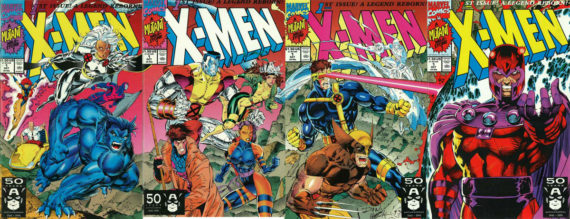
Look at what Marvel did by creating several different covers for X-Men #1 (1991) below:

X-Men #1, with multiple covers for the same issue, is in The Guinness Book of World Records for best selling comic book of all time! So, there’s that!

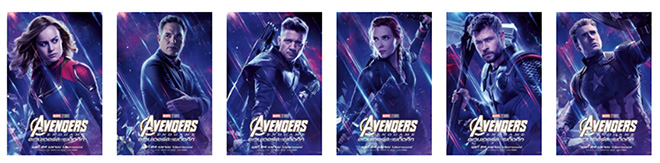
Or, look at studios that create several different posters for the same movie.

OOPS! Marvel did it again! With what now is the #1 Box office hit of all time, Avengers Endgame!

That’s It!

With a bit of luck, and hopefully a compelling design, your animated book image might even go viral!

Viral or not, it’s still a cool and fun marketing strategy. It’s cost-effective too. Aside from the images I purchased, the rest was free. If you hire someone to do this for you, it could cost hundreds, even thousands, so consider costs if you want to have a professional create it. I highly recommend trying it yourself first. Canva really is that easy. After all, I am by no means a designer!

If you find yourself getting good at creating your own covers and you’ve self-published, go ahead and get even more creative and design separate covers for holidays and other occasions, if you like. There are so many options.

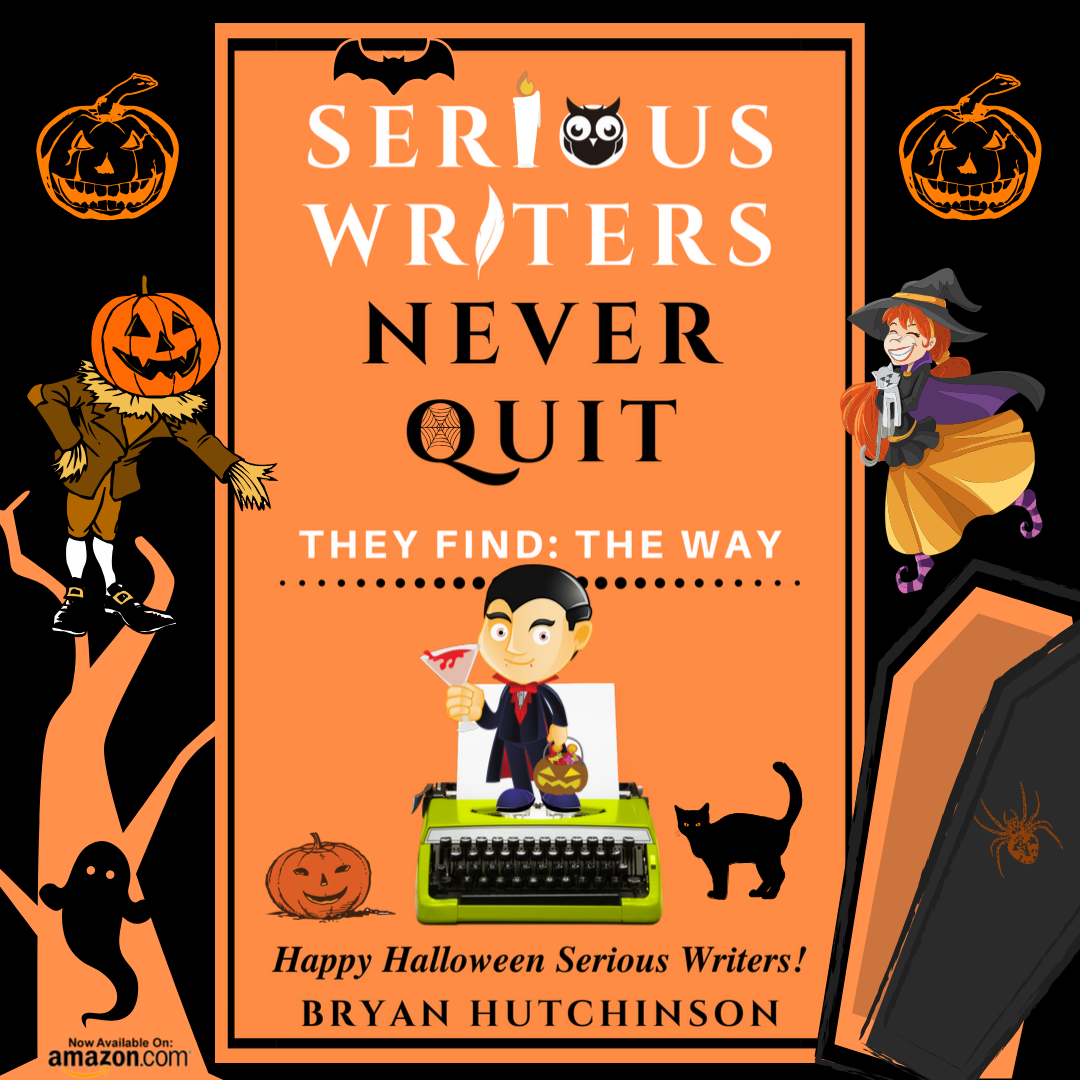
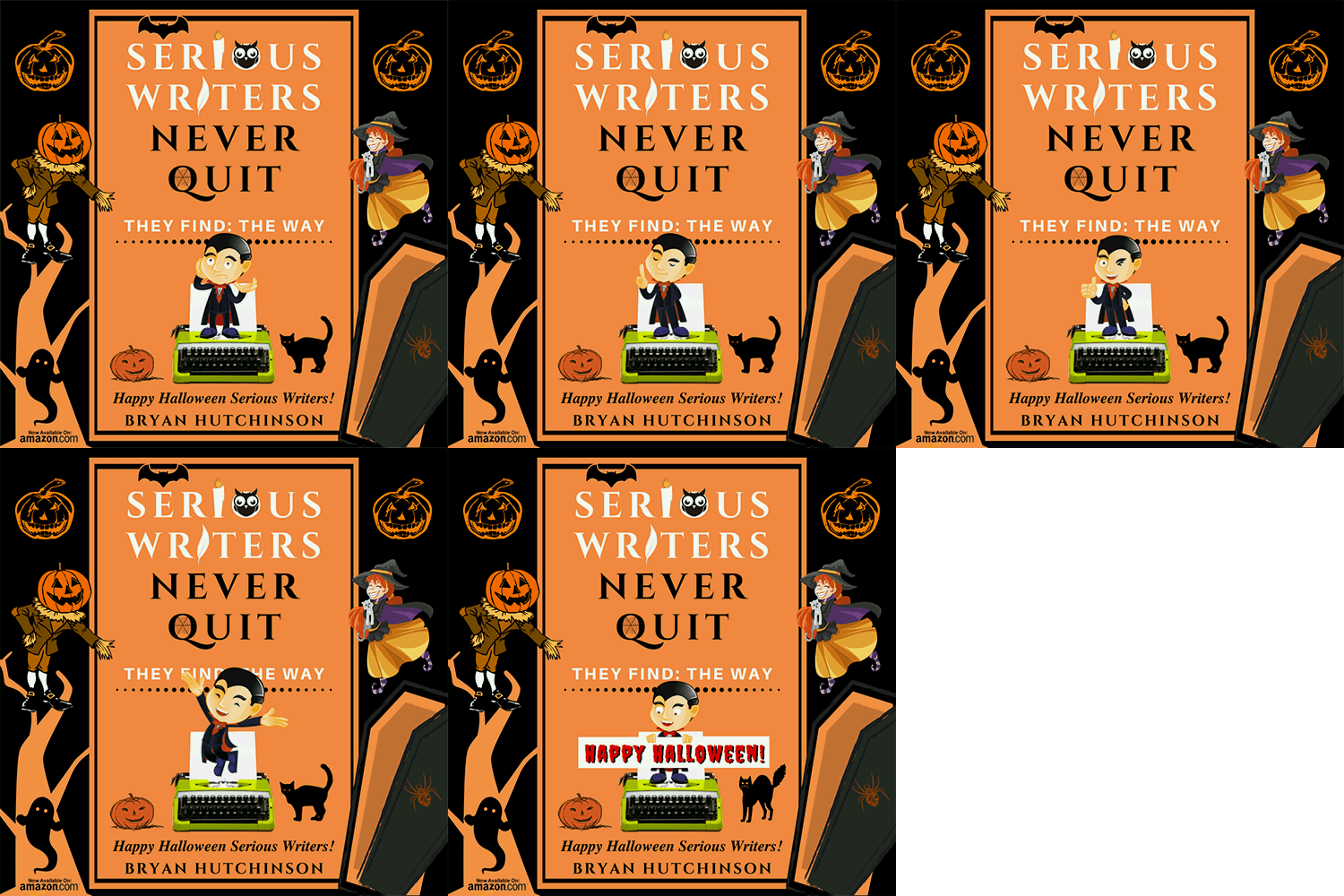
Since it’s almost Halloween, here’s a poster I created for the season:

(Click to enlarge)

And, of course, we have an animated version for Halloween as well. I can’t stop watching it because the cat totally cracks me up (every now and then I have a fun idea)! I’m already thinking up things I can do with the Christmas version.

There you go! Now go and create your own animated book cover.

If you do create your own animated cover, feel free to leave a link to it in the comments. I’d love to see it.

Chance To Win

If you haven’t read Serious Writers Never Quit yet, here’s the link to it on Amazon. Once you read it, consider reviewing it and enter a drawing I set up where you can win an Amazon Gift Card and/or an Amazon Fire Tablet!

Click here for how to enter the drawing.

Good Luck and Happy Reading!

Why Writing in Isolation is Good For You

Why Writing in Isolation is Good For You

written by Frank McKinley

You’ve probably heard that writing is a community affair.

Well, it is, and it isn’t.

Sure, if you want people to read your work, you’ve got to know what they want. So you visit the blogs on your topic and start snooping around. You might even look at the comments and see what questions people are asking. Who knows? You could be first with the answer nobody has given.

Then you run your idea by a few of your closest friends to see what they think. It’s kind of like getting pre-approved for a loan at the bank. It seems like a waste of time to go fill out papers for a whole afternoon if they’re just going to say no, isn’t it?

So you seek permission to write what’s on your mind.

At least you do if metrics matter more than free expression.

What if you go and hide to write?

The obvious way to hide is to sit at your desk and cut off all contact with the outside world.

No social media.

No email.

No notifications of any kind.

Can you do it?

Sure, you can. Just turn it all off. Besides, it will still be there when you get back.

But what if you have an appointment?

Work around it.

Set office hours. Let people know when you’ll be available so you can devote your full attention to them. And let them know when you can’t by making yourself unavailable.

Trust me, they’ll thank you for it.

There’s something else you’ll turn off while you’re writing. It’s so important it’s easy to overlook. But if you do, it will ruin your work.

What is this poison?

Opinions.

Ask other people what they think before you put words on paper. Ask them in conversations beforehand. But once you enter the writing chamber, no one else matters.

Writing time is your time

When you’re in your writing space, it’s sacred. It’s not to be interrupted by second thoughts, the phone, or anything that can wait.

Especially other people’s opinions.

When you’re in your writing space, it’s sacred. It’s not to be interrupted by second thoughts, the phone, or anything that can wait. Especially other people’s opinions. Click To Tweet

You’ve already floated the idea by a few people. They had their chance to agree or object then. Don’t leave the door to criticism open when you’re creating. Just open the spigot and let it flow.

Besides, you’ll edit later.

But not until you’ve had time for your draft to simmer.

Some use the term “free writing” for vomit drafts of all types. Why? Because you’re ignoring all the rules. Spelling. Grammar. Typos. Whatever.

You’re giving your voice free rein to say whatever it will.

Don’t worry about being offensive, wrong, or sloppy. Your prime concern is to get your deepest, most unreserved thoughts out so you can mine them for the gold inside.

That may mean you move a little dirt later. But so what? You’ve got to put the dirt there to move it. It’s just part of the process.

Keep the door closed while you edit

When it comes to startups, business expert Seth Godin says you should thrash early.

What this means for you as a writer is you get all the input you need on the front end. You research, then you write. You take a break, then you edit. Find the changes you need to make on the first swipe if you can. After that, go with it.

Too many changes dilute your writing’s power.

Don’t smooth off all the edges. You don’t want dull words competing with edgier ones. Your edges will help you stand out and will show your genius in all its imperfect glory.

Worried you’ll be criticized? Good. That means you’ve made an impact. No criticism means no one cares. And who wants that?

Keep the door closed to other eyes until you publish. The only exception to this is if you hire an outside editor specifically to make your piece the best it can be. Otherwise, use your best judgment. Set a time limit that fits the work you’re doing. Then share it with the world.

Open the door when you launch

You do this by allowing comments on your work.

If comments bother you, just turn them off. Seth Godin does this. And he’s still as popular as ever. You won’t go to writer’s hell if you cut off comments.

But if you’re growing, you might want to have a chance to talk with your readers.

Answer their questions. Respond to their observations. Ask them about what they’re working on, and offer advice if you can (and you sense that they might want it).

Generosity is a great community builder.

You might pick up new readers, customers, or even a client or two.

Here’s something not many talk about. When you talk about a finished work, rather than one that is still in progress, you’ll gain more confidence. Why? It takes guts to finish something. Every time you do, you get a little stronger. You learn more. And your writing time becomes more and more effective at bringing out the genius inside you.

It takes guts to finish something. Every time you do, you get a little stronger. You learn more. And your writing time becomes more and more effective at bringing out the genius inside you. Click To Tweet

Create your own writing sanctuary

You know your space needs to be quiet and free from distractions.

Now let’s take it to the next level.

Do you thrive with background noise? Or do you prefer total silence? Will you listen to music or binaural beats?

Will you have anything to drink? Water is good. I like coffee also. Stay hydrated and you won’t be distracted by hunger or undue weariness.

You also need a timer.

When you’re sitting at your desk for what might be hours, you’ll wear your eyes out if you don’t get up and move around every 25 minutes or so. Take a 5 minute break then get back to work. After 4 sessions like this, take a longer break (at least 15 minutes).

Make sure you don’t cheat and sneak some work in while you’re resting. The only work you can’t get out of is being alone with your thoughts. The forced breaks might just fill in gaps that would remain if you pressed on full steam ahead.

You might know this as the Pomodoro Technique. I’ve used it faithfully for years. I thought at first the frequent breaks would mess with my flow. But they actually made me more productive. When you rest before you get tired, you’re more eager to get back at it.

Here’s a bonus from Julia Cameron. Celebrate your wins by going on an Artist Date with yourself. It can be whatever you want. A walk in the woods. A bowl of ice cream. A trip to the coffee shop. Or maybe you just buy (or make) a trinket to mark the occasion.

When you cheer yourself on like this, you’ll find the will to press on when it counts.

How does isolation help you write better? Share your stories and strategies in the comments. I’d love to hear what works for you! Have questions? Feel free to ask. We’re here to help you make your writing dreams reality.

The #1 Way to Write Without Worrying About the Gosh-Darn Bills! (It’s not such a secret anymore, but do you know it?)

The #1 Way to Write Without Worrying About the Gosh-Darn Bills! (It’s not such a secret anymore, but do you know it?)

written by Bryan Hutchinson

One of the most widespread myths about writing, especially if you create a blog to build your online platform, is that you need a big following to be successful.

It seems every day there is a new “guru” telling you that you need to build your email list and increase your social media reach. And until you do, you just need to give away your hard work for free, in the form of free eBook’s, free courses, free podcasts and you name it – as long as it’s free.

But wait a minute, if you give everything away for free how do you earn anything to keep doing what you love?

The hard part of writing isn’t necessarily the writing, it’s being able to afford to do it without worrying about the bills day in and day out. It’s the truth most of us don’t talk about, but maybe we should.

The hard part of writing isn't necessarily the writing, it's being able to afford to do it without worrying about the bills day in and day out. Click To Tweet

Through ignorance (or self-motivated desires) the gurus tell you that you can’t possibly monetize your online writing platform until you have (insert random number here) people on your email list, or enough people who like and share your pages.

NOTHING could be further from the truth.

You CAN monetize your writing platform even if you don’t have a huge email list or massive twitter following.

Your writing platform is your online blog, Facebook Page, Twitter handle, and all of your other social media pages which focus on what you create via your craft.

Monetizing your online presence is a critical factor for writers today in order to earn income while creating work that matters to them. The sad part is most writers don’t know how, or worse, they’ve given in to the belief that it’s impossible. I mean, how many of us have put an ad or two on our blogs and watch the money never roll in?

I’ll be honest with you, I’ve tried basic ads and they don’t really work, and I have a pretty large following.

I’ve also tried sponsored posts, but most of those seeking to sponsor a post on websites don’t want you to advertise that it’s sponsored. And, guess what? That’s illegal, so, uhm, no thanks!

It was a conundrum, if ads don’t work (pennies aren’t worth making your site look like a night in downtown lit-up Tokyo) and sponsored posts don’t work all that well either, what, pray tell is a writer to do?

I’m glad you asked.

I was writing blog posts like a demon and working on my book projects at the same time, all the while holding down a day job in order to afford to work on the craft I love, but I kept getting upset with myself. After all, if you’re going to work so hard on your craft, but it’s not – in some way – paying for itself, how long can you keep at it?

It’s not just physically exhausting to try so much and so hard, for so long, it’s also mentally exhausting. Because, let’s face it, as writers, you know how much work is involved and there should be some kind of payoff.

BREAKTHROUGH!

And then, a few years ago, just when I was thinking about giving up on at least part of what I was doing, my friend, Jeff Goins introduced me to someone who would change everything! Jeff was promoting his popular course Tribe Writers and the person running his promotion was the affiliate mastermind Matt McWilliams.

When someone like Jeff Goins recommends someone, you listen. Unless you’re a complete and total idiot, and that my dear readers, thankfully, I was not!

Meeting Matt was the breakthrough I was looking for but I didn’t know I was looking for!  He has directed affiliate marketing programs for people like Jeff Goins, Chandler Bolt, and many of the top writing experts online. Best of all he teaches Affiliate Marketing and this is where he made the difference for me.

Wait, back up, Affiliate Marketing? WTF is that? It sounds shady, not the slim-shady, just shady! At least, that’s what I thought at first. But truth is, as I found it, it’s one of the best legit ways to make a living online and gives you the time to do what you love, focusing on working your craft.

Affiliate marketing lets you earn extra income, passively, while serving and helping people in your communities.

If you’re a writer and you’re doing anything online, such as blogging, posting on Facebook, or sending out tweets and you are not using Affiliate Marketing, you are missing out!

The classes this post linked to as resources are over, sorry.

Have you been struggling to make an income via your online presence, like I was? What ways have you tried? Are you ready to learn about Affiliate Marketing and see if it’s something for you?

How to Unleash the Writing Genius Inside You

How to Unleash the Writing Genius Inside You

written by Frank McKinley

The biggest enemy any writer faces is one’s self and often appears as writer’s block.

If left untreated, it can be devastating to your output and your writing career. Nobody wants that, so let’s solve this problem!


This post is by Positive Writer contributor Frank McKinley.

Maybe you’ve heard of writers who get up every morning and put paws to the keyboard for an hour or two before breakfast. These are the people who churn out three or four novels a year like it was nothing (it’s not, of course). If you’re not doing the same, your gut reaction is likely to be jealous – crazy jealous.

How do they do that anyway? Do they add a magic potion to their morning coffee? Do the writing gods live in the spare bedroom of these high producers? Are they directly related to King Midas so every book they publish turns to gold?

It’s an entertaining notion to think successful people are born with innate talent that you don’t have. That lets you off the hook and justifies your complaining.

But it doesn’t get your book written.

If you suffer from any kind of writer’s block, you know all too well it’s a real thing. Sometimes it feels like a writer’s wall that is so high all the ideas on the other side are trapped there, forever out of your reach.

Unleash the genius one block at a time

Writer’s block doesn’t have to be forever.

Seth Godin makes the bold assertion that he never has writer’s block. To him, writing is another form of talking, and he is never at a loss for words.

If you’re an introvert, that might not comfort you much.

The truth is, words are readily available. You just have to reach out and grab them. The Muse loves the chase, and you can’t catch her by complaining about not being able to catch her.

In this post, you’ll learn how to hunt her down and make her do your bidding.

First, let’s identify the common blocks we writers face every time we sit at our desks.

Perfectionism. “If it’s not perfect, it’s not worth doing,” you might say to yourself.

Really? What is “perfect” anyway? Compared to what?

Everybody’s definition of perfect is different.

Aim to be effective instead.

Procrastination. “I’ll get started writing the moment this episode of Game of Thrones is over.” Or right after you unload the dryer. Or as soon as you wake up tomorrow.

The longer you wait, the easier it is not to start at all.

When you finish reading this post, you’ll face every blank page with confidence.

Fear. Someone might criticize you. Someone else might leave a nasty comment. Or worse, nobody will read your work at all.

Fear makes you freeze. Breathing is hard, and thinking becomes impossible. Except for worst case scenarios. Amazingly, you can come up with an endless supply of those.

What if you could blast past all your fears and tap into the writing genius inside you? What would that do for your production? Your confidence? How would the quality of your writing improve?

Forget about fear for 30 minutes a day

When we don’t want to do something, we do something else.

The dishes are piled up in the sink. But it’s been a long day and you’re tired. So you watch an episode or two of Black Mirror on Netflix. After that, you’ll feel more like dealing with the dirty dishes.

But you fall asleep on the couch instead.

What if you just went into the kitchen right after dinner and loaded the dishwasher before you plop onto the couch? Sure, it’s not fun dealing with the dishes. But it won’t be later either. Just get it over with.

When you’re done, you can rest in peace.

Dorothea Brande taught writers to get up and spend the first 30 minutes of the day writing “as fast as you can.” She gave that advice in 1934 and it as sound today as it was then.

Why did she recommend writers do this?

Because for those 30 minutes, you’re focusing on writing and nothing else. You’re ignoring everything in the universe besides putting words on paper. Call it freewriting, a stream of consciousness, a brain dump, or whatever you want.

How to make freewriting work for you today

It might sound crazy to have rules for “free” writing. But there are a few important ones.

And don’t worry, they won’t hamper your creativity at all.

First, set a timer. It can be for 5 minutes or 5 hours. You choose. If you’re just starting out, 5-10 minutes is plenty of time.

You might want to use the first 5 minutes to warm up your writing muscles. You can write about anything you want:

  • What you dreamed about last night.
  • The weather yesterday, today, or tomorrow.
  • How sleepy you still feel.
  • How stupid this seems.
  • How much you enjoyed watching Black Mirror last night.

The point is you’ll be putting words on paper. Set the timer again for 10 or 20 minutes and you can get more focused. Start with a prompt and write whatever comes to mind about it.

Second, don’t edit as you go. Please. You’ll be using both sides of your brain at once. That’s like drawing a picture, and erasing it at the same time.

The main reason you don’t want to edit while you write is that you risk wiping the flavor out of it. Try this instead. Write for 30 minutes or an hour. Take a break. Go walk. Load the dishwasher. Watch an episode of Breaking Bad. After you’ve put some space between you and your writing, then come back with a less critical eye.

Maybe you can even pretend your best friend wrote it.

Third, make sure you’re totally isolated when you write. Turn off the internet. Don’t answer the phone. Turn off the TV. Let your loved ones know not to bother you because it’s “writing time.”

If you need noise, listen to your favorite music. Just make sure it puts you into a peak state so you write something awesome.

When the timer stops, you have to stop, too.

If you can’t, I say keep going until you exhaust your idea mill.

If there’s one rule you can break, this is it.

Fourth, set a time limit for editing, too. Why edit forever? The more you slice away, the blander your writing becomes. Decide what you want to achieve and edit for that. Leave the spice in.

Proofreading doesn’t count as editing. Of course, you should do that, too. Fix the typos and read your work aloud. Does it sound human and conversational?

Perfect.

And I mean perfect by anyone’s standard.

Especially the reader’s.

In the end, the reader’s opinion is the most important one.

Now go pour out your soul on paper

We don’t want another “me, too” writer. We want you at your gloriously imperfect best. Entertain us with your wit. Dazzle us with your insights. Be bold in your creativity and share the story only you can tell.

If you’re not freewriting already, today is the day to begin.

If you are, share your experience in the comments. Pass this post to your friends who struggle with writer’s block. Let’s start a movement of creative geniuses changing the world with their words!

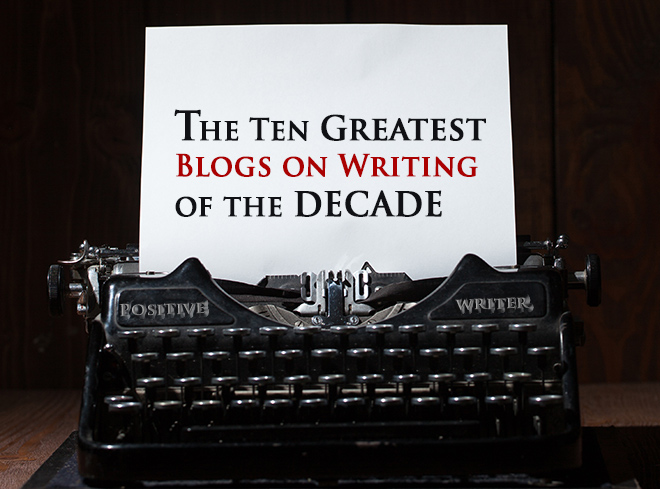
The Ten Greatest Blogs On Writing of the DECADE

The Ten Greatest Blogs On Writing of the DECADE

written by Bryan Hutchinson

As we inch closer to the end of the decade, I want to take a moment to celebrate the best of the best, the absolute cream of the crop, the ten greatest blogs On Writing of the decade!

top ten writing blogs

In some extraordinary way, each of the following blogs represents what writing is all about and each has gone to extraordinary levels of generosity sharing their knowledge, something which is so needed today. Not only do I want to congratulate the bloggers, but I want to congratulate you too because without writers in the trenches (like all of us!) there would be no need for such great blogs.

You’ll notice as I list these blogs that I include personal experiences I’ve had with most of them, this is because after spending time as a reader, a student, and as a fellow blogger, I have developed relationships with these bloggers and it would be unfair of me to say these relationships haven’t influenced me. I think it is important for blog authors to create personal connections with their readers, so it deserves to be an influencing factor when selecting the best of the best.

(I also do an annual Top 50, but this isn’t related to that.)

Without further ado, here are the ten GREATEST blogs ON WRITING of the decade:

1) Goins Writer

Jeff is my personal favorite blogger. But he’s not just my personal favorite, he’s the favorite of thousands upon thousands of other writers and authors. Jeff’s also a good friend, we met nearly ten years ago and Jeff helped me launch this blog you’re reading, Positive Writer. Many of you found your way here thanks to Jeff sending you over at some time or another. With that said, Goins Writer is not the best of the best because he’s a friend, it’s because he’s one of the most personable, gracious, and kind people online and he takes those wonderful characteristics and uses them to share his vast knowledge of writing with you and me. He’s a coach’s coach. If you’ve been under a rock and have not discovered Jeff’s blog yet, then it is an honor for me to introduce you to my good buddy, Jeff Goins.

2) Jerry B. Jenkins

Jerry is the author of more than 190 books with sales of more than 70 million copies, and yet he takes the time to write one of the very best writing blogs online! Jerry’s a great guy, who is known for being incredibly personable and generous. In fact, a few years ago when I asked Jerry to read my book, Writer’s Doubt, I wasn’t expecting him to actually say yes due to his busy schedule and other commitments, but he made the time and to my amazement, and tremendous gratitude, he loved it. The more I’ve read Jerry’s blog and followed him over the years, I realize he’s the real deal. It’s not about doing anything for himself, it’s about what he can do for you, the writer who is doing everything in your power to be the best writer you can be. Visit Jerry B. Jenkins.

3) Write to Done

Mary Jaksch, the Chief Editor of Write to Done, has created one of the most extraordinary blogs for writers. I love visiting Write to Done, it’s filled with valuable lessons for writers at all levels and in all genres. I met Mary in 2012 when Write to Done selected Positive Writer as one of their top ten writing blogs, since then I’ve grown to admire her work more and more, and from time to time we’ve competed via one promotion or another and she always seems to win! Write to Done is a must to bookmark!

4) The Write Practice

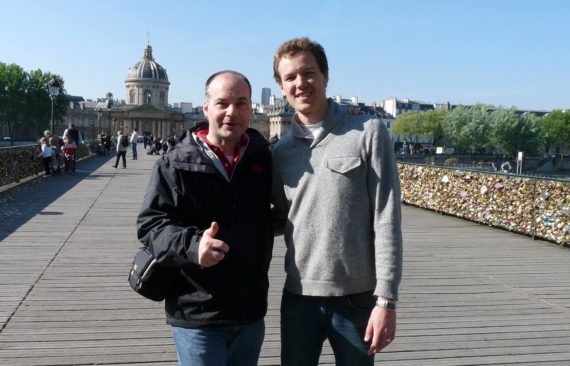
I don’t even know where to begin with Joe Bunting’s website, The Write Practice, it’s boundless. Joe Bunting, the founder of TWP, provides services every writer needs to take advantage of. Each blog post is a lesson and an exercise for writers to improve in their craft. I’ve admired Joe and his work for years and in 2014 we met up in Paris, France. Be sure to visit The Write Practice.

bryan hutchinson joe bunting Paris France

Bryan Hutchinson and Joe Bunting, Pont des Arts bridge, Paris, France. Photo by Joan Hutchinson.

5) Helping Writers Become Authors

This is a fantastic blog by the wonderful K.M. Weiland. If you’re a fiction author, this is the blog to read daily! We’ve worked on a few book promotions together over the years and I can tell you she’s an absolute joy. I highly recommend following her on Facebook as she posts some great questions for writers on a regular basis and the comments are just as fun as the questions! Visit Helping Writers Become Authors.

6) Jennifer Blanchard

Jennifer has enough energy for the entire web! She’s a very positive, go-getting writer and is one of the few bloggers who still posts new articles frequently. She’s a lot of fun to work with and her lessons on her blog are just as entertaining as they are instructive and inspiring. Visit Jennifer Blanchard.

7) The Magic Violinist

Kate Foley, AKA The Magic Violist is a contributor on Positive Writer and The Write Practice. Her first post on Positive Writer took off like a rocket and went viral with over 10,000 shares. In my humble opinion, she’s a prodigy. I cannot recommend her blog enough, she conducts interviews, writes book reviews, and shares valuable lessons she’s learned about the craft. She’s the real deal. Visit The Magic Violinist.
8) What is a Plot (Ninja Writers)

I have a not so secret admiration for blogger Shaunta Grimes. She came on the scene just a few short years ago and writers everywhere fell in love with her wit and her mastery of the craft. She’s one of the few bloggers who’ve made the move from amateur to professional in such a short time. Her blog is a gem, don’t miss it! Shaunta is also a writing champion on Medium. Visit What is a Plot.

9) The Write Life

The Write Life is a brilliant blog made up of several outstanding bloggers who share their love of the craft and what they’ve learned. I’ve had the privilege of working with a few of their contributors so I know firsthand the talent that makes up The Write Life. Whatever your interest in writing, this is the blog you’ll want to keep bookmarked and ready to refer to and learn from. Visit The Write Life.

10) Writers Helping Writers

I love Angela Ackerman and Becca Puglisi’s blog, Writers Helping Writers! These two are constantly publishing new insights and lessons, and all of their posts are unique and helpful. Angela and Becca bring their personal touch to every word they publish, so trust me, this is deserving of making anyone’s top ten list, so make sure you stop by and subscribe! You’ll be happy you did. Visit Writers Helping Writers.

—-~~–~~—-

There are so many wonderful blogs that could make the top ten of any true writer’s list, but alas there’s only room for ten and these fantastic blogs all overwhelmingly deserve being here.

The #1 Rule on How to Write Viral Content for Your Blog or Website

The #1 Rule on How to Write Viral Content for Your Blog or Website

written by Bryan Hutchinson

One of the things that surprised me the most when I started Positive Writer was that a lot of my content was going viral. I didn’t expect that to happen and, if I am being honest, I didn’t start writing articles with going-viral in mind. I created my blog to share my thoughts about writing and since I felt what I wanted to express wasn’t really being talked about at the time, I might as well give it a shot and see if anyone cared. They did, and how!

At first, when my posts started taking off, I thought it was just luck. And, to a degree it was, but after a while, I noticed a trend. I had stumbled on to one of the most important aspects of being a writer online – at least, a writer who writes stuff that gets not only noticed but also passionately shared.

Before we get into what the secret is and how you can do it too, let me tell you another little truth, you’re probably a much better writer than I was when I started out, and if we’re really being open and sincere about what it takes to get your work noticed, shared and, well, going viral, it has very little to do with being a “great writer.” If you don’t consider your writing skills to be as good as you want them to be, welcome to the club.

With that said, being a great writer doesn’t hurt, but it’s not the key to success online. Writers with something to say will always get noticed more than great writers just writing for the sake of writing.

The #1 rule to creating content online that goes viral is:

Write What People May Be Thinking But Aren’t Saying

You’ve heard the saying that “The first draft of anything is shit.” Right? Well, my first article on Positive Writer was an argument against this declaration. It was titled “The First Draft is Not Crap!” It was short and, what I considered, a simple post.

“The First Draft is Not Crap!” went on to become my first viral phenomenon. I’m still a bit stunned at how well received the post was and the life it took on for itself. I’d love to tell you, I knew it! But that was hardly the case.

Hemingway allegedly said the famous quote, “The first draft of anything is shit.” as claimed in a postmortem book, “With Hemingway: A Year in Key West and Cuba.”

Thousands, if not millions, of authors and aspiring authors (especially the aspiring ones), have repeated the quote with conviction, even going so far as to post it on vision boards and bathroom mirrors. However, I imagined many actually disagreed with it or felt it went too far. In fact, psychologically it IS a self-defeating statement, which has led more people to let-downs than to publishing contracts.

I’m not going to go into the debate about the quote itself in this article. I’ve already done that. We’re going to talk about how a topic, especially something people may be thinking about, but aren’t really talking about, can get people to react in some way, positive, or negative, in agreement or disagreement, thus sharing your articles.

The result to share and discuss the content is there because it’s different, it’s taboo, and at the same time, it’s meaningful and important.

How dare you contradict the great one! Hemingway was a master.

Or:

It’s about time someone said it! No one can prove Hemingway ever uttered those words.

And it’s not always so cut and dry, some may agree to a point, but not entirely, which opens up more debate, discussions, and ultimately, sharing of your content!

Now here’s the thing, I wasn’t merely trying to stir up the bees. Quite the contrary, I set out to help fellow writers with positive and motivational content. Part of that was to get writers to think more positively about their initial work and give it the credit it deserves. Calling your work crap isn’t exactly all that motivational. And, reverse psychology doesn’t usually work the way a lot of people think it does.

Studies have shown direct requests and suggestions work better than reverse suggestions, in fact, reverse suggestions often work as direct suggestions. So, if you’re one of those who is wired for direct and not “reverse psychology,” then guess what calling your work worthless means. Exactly, your efforts and your work are very likely F**k’d. If that’s you, now you know why you’re always stuck and borderline depressed. Stop that!

Since I hadn’t found any blogs out there expressing things the way I thought about them, I only had an inclination more people thought the way I did. It was a big risk and I figured there would be some push back because, frankly, a lot of the most common and repeated writing advice out there is capital BULLSHIT. I wanted to talk about that and provide other ways of thinking about said bull advice.

To create viral content you have to be willing to discuss topics your readers might not agree with and at the same time do your best to help them see your point of view.

To create viral content you have to be willing to discuss topics your readers might not agree with and at the same time do your best to help them see your point of view. Click To Tweet

It’s not enough just to write about that which should not be said, there also has to be a point to it – or rather, a point you’re trying to make. If you’re successful at making your point, whether your readers agree or disagree, they will share your content, and if you’re lucky, it will go viral.

I noticed many new writers and bloggers like to rewrite old advice and popular content. Sure, they give a little of their own twist in the rewriting of it, but really, it’s the same we’ve all already read before. Great for a moment, but ultimately forgettable. Don’t be forgettable. I made that mistake with the first few blogs I started. I hadn’t found my own voice yet, or really, I wasn’t brave enough to let it sing freely. With that said…

Pro-tip: Don’t write content with the sole purpose of pissing people off. Because, rest assured, if you try that you WILL succeed and it won’t be pretty. If you’ve got a point to make – be sure it’s something you believe in and you feel needs to be said.

Your content needs to be valuable. Make your words make a difference. Because they can.

If you leave this article having gained something that will help you in some way, then I feel I have succeeded. I don’t need you to agree with me or disagree with me – I just want to get you thinking, considering, and coming up with your own solutions with what may be a new or fresh perspective. To me that is valuable. To me, that is a win.

You’ve got something you want to say. I know you do. It might not be mainstream, it might be a little edgy, and I am quite sure, whatever it is, it’s pretty damn scary. That’s the type of stuff people care about. Viral content goes viral because people care about it. You would never share anything you don’t care about.

Writing articles to give your opinion is the primary reason to create a blog so that you can share those opinions with the world. However, – this is going to hurt – your opinion doesn’t count for much. And frankly, neither does mine.

It’s the thoughts, the discussions, and the sharing of views that we generate which matters the most. If I could get one person to rethink the draft she’s about to throw in the trash because she thought it was “shit.” Then I’ve done my job. And if that draft becomes a second draft, then a third draft, and eventually turns into a published book – oh my!

And THAT is why I wrote the article without ever considering it would eventually be viewed and read over 2 million times, or that thousands of people around the world would share it with each other.

I’ve written many other articles which have had a similar effect, some have been shared far more, and some much-much less, and some have caused even greater ripples in the blogosphere. But get this, you’re a better writer than you realize and you have things to say you know are important too, so what are you waiting for?

Say what others are thinking, but aren’t saying. The scarier this idea is to you, the more likely you’re on to something.

Go create some ripples. I dare you.

Nominate Your Favorite Writing Blog for 2019!

Nominate Your Favorite Writing Blog for 2019!

written by Bryan Hutchinson

Do you have a favorite blog about the craft? Great! Nominate it for the Best Writing Blogs Award for 2019.

The Annual Best Writing Blogs Award is my favorite event of the year and your involvement is paramount. The annual award post has reached millions of writers who have discovered fantastic new writing blogs to explore, bookmark, and subscribe to, so please do take a moment and nominate your personal favorite because it deserves to be recognized!

Here’s how to nominate your favorite writing blog:

  • 1) Post a link to your favorite blog in the comments with a brief explanation as to why you’re nominating it.
  • 2) You can nominate up to two blogs; however, please do not nominate any specific blog more than once yourself.

The more nominations a particular blog receives will give it the best chances of making the final list.

Bloggers can nominate their own blog; however, it will only count if at least one other person seconds the nomination.

Nominated blogs can be by multiple authors and can be about other topics, as long as writing is the main topic.

The final date for nominations is 31 Jan 2019.

Nominate your favorite, go!

Want to be a Blogger who Actually Makes a Living Online? Here’s a Simple Guide!

Want to be a Blogger who Actually Makes a Living Online? Here’s a Simple Guide!

written by Bryan Hutchinson

What if you could make a living online? Would that interest you? It interested me, and that’s why I connected with Matt McWilliams, who is the go-to expert. Matt shared something with me that I want to share with you (with his permission, of course).

Read More

The Winning Edge That Moves Any Writer to Center Stage

The Winning Edge That Moves Any Writer to Center Stage

written by Frank McKinley

Are you a writer who yearns for a shot at the big time?

Do you dream of being in the spotlight – adored by a crowd of raving fans?

Are you looking for that one magic bullet that will make these dreams come true?

Friend, you’ve come to the right place.

Today’s post is by Positive Writer contributor, Frank  McKinley.

Read More

Newer Posts
Older Posts

writers doubt book on writing

"Bryan's book, "Writer's Doubt," Will dispel any writer's doubt! Highly Recommended!" — Warren Adler, author, "The War of the Roses".
.
Writer's Doubt is an Amazon Exclusive Release.  Please note, all links to Amazon on this site are affiliate links.

Are You A Writing Warrior? If Yes, Join Us Now!

Hello! I'm Bryan Hutchinson, you might know me as the author of the bestselling book, "Writer's Doubt." On Positive Writer I help writers and bloggers do what they were born to do: Write and get attention! I'd love to keep you up to date and share my best tips with you:

Like Positive Writer on Facebook

SuperWebTricks Loading...

Become A Better Writer

Ready to improve your writing and your life?

Join The Art of Positive Journaling!


“I’m a fan!” —Jeff Goins, author of Real Artists Don’t Starve


  • Facebook
  • Twitter
  • Google +
  • Pinterest
  • RSS

Copyright © Bryan Hutchinson


Back To Top