A superfan is that reader who buys all of your books and responds to your emails. They’re buying the pre-order and purchasing the audiobook even though they’ve already read the Kindle version and the paperback.
We love our superfans.

Note: This is a guest post by Dave Chesson. Dave teaches authors advanced book marketing tactics at Kindlepreneur.com. He likes sharing in-depth, actionable guides, such as this breakdown of the anatomy of a book. His free time is spent in Tennessee with his wife and children.
Finding these fans is incredibly important as an author. In this article, we’re going to look at ways you can find your superfan readers.
1. Build a Mailing List
One of the first things you should do to find your tribe of superfans is to start an email list. Starting it sounds intimidating, but there are reasons you should:
- You own your email list. When someone buys your book on Amazon, you don’t get their contact details. When you have their email address, that changes. You can market directly to them.
- You can launch your books to an engaged audience.
- You can start an autoresponder series that should give you a slow drip of book sales.
But most of all, an email list can be used to find and reach out to your superfans. If a reader is a highly engaged email list subscriber, odds are they’ll be one of the first to buy your new books.
The best way to build a mailing list is by giving away a lead magnet–a giveaway that a reader downloads in exchange for their email address.
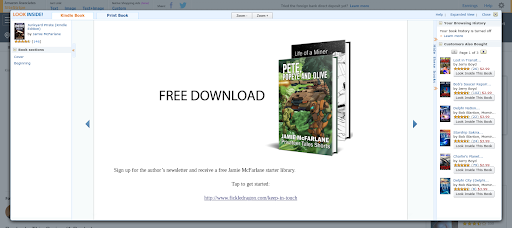
You’ve probably seen lead magnets before. Authors use lead magnets in their books to grow their lists too. For example, Sci-Fi author, Jamie McFarlane has an opt-in to his book, Junkyard Pirate. This clickable link leads readers to a download page where they can sign up to receive their free book.
Chris Fox, who writes fiction and non-fiction does the same thing with his books. For example, in his fiction book, Destroyer, he includes only one link.
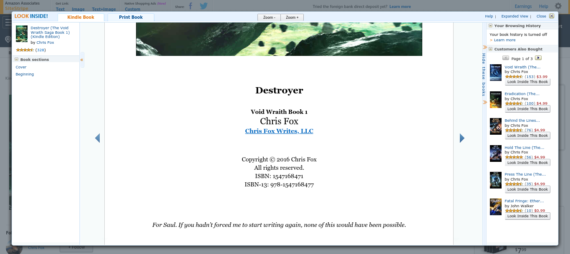
When the reader clicks that link, they’re taken to Chris’ homepage which includes three giveaways placed above the fold–visible without having to scroll down.

When it comes to creating a lead magnet, you can use plenty of different ideas:
- Add-on to the story
- Another full book
- Prologue to the book
- Epilogue to the book
- Character background information
- Location maps
You can even create a course as your lead magnet. Plenty of non-fiction authors use companion courses for their book, and I use a free Amazon Ads Course as a lead magnet on my site.
Once you’ve got a lead magnet or two, you can either host them on your website or sign up to a platform like StoryOrigin that’ll host the files along with giving you options on creating landing pages.
You can also use StoryOrigin to connect with other authors for newsletter swaps and promotions that’ll grow your email list.
2. Engage With Your Mailing List
Okay, so you’ve got a growing email list. Now what?
Your superfans won’t come out of the woodwork straight away. Instead, you’ll have to engage with your readers with emails worth opening and reading.
Your email list engagement tactics are far more important than your strategies for growing your list in the first place. Hosting a large email list can become quite expensive, so if you’re not making any profit from your list, you’re wasting your time and money.
There are a few strategies to make sure you’re getting the most out of your email list and finding your superfans.
Share parts of your personal life: A benefit of having an email list is that you can create a more personal relationship with your subscribers over time. Use your email blasts to tell personal stories that readers can relate to. You don’t have to give away any deep dark secrets, but simply going through some aspects of your day and showing off a bit of your personality will draw those who relate to you.
Post with the right frequency: Author newsletters are tricky when it comes to how often you should send emails. A lot depends on how often you publish books. Regardless, you don’t want to email your list every day. Once every week or two weeks should be fine.
Have a solid onboarding system: The beauty of an onboarding system for your list is the guarantee that all subscribers will get the same experience when subscribing. Each new subscriber will receive the same emails no matter what time they join your list. When Tammi from Newsletter Ninja was on the Creative Penn podcast, she spoke about keeping your email onboarding short but still giving an intro to you and your work.
Offer something more than just ‘buy my book’ emails: I’m sure you’ve been on an email list before where you’ve received spammy sales emails. If you’re like me, you unsubscribe super-quick. That applies to your readers too. Don’t always sell to your list. Instead, offer some valuable information, curated posts and maybe fun facts and freebies.
If you want to know more about engaging with an email list, I strongly recommend Newsletter Ninja. There’s a great book and some classes that you can take on being the best email marketer possible.
3. Join Facebook Groups
Facebook Groups are a great resource to connect with passionate readers. When you join a group, you’re not necessarily looking to sell books or create fans straight away. Instead, you want to join in on the conversation.
These groups are everywhere too.
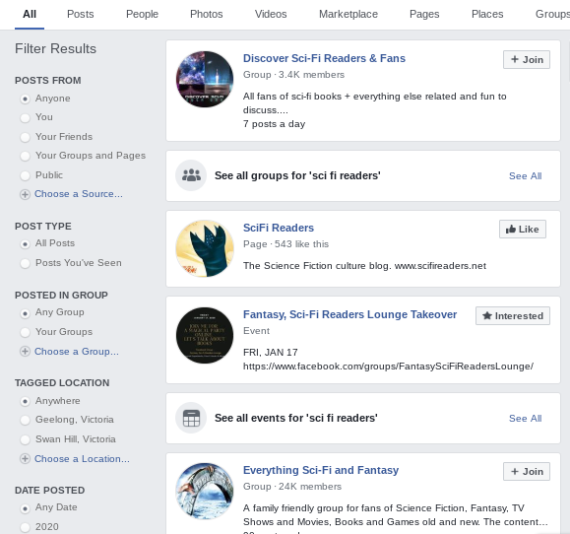
For example, I searched ‘Sci-Fi readers’ on Facebook and quickly found two groups and a page I could join. With some further searching, that number could be a lot more. Bear in mind, you don’t want to join twelve different groups and float in and out trying to make them all happen at once. Instead, find one or two groups that resonate with you and give them your attention.
This strategy is by no means a fast-acting solution — it can take months to be seen as a regular member of the group. However, once you’re in, you’ll strike up relationships with members and they’ll naturally become intrigued about you and your writing. Remember, don’t go into a group looking for self-promotion. It won’t work and you’ll probably get yourself banned.
While this is a time-consuming task, it can be an incredibly successful one. Partially because not a lot of authors will go to the time and effort to become an active Facebook group member. And even if it doesn’t lead to book sales, you’ll at least get a group of potential readers commenting on what they like and don’t like about the books in your genre. Consider that market research.
4. Create Your Own Facebook Group
Do you want to take your Facebook Group game up to 11, when everyone else is at a 10?
Well, you can start your own Facebook group!
Now, we already said that joining a Facebook Group can be a long-burn. Creating your own Facebook group is even more time-consuming. When you create a Facebook group, you’ll be doing a lot of work at the start making sure conversations are flowing. The good news is a successful group can be a highly targeted way to bring out and develop your own superfans.
Odds are you’re not at the stage where a group can just be about your work, so maybe create a fan group for the genre you write in. That way you’ll bring in people who may be interested in your group but haven’t read your work yet.
The catch-22 of a Facebook group is that nobody wants to join an empty one. So, let your email list know about the group as a way to chat with you and each other.
It’s the ‘each other’ that’ll be the deciding factor if your group is a success or not. Sure, at the start you’ll have to be doing a lot of the heavy lifting conversation-wise, but you’ll really win when the group members are having conversations without your encouragement.
Bonus: Spend Time Writing Better Books
Let’s file this next section under “sometimes the simplest answer is the best one.” If you really want to find your superfans, spend time improving your craft. Rather than investing time and money improving the conversion rates on email subscribers and whatnot, spend it on improving your writing–take a class, or invest in a better editor.
When you write great books, your readers will do a lot of your marketing for you. Word of mouth marketing is one of the most effective forms because people trust a recommendation they get from a friend more than they do a Facebook ad.
Being the best writer you can be will make all the marketing work you do more effective.
Final Thoughts
As a writer, your superfans are the group that’ll uplift you. They’re your cheerleaders and you want them on your side. Connect with people in a genuine way and you’ll find them in no time.