Positive Writer
  • Inspiration
  • Writer’s Doubt
  • Free eBook Good Enough
  • Contact
    • Guest Post Guidelines for Positive Writer
  • Resources
  • Archives
  • About
    • The Wee-Jees Book Launch Team
      • Picture Files for the Book The Wee-Jees
    • Privacy Policy
    • Free Book
  • Inspiration
  • Writer’s Doubt
  • Free eBook Good Enough
  • Contact
    • Guest Post Guidelines for Positive Writer
  • Resources
  • Archives
  • About
    • The Wee-Jees Book Launch Team
      • Picture Files for the Book The Wee-Jees
    • Privacy Policy
    • Free Book

Positive Writer

Category:

Practical Tips

If You Create and Publish Original Content on YouTube and Other Platforms, You Have Rights.

If You Create and Publish Original Content on YouTube and Other Platforms, You Have Rights.

written by Bryan Hutchinson

I’ve been asked to share my thoughts on paranormal reaction videos. This isn’t about calling anyone out, debating skepticism, or taking sides on paranormal claims. It’s about creator rights, based on my general observations and decades of experience protecting my own intellectual property.
For those who don’t know, I recently started a paranormal-travel vlog on YouTube. I combined my love of all things paranormal with my passion for travel, and there you have it!  Bryan’s Paranormal Travels


Disclaimer

Disclaimer: This is an opinion article and NOT legal advice. While efforts were made to ensure accuracy, no guarantee is given. This content may not be cited as legal guidance. Laws vary by jurisdiction and must be verified independently. Readers are responsible for their actions and for checking applicable laws. By continuing, you agree to these terms. Always consult a qualified attorney. If something is factually incorrect, I’ll correct it if it is supported by legal citations.


The Main Issue

The main issue I have with many paranormal reaction creators is their use of others’ work without permission. As an author, I’ve had my share of criticism, and that’s fair. But IP misuse is another matter.


First, Fair Use

First, fair use. It’s not pre-approved. It’s a LEGAL DEFENSE in U.S. courts that may allow limited use of copyrighted material if a judge agrees. “Everyone does it” isn’t a defense (remember Napster), and simply pausing to add commentary, or flipping/cropping, doesn’t automatically make a work transformative or educational. (See: U.S. Copyright Office / Fair Use.)


Defamation Risks

What sets many paranormal reaction creators apart is that they often call paranormal content creators fakers, liars, or scammers. Any kind of public accusation is legally risky, but these specific terms are recognized in defamation law as carrying especially high risk because of their potential for serious reputational harm.

Courts, including the U.S. Supreme Court in 497 U.S. 1, have ruled that publicly calling someone a liar or similar merely for disbelieving them, even just as an opinion, can be actionable as defamation.

There is no ‘public duty’ exception for private individuals who make public accusations. On the contrary, projecting false authority through a self-appointed role that has no official capacity could affect liability. Unlike hearsay cases, reaction videos provide replayable evidence. And, labels like parody don’t provide immunity either, especially when statements imply fact.


Likeness and Privacy Risks

One of the most underestimated legal risks is using someone’s likeness: name, image, voice, or other personal information in reaction videos (or any video) without consent, even thumbnails. In the U.S., likeness is protected under privacy and publicity laws, which fair use doesn’t cover. Publicly accessible online does NOT mean it’s free to use or in the public domain. That’s why smart creators use licensed content or obtain signed releases. Even famous people are not fair game. Some of the largest statutory damage awards have gone to them. Did you know likeness can even be implied? In White v. Samsung, White won $400k+ because a robot evoked her identity. In Waits v. Frito‑Lay, Waits won $2.5M for its use of a sound‑alike voice. (Legal media of people is typically licensed from Getty, other agencies, or directly from the individuals.)

U.S. fair use offers no protection for defamation, privacy, publicity, harassment, or other non-copyright claims. This is why IP holders often bring multiple claims in a lawsuit.


UK and EU Notes

Note: In the UK or EU, likeness is protected under privacy and data protection laws, especially if the use is misleading, harmful, or commercial. The EU goes even further. Always verify your local laws.

Privacy complaints are often filed with platforms first, and lawsuits can follow.


Why This Matters

This all matters because original creators invest significant time, energy, and resources into their work. When that work is misused, it can harm reputation, damage partnerships, impact sponsorships, and even affect employment opportunities. Creators are not just making videos. They’re building brands. Unauthorized use can devalue or interfere with licensing opportunities. I experienced this when one of my IPs was blocked due to unauthorized use.

The thing is, criticism does not require unauthorized use. Thousands legally post critical reviews daily.


If You Believe Your Rights Were Violated

Not all reaction videos are malicious, but if you genuinely believe your rights were violated or no copyright exception applies, and you want it removed, consider:

• It’s a legal process, so avoid responding with anger, insults, threats, or any kind of public retaliation.

• Send a polite takedown request to the reactor. Refusing to remove infringing content after being clearly notified may contribute to a finding of willful infringement, which can increase potential statutory damages.

• Document everything: videos, URLs, thumbnails, and any use of terms like “faker,” “liar,” or “scammer.” Save follow-ups, as they might show willful intent.

• Screenshot comments: They could end up as valuable evidence of reputational and market harm.

• Report infringement to platforms for removal. Under Safe Harbor provisions, platforms must remove infringing content after receiving a valid takedown notice to maintain their immunity. Safe Harbor protection applies ONLY to the platform, NOT to the person who uploaded the content. If you receive an automated fair use reply from YouTube, you may need to email the full explanation to: Copyright@youtube.com

But before you do that, know your rights. The more detailed and informed your request is, the more likely it will be honored.


Fair Use: The 4 Key Factors

FAIR USE is evaluated in court using 4 KEY FACTORS. A best practice approach in removal requests to platforms is to explain how these factors apply to the case. Here are examples of how they may affect para-content:

1 Purpose and Character of the Use:

Many para-reaction creators focus on discrediting, but in a legal context, discrediting is not the same as criticizing. Calling someone or implying that they are a liar, faker, or scammer goes beyond mere commentary on copyrighted work and becomes a personal attack on the creator’s credibility and identity. Such attacks on the creator, directly or indirectly, are generally not protected by fair use and may undermine or nullify a fair use defense. Thumbnails stamped with “Fake,” etc., tend to give away intent.

2 Nature of the Original Work:

Videos capturing alleged paranormal events often involve rare, spontaneous moments in distinctive settings, recorded in creative and original ways. This type of content may be less likely to qualify for fair use, especially when key moments, the heart of the work, are reused.

3 Amount and Substantiality Used:

Para-reaction videos often take the key scenes involving alleged paranormal activity. Even the briefest use of these key moments weighs against a fair use defense, as they represent the heart of the video and are highly protected under copyright law. In the landmark fair use case Harper & Row v. Nation Ent., the U.S. Supreme Court ruled that copying even a small portion can be infringing if it includes the most valuable parts, the heart of the work. That established an important legal standard for fair use. Alleged paranormal activity often forms the heart of videos involving paranormal content because it is the “holy grail” of this type of content. Reaction creators have no legal authority to decide what the heart of someone else’s work is. And platforms can’t know the heart UNLESS informed by the original creator.

4 Effect on the Market:

Use that harms viewership, damages reputation, or poisons audience perception is market harm. Viewer comments and sudden spikes in dislikes can be key evidence.


Jurisdiction Matters

IMPORTANT: Fair use is a legal defense ONLY under U.S. law in U.S. jurisdiction. It’s best practice to state locations in removal requests to platforms, whether the original content was uploaded outside the U.S. or if the reactor is based outside the U.S. Platforms consider jurisdiction when clearly stated. Otherwise, they often default to U.S. law. They can verify locations. If legal action is pursued in the reaction creator’s country, for example, in the UK, stricter copyright laws apply. The fair dealing provision under UK copyright law offers far less protection. To date, I have not found any UK court that has upheld fair dealing as a defense for reaction-style use. In Tixdaq Ltd v. BT, the High Court rejected a fair dealing claim for just eight seconds of footage, showing how narrow the UK standard is. In the UK, fair dealing is intended to cover critique of the work, not attacks on its creator. Across Europe, the InfoSoc Directive imposes strict limits, and so on. YouTube is a global platform, so rights holders with standing may file suit in the infringer’s country if they choose.


Reporting Effectively

Just because content isn’t removed doesn’t mean it’s legal. Platforms are not courts. But it’s important to understand that platforms rely on rights holders for what happened, so be confident, clear, and factual in your reporting. It’s not enough to click the report button and type, “copyright infringement.” Explain: How was the work used? Why is it not fair use? Does it contain the heart? What’s the context? What’s the jurisdiction? The more specific, the better. Also, I’d be cautious about taking legal advice from anyone whose own unauthorized use of other people’s content might be in dispute.


Final Thoughts

I know how upsetting it is to see your content or likeness misused. But you are not legally powerless. From what I’ve seen, many disputes fail because the original creator didn’t understand the laws involved, or how to report infringement or privacy issues properly, and/or how to respond effectively to rebuttals. As someone who instructs up-and-coming authors, I always stress the importance of learning your rights. And consider getting legal insurance because IP protection never stops.

Please don’t just take my word for any of this. Consult a qualified attorney. Statutes of limitations for copyright are usually up to 3 years, in some cases, even up to 6 in the U.K. Defamation is usually less. Always check.

~Bryan
13 Limiting Beliefs That Hold Writers Back

13 Limiting Beliefs That Hold Writers Back

written by Bryan Hutchinson

In the Spring of 2016, my book, Align Your Writing Habits to Success, hit #1 in my category on Amazon and I became a bestselling author. That same year, two more of my books also hit #1. It happened again the next year and again two years later. 

Now, it’s pretty common for me to release a new book and have it hit #1 in my category.

But before that, being an Amazon Bestselling author was a pipe dream. Something I knew was possible for other people, but I didn’t think it was for me.

NOTE: This is a guest post by Jennifer Blanchard, a multi-passionate author of both fiction and nonfiction, and the Feel-Good Life + Mindset Coach who helps writers, creatives, and dreamers shift their mindset and own their worth so they can achieve their dreams. If you have big dreams, but always get caught up on How to make them happen, be sure to download her FREE training: F*ck the How. 

Why did I think it was a pipe dream? Two reasons:

  • I didn’t know How to make it happen 
  • I had a limiting belief that said it wasn’t possible for me

Then in February of 2016, I met an author who had written and published 47 books, 46 of which hit #1 in her category on Amazon. Meeting her got me thinking: if she could hit #1 that many times, surely I could do it once. 

That thought shifted everything for me, and less than four months later, I joined the ranks of Amazon Bestselling authors. 

Limiting beliefs run rampant in your subconscious mind, and these beliefs stop you from pursuing your desires and believing your dreams are not only possible, but inevitable. And if you don’t deal with your limiting beliefs, they will hold you back from ever having the writing career and the life you truly want.

First, what is a limiting belief? It’s a belief that limits what’s possible and available for you. 

Limiting beliefs are rooted in misperception, and everyone has them. It’s your job to figure out what yours are, then deal with them, and let them go. 

To get you started, here are 13 of the most common limiting beliefs I see from writers and creatives (and why they’re not actually true): 

Writers are broke

This one has been said so many times it plays like a broken record in many writers’ minds. 

Not only does this limiting belief stop you from making money as a writer, but it also stops you from even doing your writing or putting it out into the world. If you think from the get-go that being a writer means you’ll be broke, why would you ever allow yourself to be a writer? 

But the truth is, not all writers are broke. I’d argue the only writers who are broke are the writers who aren’t resourceful, who haven’t done the due diligence to learn what it takes to make money from being a writer, and who haven’t consistently implemented what they’ve learned.

And I would argue this because if you are resourceful, you do learn what it takes to make money as a writer, and you implement it consistently, you will make money eventually. That’s how it works. 

You’re only a published author if your book was traditionally published 

Let’s look at the very basic definition of published: to prepare and issue a piece of work for readership or sale to the public. With this definition, a blog post–much like this one–makes you a published author. 

Same goes for self-publishing your book(s). 

If you’ve prepared your book and issued it for readership or sale to the public–congratulations, you’re a published author. If someone can find your book on Amazon and read it and/or buy it, you’re a published author. It really is that simple.

The problem is when you allow someone else’s limiting beliefs around what it means to be a published author affect you and the way you think about yourself and your writing.

I shouldn’t have to spend money to be successful as an author 

You’ve probably heard the old saying, “you have to spend money to make money.” You’ve maybe even said that yourself or believed it at some point. 

But that doesn’t mean it’s ultimately true for everyone. It is possible to make money without spending money. 

The real question is: do you want to be a hobbyist or a professional? 

A hobbyist writer doesn’t see the value of investing in their writing career. A professional writer knows that allowing yourself to be supported by investing your money in whatever you need for your career–be that an editor, a coach, a cover designer, a how-to book or course, or something else entirely–is a win-win. 

That doesn’t mean you have to spend a ton of money to be a professional. This is more about making a mindset shift from not seeing the value in investing in your writing career to seeing that when you invest in your career, that investment returns to you in multiple ways, money included.

Writing isn’t a career with longevity

Ugh, I hate this one! And I get it. I really do.

As a writer who was told many times that writing “isn’t a real job,” I can tell you with absolute certainty writing is a career with longevity. I’ve been getting paid for my writing since 2001. All these years later, still getting paid.

The issue at hand here is two-fold: 

  • Are you willing to stay the course? 
  • Are you willing to pivot and learn new things as the industry and marketplace shifts and changes? 

While being a writer is still the same thing as it has always been–sit down and put words on the page–the way writers sell their books and make money from their writing has shifted over the years, and will continue to. 

If you’re a writer who wants to have a long career, you have to be willing to stick with it and change and grow as the industry and marketplace does.

It’s hard to make money as a writer

This is one of the most common limiting beliefs, and it’s deeply rooted in misperception. 

It’s not that it’s hard to make money as a writer. There are plenty of authors out there making five and six figures a year and even a month from their writing.

A coach-friend of mine sold 7,000 copies of her book at $4.99 a copy when it first came out. At a 70 percent royalty, she gets about $3.49 per book. Now multiple $3.49 times 7,000 and you’ll see that she made around $24k. It was not hard for her to make this money. She just sent out a few emails and put a few posts up on social media.

So the misperception here is that it’s hard to make money as a writer, and clearly, that is not the ultimate truth. 

For the writers who have had the experience of it being hard to make money, there were most likely other things at play, such as not having the right audience or a big enough following to sell books to, or having a limiting belief that said it’s hard so it became a self-fulfilling prophecy 🙂 

I’m not good at marketing 

When you think about marketing as this big hairy-scary thing, yes, it can be intimidating and it might make you think you’re not good at it. 

But when you break it all down and look at marketing for what it actually is, you’ll see how easy it can be to be good at it. And here’s a breakdown: marketing is simply showing your audience who you are, telling them about your book, and giving them a specific action you want them to take.

When you look at marketing from that lens, it feels less scary, right? 

Here’s a simple example of what that could look like: you write a post on Facebook sharing your opinion about a topic you’re passionate about. You add a P.S. at the end of the post telling people about your new book, then write “buy my book here” and give them the link. 

Online marketers overcomplicate marketing and it doesn’t need to be. Keep it simple and you’ll actually show up and do the work.

Selling is sleazy

When I hear the phrase “selling is sleazy,” I picture those door-to-door salesmen who come to your house and try to sell you a vacuum or a magazine subscription. That kind of selling is dripping in desperation and you can feel the “ick” energy of it. 

But that doesn’t mean that selling, in general, is sleazy. You have to separate “selling” from “sleazy” in your mind because they’re not one and the same. 

“Sleazy” is a specific approach that can be taken to anything, not just selling. And selling is simply telling someone about your book/offer. 

I think the other part of what makes this limiting belief so popular among writers is the idea that you’ll have to “convince” someone to do something, like buy your book. But it’s a choice to see it that way.

You could choose to view selling as being of service, and as you getting your book into the hands of the people who need it the most. Nothing sleazy about that. 

You can also decide that you’re not going to put energy into trying to “convince” anyone of anything. That’s not your job. 

Your job is to share with people who you are, what you have to offer–aka your book–and to let them know why it’s of value and how to get their hands on it. 

I don’t want to annoy people by promoting my books all of the time 

Do you think Amazon or Apple or Starbucks gets up in the morning and thinks, “I shouldn’t sell today because I don’t want to annoy people?” No way! 

They just send you a hundred emails a day and think nothing of it. 

Not saying you have to do the same thing to your audience, but in this day and age, people are used to businesses selling all day every day. If you’re an author, you also own a business, so you get to do the same. 

And if someone is “annoyed” by you selling, they can unfollow you or unsubscribe from your emails. You don’t want people like that in your audience anyhow.

Self-promotion is egotistical 

Here’s a new thought for you to try on: it’s egotistical not to promote yourself.

The limiting belief that self-promotion is egotistical is, again, rooted in misperception. The misperception is that your “ego” wants you to be out in the world being all loud and proud and self-promote-y, and that couldn’t be further from the truth.

Your ego wants to keep you playing small. It wants to keep you “safe” in your comfort zone. 

The last thing it wants is for you to be out in the world every day promoting yourself and telling people about your books. 

So it’s actually not egotistical to promote yourself. It’s confidence. It’s bravery. It’s putting the ego in its place.

You came to this world with gifts to be shared, and it’s egotistical of you to not share them.

Building an audience is hard 

This one goes hand-in-hand with “it’s hard to make money as a writer.” While building an audience does take time and consistency, it doesn’t have to be hard. 

You can choose to see it as fun, as something you get to do, as something you enjoy doing because it allows you to connect with your fans and the people who follow you and your work. 

And yes, there will be things you may need to learn in order to build your audience, but that doesn’t have to be hard either. You can set aside 30 minutes a day to learn, and then when you’re ready, 30 minutes a day doing activities to grow your following. 

How you choose to view building an audience is really what makes it hard or not. 

Self-publishing isn’t taken seriously 

Nonsense. Yes, maybe that used to be true, but it’s not anymore. Self-publishing has grown in popularity so much that many traditionally published authors are leaving their publishers, or becoming a hybrid author and adding self-publishing into the mix. 

Now that doesn’t mean you should just write whatever the heck you want and then slap it up on Amazon. Self-publishing doesn’t mean you don’t have standards. 

When you self-publish, you should do as good of a job, if not better, than a traditional publisher would. And that means doing things, like hiring an editor, a cover designer, a copywriter to write your Amazon copy, or whatever you need to self-publish your book in as professional a way as possible. 

There’s a wide variety of self-publishing options available these days, some of which are almost exactly like working with a traditional publisher, except for you foot the bill and get to keep more of the royalties.

I don’t have the money/resources/time to sell my books 

We’ve already covered the money part (see above), but this limiting belief is rooted in the misperception that selling books requires a lot of time, money and/or resources. That is not at all true.

The truth is, you can sell books organically in 30 minutes a day if you’re consistent with it and have the right mindset, energy, and strategy. You can also sell books using an automated book sales funnel and only have to spend the time once to get the result over and over again. 

Don’t allow the fear of marketing or the fear of not being able to sell books make you believe limiting things like selling books requires a lot of money/resources/time. 

Selling books requires whatever you’re willing to give to it. Period.

I can’t write nonfiction and fiction 

So many fiction writers think they can’t write nonfiction. So many nonfiction writers think they can’t write fiction. But it is only their thinking that makes it so.

I used to feel the same way. I’ve been writing fiction since I was 11, and I never, ever thought I’d write a nonfiction book. Then in 2010, I had an idea for a nonfiction book that I wanted to write.

I wrote it, published it, and the rest is history. Now, I have a collection of nonfiction books, and I’m beginning to increase the number of fiction books I’ve published as well.

The real issue here isn’t whether you can or can’t write fiction and nonfiction. The issue is whether or not you want to.

It is absolutely possible for a fiction writer to write nonfiction, or for a nonfiction writer to write fiction. But you have to want to. You have to be willing to learn the differences and practice implementing them in your own writing. 

If that’s not something you want to do, that’s perfectly okay. Just don’t limit what’s possible for your writing career by believing something as silly and limiting as “I can’t write fiction and nonfiction.” 

How To Deal With Limiting Beliefs:

I could keep going with this list of limiting beliefs and showing you why they’re not actually true, but the whole point is this: you get to decide. You get to decide what is and isn’t true for you. 

And unless what you’re coming up against is Ultimate Truth–as in it’s true for every single person on the planet, like gravity–you’re just dealing with a limiting belief and there’s always another option available. 

Here’s my process for looking at and clearing out any limiting beliefs that come up: 

1. Write down what’s currently present for you

Before you can deal with anything, you first have to get clear on what’s coming up for you. I like to get my journal, sit somewhere quiet, and then ask myself: “what’s coming up for me right now?” Another way to ask this is, “why don’t I believe I get to have X” with “X” being whatever you desire that you don’t believe you can have.

Whatever comes up, write it down. No judgment.

2. Is this ultimately true?

Now, go through each limiting belief that you wrote down and ask yourself, “is this ultimately true?”

As I mentioned above, ultimate truth means something is true for everyone, like gravity. If it’s not the ultimate truth, that means there’s another option available.

So, is it ultimately true that “it’s hard to make money as a writer” or that “people get annoyed by self-promotion,” or that you’re “not good at marketing,” or whatever other limiting belief is coming up for you? Of course not.

And if it’s not ultimately true, you get to choose something else.

3. What could be true instead?

This is where you get to now disprove the limiting belief, by telling yourself what you actually want to believe as true, and then finding examples to back it up.

For example, if your limiting belief is “it’s hard to make money as a writer” or “writers are broke,” find examples of self-published authors who make bank. There are a lot of them out there if you do your research.

Someone to check out right now would be Amanda Frances, a business and money coach who just self-published a book and sold more than 10,000 copies, outranking all of the books in both the Self-Help and the Women and Business categories on Amazon, including big-name traditionally published authors.

4. Claim what you actually want as if it’s already yours

Write down the new belief you’re now claiming for yourself. Something that is in opposition to the limiting belief.

If your limiting belief says “writing isn’t a career with longevity,” you now write down and choose to believe “writing is a career that grows and expands as the years go on,” or whatever belief would feel good to you.

The most important part is that you come up with a new belief that feels good when you say it and think it.

5. Repeat this process daily and/or whenever a limiting belief comes up

Repetition is required when reprogramming your mindset and beliefs. So stick with this, do it every day, and your life will begin to change in ways you can’t even imagine right now.

Which of these 13 limiting beliefs most resonates for you, and what are you going to do about it? Share in the comments.

How to Find Your Superfan Readers

How to Find Your Superfan Readers

written by Bryan Hutchinson

A superfan is that reader who buys all of your books and responds to your emails. They’re buying the pre-order and purchasing the audiobook even though they’ve already read the Kindle version and the paperback. 

We love our superfans.

Note: This is a guest post by Dave Chesson. Dave teaches authors advanced book marketing tactics at Kindlepreneur.com. He likes sharing in-depth, actionable guides, such as this breakdown of the anatomy of a book. His free time is spent in Tennessee with his wife and children.

Finding these fans is incredibly important as an author. In this article, we’re going to look at ways you can find your superfan readers. 

1. Build a Mailing List

One of the first things you should do to find your tribe of superfans is to start an email list. Starting it sounds intimidating, but there are reasons you should: 

  1. You own your email list. When someone buys your book on Amazon, you don’t get their contact details. When you have their email address, that changes. You can market directly to them. 
  2. You can launch your books to an engaged audience.
  3. You can start an autoresponder series that should give you a slow drip of book sales. 

But most of all, an email list can be used to find and reach out to your superfans. If a reader is a highly engaged email list subscriber, odds are they’ll be one of the first to buy your new books. 

The best way to build a mailing list is by giving away a lead magnet–a giveaway that a reader downloads in exchange for their email address. 

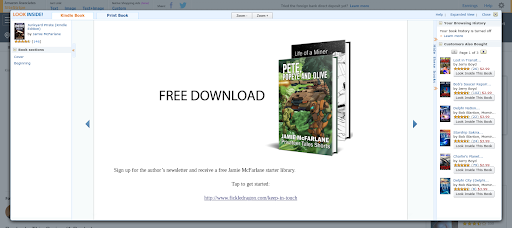
You’ve probably seen lead magnets before. Authors use lead magnets in their books to grow their lists too. For example, Sci-Fi author, Jamie McFarlane has an opt-in to his book, Junkyard Pirate. This clickable link leads readers to a download page where they can sign up to receive their free book.
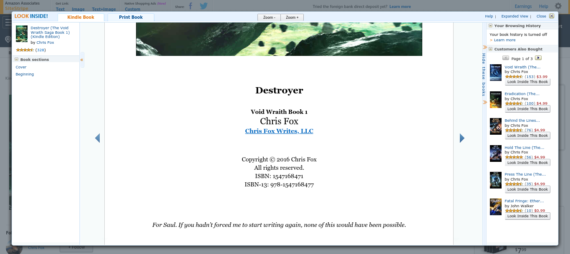
Chris Fox, who writes fiction and non-fiction does the same thing with his books. For example, in his fiction book, Destroyer, he includes only one link.

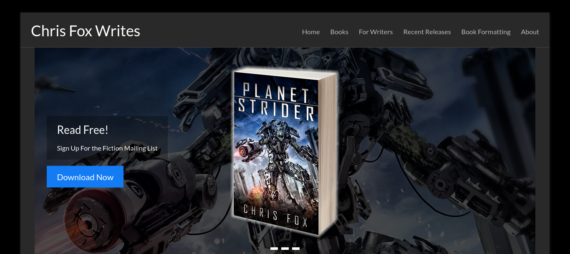
When the reader clicks that link, they’re taken to Chris’ homepage which includes three giveaways placed above the fold–visible without having to scroll down.

When it comes to creating a lead magnet, you can use plenty of different ideas:

  • Add-on to the story
  • Another full book
  • Prologue to the book
  • Epilogue to the book
  • Character background information
  • Location maps

You can even create a course as your lead magnet. Plenty of non-fiction authors use companion courses for their book, and I use a free Amazon Ads Course as a lead magnet on my site. 

Once you’ve got a lead magnet or two, you can either host them on your website or sign up to a platform like StoryOrigin that’ll host the files along with giving you options on creating landing pages. 

You can also use StoryOrigin to connect with other authors for newsletter swaps and promotions that’ll grow your email list. 

2. Engage With Your Mailing List

Okay, so you’ve got a growing email list. Now what? 

Your superfans won’t come out of the woodwork straight away. Instead, you’ll have to engage with your readers with emails worth opening and reading. 

Your email list engagement tactics are far more important than your strategies for growing your list in the first place. Hosting a large email list can become quite expensive, so if you’re not making any profit from your list, you’re wasting your time and money. 

There are a few strategies to make sure you’re getting the most out of your email list and finding your superfans. 

Share parts of your personal life: A benefit of having an email list is that you can create a more personal relationship with your subscribers over time. Use your email blasts to tell personal stories that readers can relate to. You don’t have to give away any deep dark secrets, but simply going through some aspects of your day and showing off a bit of your personality will draw those who relate to you.

Post with the right frequency: Author newsletters are tricky when it comes to how often you should send emails. A lot depends on how often you publish books. Regardless, you don’t want to email your list every day. Once every week or two weeks should be fine. 

Have a solid onboarding system: The beauty of an onboarding system for your list is the guarantee that all subscribers will get the same experience when subscribing. Each new subscriber will receive the same emails no matter what time they join your list. When Tammi from Newsletter Ninja was on the Creative Penn podcast, she spoke about keeping your email onboarding short but still giving an intro to you and your work. 

Offer something more than just ‘buy my book’ emails: I’m sure you’ve been on an email list before where you’ve received spammy sales emails. If you’re like me, you unsubscribe super-quick. That applies to your readers too. Don’t always sell to your list. Instead, offer some valuable information, curated posts and maybe fun facts and freebies.

If you want to know more about engaging with an email list, I strongly recommend Newsletter Ninja. There’s a great book and some classes that you can take on being the best email marketer possible. 

3. Join Facebook Groups 

Facebook Groups are a great resource to connect with passionate readers. When you join a group, you’re not necessarily looking to sell books or create fans straight away. Instead, you want to join in on the conversation. 

These groups are everywhere too. 

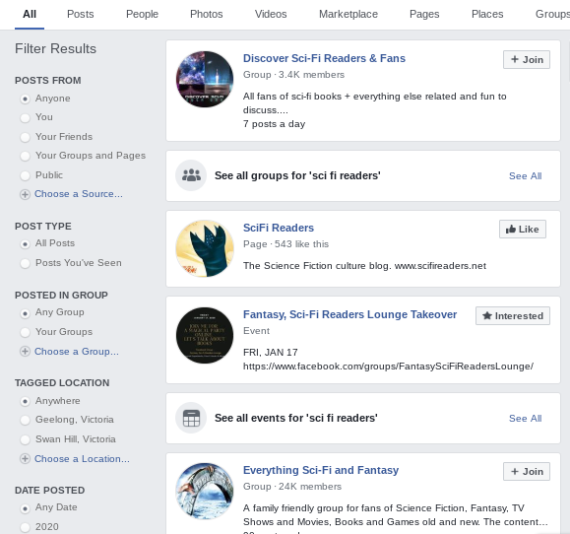
For example, I searched ‘Sci-Fi readers’ on Facebook and quickly found two groups and a page I could join. With some further searching, that number could be a lot more. Bear in mind, you don’t want to join twelve different groups and float in and out trying to make them all happen at once. Instead, find one or two groups that resonate with you and give them your attention.

This strategy is by no means a fast-acting solution — it can take months to be seen as a regular member of the group. However, once you’re in, you’ll strike up relationships with members and they’ll naturally become intrigued about you and your writing. Remember, don’t go into a group looking for self-promotion. It won’t work and you’ll probably get yourself banned. 

While this is a time-consuming task, it can be an incredibly successful one. Partially because not a lot of authors will go to the time and effort to become an active Facebook group member. And even if it doesn’t lead to book sales, you’ll at least get a group of potential readers commenting on what they like and don’t like about the books in your genre. Consider that market research. 

4. Create Your Own Facebook Group 

Do you want to take your Facebook Group game up to 11, when everyone else is at a 10? 

Well, you can start your own Facebook group! 

Now, we already said that joining a Facebook Group can be a long-burn. Creating your own Facebook group is even more time-consuming. When you create a Facebook group, you’ll be doing a lot of work at the start making sure conversations are flowing. The good news is a successful group can be a highly targeted way to bring out and develop your own superfans. 

Odds are you’re not at the stage where a group can just be about your work, so maybe create a fan group for the genre you write in. That way you’ll bring in people who may be interested in your group but haven’t read your work yet. 

The catch-22 of a Facebook group is that nobody wants to join an empty one. So, let your email list know about the group as a way to chat with you and each other. 

It’s the ‘each other’ that’ll be the deciding factor if your group is a success or not. Sure, at the start you’ll have to be doing a lot of the heavy lifting conversation-wise, but you’ll really win when the group members are having conversations without your encouragement.

Bonus: Spend Time Writing Better Books

Let’s file this next section under “sometimes the simplest answer is the best one.” If you really want to find your superfans, spend time improving your craft. Rather than investing time and money improving the conversion rates on email subscribers and whatnot, spend it on improving your writing–take a class, or invest in a better editor.

When you write great books, your readers will do a lot of your marketing for you. Word of mouth marketing is one of the most effective forms because people trust a recommendation they get from a friend more than they do a Facebook ad. 

Being the best writer you can be will make all the marketing work you do more effective. 

Final Thoughts

As a writer, your superfans are the group that’ll uplift you. They’re your cheerleaders and you want them on your side. Connect with people in a genuine way and you’ll find them in no time. 

How and Why You Should Start a Daily Positive Journal

How and Why You Should Start a Daily Positive Journal

written by Bryan Hutchinson

For the longest time, I struggled with a negative mindset. I constantly told myself what could go wrong would go wrong. And, I was usually right. When things did go well, I believed that it was luck or someone stepped up to help, or hey, maybe it was Halloween and reality was wearing a mask.

Read More

The Hardest Thing to do as a Writer (You CAN Master It!)

The Hardest Thing to do as a Writer (You CAN Master It!)

written by Bryan Hutchinson

2007, at the age of 37, I finally published my first book. I started writing when I was 12 and it took me 25 years to finally finish and publish a book. That’s a long time. I was ecstatic to complete my lifelong dream, but I still felt like a failure.

Read More

How To Edit Your Book Until It’s “Finished”

How To Edit Your Book Until It’s “Finished”

written by Bryan Hutchinson
Note: This is a guest post by Joe Bunting. Joe is a professional ghostwriter and editor. He is the publisher of The Write Practice.

Lately, I’ve been getting a lot of questions about how to edit a book. “I have a 60,000 word manuscript,” people tell me, “but I don’t know how to know if it’s ready to publish.”

Some of these writers want to finish up the manuscripts they began during NaNoWriMo. Others are in the middle of their first draft and are enthusiastically thinking ahead to their next steps.

However, they’re all asking the same question: How do you know when your book is finished?

Read More

How to Sell Thousands of Books When You Don’t Have an Audience

How to Sell Thousands of Books When You Don’t Have an Audience

written by Frank McKinley

By Positive Writer contributor Frank McKinley.

Do you have a book inside you that needs to be shared with the world?

I know how you feel. You should write it and sell it, even if you don’t have an audience yet…

Read More

4 Lies Your Inner Critic Will Use to Destroy Your Writing Dreams

written by Bryan Hutchinson

Note: This is a guest post by Julian Cavazos of Better Blog Writing. Get a free copy of his free Blog Post Checklist to use as a helpful guide before you upload your next post!

Does your inner critic get the best of you sometimes?

You’re not alone. If I had a dollar for every time my inner critic told me not to write something, I’d be a millionaire by now.

Read More

Stop Worrying About What People Think and Create Anyway

Stop Worrying About What People Think and Create Anyway

written by Bryan Hutchinson

One of the surest ways to find unhappiness and limit your creativity is worrying about what others think of you or your work.

It’s true, and I am guilty of it. But it doesn’t have to be that way.

Read More

9 Crippling Beliefs Holding Writers Back From Writing Their Book (and How to Overcome Them)

9 Crippling Beliefs Holding Writers Back From Writing Their Book (and How to Overcome Them)

written by Bryan Hutchinson

Note: This is a guest post by Ayodeji Awosika. He is a writing coach who helps aspiring writers develop confidence, build writing habits, and launch their writing careers into the stratosphere. Visit his website to receive your free guide: The Ultimate Guide to Writing Your First Book.

reframe-writing

Admit it.

You’ve been thinking about writing a book for a while now. Maybe you’ve even spent years thinking about it.

Read More

Newer Posts
Older Posts

writers doubt book on writing

"Bryan's book, "Writer's Doubt," Will dispel any writer's doubt! Highly Recommended!" — Warren Adler, author, "The War of the Roses".
.
Writer's Doubt is an Amazon Exclusive Release.  Please note, all links to Amazon on this site are affiliate links.

Are You A Writing Warrior? If Yes, Join Us Now!

Hello! I'm Bryan Hutchinson, you might know me as the author of the bestselling book, "Writer's Doubt." On Positive Writer I help writers and bloggers do what they were born to do: Write and get attention! I'd love to keep you up to date and share my best tips with you:

Like Positive Writer on Facebook

SuperWebTricks Loading...

Become A Better Writer

Ready to improve your writing and your life?

Join The Art of Positive Journaling!


“I’m a fan!” —Jeff Goins, author of Real Artists Don’t Starve


  • Facebook
  • Twitter
  • Google +
  • Pinterest
  • RSS

Copyright © Bryan Hutchinson


Back To Top