Positive Writer
  • Inspiration
  • Writer’s Doubt
  • Free eBook Good Enough
  • Contact
    • Guest Post Guidelines for Positive Writer
  • Resources
  • Archives
  • About
    • The Wee-Jees Book Launch Team
      • Picture Files for the Book The Wee-Jees
    • Privacy Policy
    • Free Book
  • Inspiration
  • Writer’s Doubt
  • Free eBook Good Enough
  • Contact
    • Guest Post Guidelines for Positive Writer
  • Resources
  • Archives
  • About
    • The Wee-Jees Book Launch Team
      • Picture Files for the Book The Wee-Jees
    • Privacy Policy
    • Free Book

Positive Writer

Category:

Writing

Outstanding Books on Writing for Just 99 cents ea. (17 to 23 August ONLY!)

Outstanding Books on Writing for Just 99 cents ea. (17 to 23 August ONLY!)

written by Bryan Hutchinson

(UPDATE: This promo is over and ended on the 23rd, while it is possible some titles are still at 99cents, I can’t promise that.)

I’m happy to announce a very special promotion I’ve arranged with several of my author friends on Amazon.

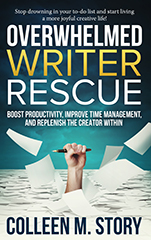
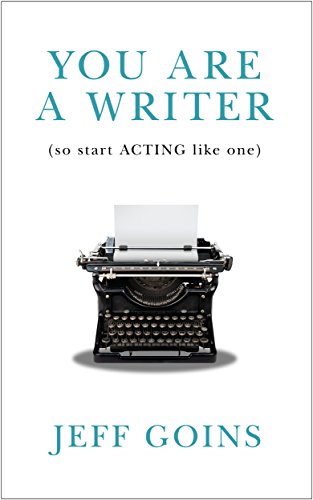
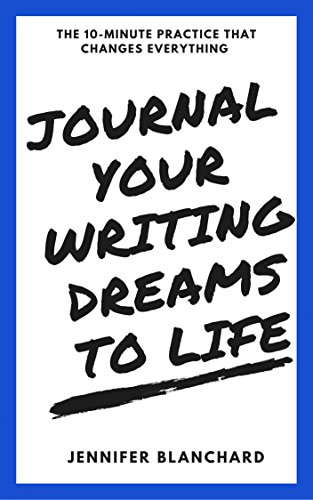
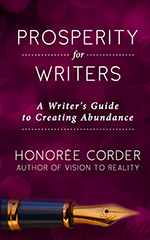
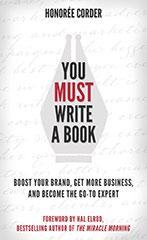
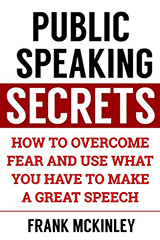
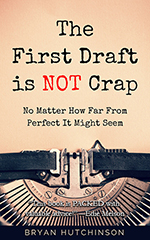
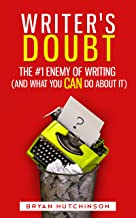
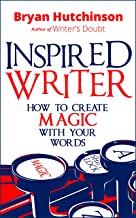
Each book listed below is priced at just 99 cents, only for the duration of the promotion, so don’t waste any time and collect them all today. Click on the covers of the books you would like and you’ll be directed to their respective Amazon pages at the discounted price.
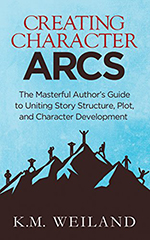
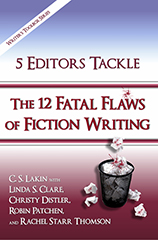
       

Feel free to share this with your friends! Leave no writers behind. 🙂
How to Overcome the Fear Every Writer Has of Repeating Themselves

How to Overcome the Fear Every Writer Has of Repeating Themselves

written by Bryan Hutchinson

Every writer fears the dreaded complaints about being too repetitive.

“I thought the book was great, but the author tended to repeat herself.” – “Fantastic information, but too much repetition!” – “The author is a moron, kept repeating the same lesson over and over―I got it the first time. WTF!”

In non-fiction, which this post focuses on, and in some fiction, there is a tension between repeating something too much or too little, and as writers, we must master this skill if we are to use it in the powerful, necessary way intended.

If readers do not learn from your book or article it might not be that you didn’t teach your point well enough the first time. No, the real problem could be that you didn’t teach your point enough.

Repetition is vital in the learning process because that’s the way the human brain learns and stores memories.

Repetition is a necessity

Let me say it again, repetition is a necessity.

In our fast-paced world, we are so busy that we can’t stand repetition, we simply don’t have the time for it (we say), and yet we wonder why so many talents and skills are being lost.

It’s because people don’t want to be bothered to take the time to learn something the right way. They can’t be bothered to take the necessary amount of time needed to master their talents. Welcome to the 21st century where everything is supposed to be instant. It’s just too bad the human brain hasn’t caught up.

Without repetition, there can be no mastery

Often, when people complain about repetition it is because they believe they “got it” the first time.

The brain simply isn’t a one and done machine. When we treat it like it is we forget lessons, we fail tests, and we never truly master any skills.

Imagine your favorite song without its chorus.

Now you know the reason why one-night-stands are so regrettable, unless it was with the entirely wrong person it’s because we want to repeat such a fantastic experience.

See, repetition isn’t always so horrible.

Okay, let’s refocus.

If you want the information you are sharing to stick, you must learn how to repeat yourself, hopefully without annoying your readers too much. Repetition, therefore, is also an art, which we must practice. You must master the art of rephrasing, hiding, and being boldly deliberate when there are no other options. Because otherwise, repetition can be annoying and counterproductive.

Do your readers a favor, when a point is important, repeat it; however, mix it up enough that it’s refreshing in of itself each time. Don’t get lazy by simply copying and pasting, tell a story, and show it through a different lens. I’ll give you a few examples in a moment.

It’s this fear of repeating one’s self today that has so many people failing to teach others how to become masters of their art. It goes for the students as well. We see people giving up because they’re not willing to put in the time and practice playing the same notes over and over again until their instruments, and they themselves, sing beautifully.

It’s not always about learning something new, it’s often more about learning what you already know better.

New is overrated when the student hasn’t fully embraced and mastered what she already knows.

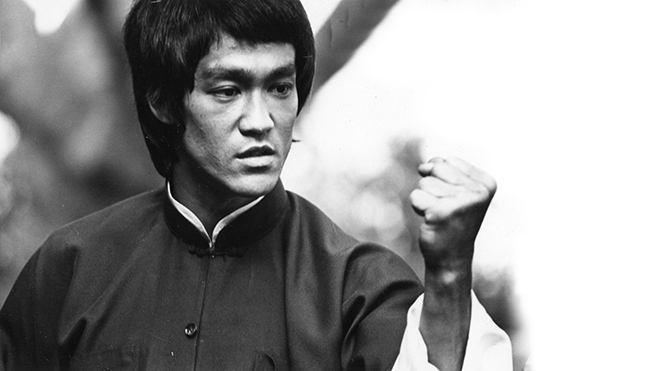
Bruce “One-Inch Punch” Lee

Bruce Lee was remarkable not only for his skills as a fighter but also as a teacher.

Due to Bruce Lee’s intense repetitive training of one single punch thousands, perhaps millions, of times, he was able to deliver a force from one inch away that could knock an opponent off of his feet.

Some claim the punch could kill.

The punch was made so famous by Bruce Lee that today it is known simply as the One-Inch Punch. Mention the One-Inch Punch to any professional fighter and they’ll instantly know to what you’re referring to and who made it famous.

The One-Inch Punch is not possible by just any layman without intensive training, in order to master it one must attempt it thousands upon thousands of times, and even then it might not be enough. Only the truly dedicated will eventually master the famed punch.

And yet, us poor little scribblers complain when authors repeat themselves even once.

If you read any book from Bruce Lee you will soon discover how he hammers home his philosophies over and over again. His lessons have taught legions of fighters over the last half-century and are still among the most sought after books on martial arts.

So the next time you are afraid to repeat yourself because you feel you still need to bring the point home, do it. A reader might complain about it today, but years down the road when she remembers the lesson well and uses it as a master, perhaps even without realizing it, she will owe you thanks.

“I fear not the man who has practiced 10,000 kicks once, but I fear the man who has practiced one kick 10,000 times.” ―Bruce Lee

Mix It Up

With that said, you don’t want to repeat yourself simply by copying and pasting what you already stated. What you want to do is mix it up. Here are a few ways you can do that:

  1. State it directly, as a matter of fact.
  2. Tell a story.
  3. Use personal experiences.
  4. Give readers a practice assignment.
  5. Offer a quiz to help your readers remember.
  6. State it a final time in your closing remarks.
  7. Use comedy by stating the point in a humorously unexpected way, if possible.
  8. Use osmosis by referring to another similar point or an example you previously used. Such as, I used Bruce Lee for a lesson in my book The First Draft is Not Crap and in my online course The Art of Positive Journaling.

Bestselling Authors are the Ultimate Culprits!

If you research reviews from some of the hottest non-fiction bestsellers on Amazon, you’ll find that many reviewers complain about repetition, you’ll especially find this in reviews from books by Seth Godin, Jeff Goins, and Jon Acuff, authors who happen to be some of the very best teachers of our time.

As an experiment, whenever you have a free moment, consider doing a search in the reviews from the below books for “repetitive,” or “repeats themselves,” or other variations and see how many results you get:

This is Marketing by Seth Godin (Wall Street Journal and New York Times bestseller.)

Real Artists Don’t Starve by Jeff Goins (Wall Street Journal bestseller.)

Quitter by Jon Acuff (New York Times Bestselling author of six books including a Wall Street Journal #1 Bestseller.)

Don’t be too shocked that the book with the most acclaim also has the most complaints of being too repetitive, but all of the above have negative reviews claiming the authors were too repetitive.

Here’s the thing, all of the best teachers repeat themselves, and frankly, by and large, students hate it. We’ve had to put up with this since grade school and teachers can’t seem to stop doing it and the best teachers do it the most.

Damn them for being so good.

Aristotle took the matter so seriously that he stated: “It is frequent repetition that produces a natural tendency.”  Perhaps it is of no coincidence that one of his most famous sayings is:

“We are what we repeatedly do. Excellence, then, is not an act, but a habit.”  —Aristotle

(Translated by Will Durant from Aristotle’s texts.)

Whatever you’re great at, wherever your talent has led you, you’re here because you practiced, again and again, you repeated the methods, you repeated the exercises, you memorized them over and over again, instructors, teachers, parents, friends, whoever helped you, did so by repeating processes and instructions over and over again.

Here’s something to consider (and if you think about it, you might be one of these students), students that become true masters of their chosen art are most often the ones that come back and thank their favorite teachers for hammering home the lessons they needed to learn.

Repetition is the true kick in the ass every artist needs

An important paper on this is:

Repetition is the First Principle of Learning

University of Virginia, by ROBERT F. BRUNER

Abstract:

One of the biggest mistakes a teacher can make is to forego the return or repetition. The learning process is one of slow engagement with ideas; gradually the engagement builds to a critical mass when the student actually acquires the idea. Repetition matters because it can hasten and deepen the engagement process. If one cares about quality of learning, one should consciously design repetitive engagement into courses and daily teaching. To do this well is harder than it seems.

As a pool player, I used to get frustrated with one of my instructors because he would have me practice one certain routine hundreds of times and, if I’m being honest, I grew to hate that routine, but eventually, there came a time when I could shoot through the entire routine with my eyes closed.

Without realizing it my shots became fluid and reflexive, I didn’t have to think about them anymore, I could free my mind while playing and shoot more true to my goal, and I won a lot more.

If you ever get the opportunity to watch a professional billiards trick shot player and he or she closes their eyes to make a fantastical shot, it’s because they practiced that shot hundreds of times with their eyes open and thousands of times with their eyes closed.

A Few Tips on how to use Repetition to Learn Better

  1. Learn lessons at least thrice, this includes tips, articles, and books, to name a few.
  2. Space out repetition, the brain learns better when you take pauses. In other words, don’t read a book again the day after you finish it, instead wait a month or two between readings. Give yourself enough time to absorb the information and then go over it again.
  3. Use short burst repetitions. With regard to my pool routine, it was rather short and quick so waiting a month on such a routine isn’t the same as it would be for longer curve learning. In this case, I repeated the exercise directly after finishing, I did this hundreds of times a day for several weeks, then paused a few days before repeating. Basic rule: The shorter the lessons the more frequent the repetition.
  4. Learn from different mediums, such as if you read a book about, let’s say, marketing, and it’s also available as an audiobook, first read it and then listen to it, and perhaps on the third go-around, read and listen simultaneously.
  5. This last one I like a lot, but it’s a bit controversial, listen to audiobook versions of what you want to learn while you sleep. I’ve woken up from dreams about the subject I’m listening to, so I know the brain is listening even while we sleep. How well does this help? I have absolutely no idea, but belief is a powerful thing and I believe it helps me learn skills better.

With all this said, I leave you with one more lesson from Bruce Lee, perhaps the most important:

”Obey the principles without being bound by them.”

Wax on, Wax off.

4 Reasons Why Finishing a Book is Hard, and How to Make It Easier

4 Reasons Why Finishing a Book is Hard, and How to Make It Easier

written by Bryan Hutchinson

You’re a serious writer. You’ve been pursuing the dream for a while. You’ve amassed several thousand words on one or more projects, read books about characterization and plot, attended writers’ conferences, and created a daily writing practice.

And yet you haven’t finished your book. Or maybe you have several you’ve started but haven’t finished. Maybe you’ve finished one but then struggled to finish anymore after that.

Writing a book is never easy, and each one presents new challenges to overcome. If you’re struggling to finish your books, you’re not alone, but if you want to separate yourself from the pack and see your writing dreams come true, you must find a way to manage the journey all the way to “the end.”

Note: This is a guest post by Colleen M. Story, she inspires writers to overcome modern-day challenges and find creative fulfillment in their work. Find free chapters of her books, “Writer Get Noticed!“and “Overwhelmed Writer Rescue,” as well as her FREE mini-course on finishing your book on her motivational site Writing and Wellness. She also welcomes connections on Twitter.

Below are four of the most common reasons why finishing a book is hard, along with action steps to take to get you closer to where you want to be.

1. A Book Is Much More than a Good Idea

We all have good ideas for books. Ask anyone who’s ever thought about writing one and you’ll hear them. Amateurs think all you need is a good idea and you’re set.

Real writers know the truth of the matter, but that doesn’t stop us from being distracted by our active imaginations. It’s probably happened to you. Halfway through your novel, you started to struggle. You knew something was wrong but you didn’t know how to fix it.

As you floundered around, your brain started coming up with new ideas for new stories. Because you’re a creative person, you couldn’t help but feel seduced by these new ideas. They sounded fresher, more intriguing, and more exciting than the one you were working on.

Surely it would be better, you thought, to set your current work aside and pursue one of those superior ideas?

Unfortunately, it’s all a hoax. No matter how great your idea, it will rarely be easy to write a book-length manuscript. Instead, you’ll go off on that new idea and end up stuck all over again.

Action Step: When new ideas occur to you, write them down and store them somewhere in a box or a file on your computer. Then go back to your project and continue working until it is finished. Do not let another idea call you away from the one you’re already working on until that one is complete.

2. Finishing a Book is Totally Up to You

For most everything else we do, someone is around to hold us accountable. At work, you must answer to your manager and/or boss. At home, your family has certain expectations of you. Even the organizations for which you volunteer expect you to follow through.

When writing a book, however, there is no one to check up on you. There is no performance review and no one to see about your progress. That can be freeing, but it can also make it far too easy to shirk your duty to the creative work.

Don’t feel like writing? No one will notice if you take the day off. Feeling frustrated with your story? You can set it aside and no one will complain. Tired of the constant grind of writing every day? You can stop it all now without fear of any serious consequences.

At the end of the day, it’s far easier to quit than it is to continue, and a lot of people take the easy way out.

Action Step: Find out what’s motivating you to do this, and keep it fresh in your mind. Why do you want to write this book? Answer that question and post your answer somewhere you can see it regularly.

Then motivate yourself to keep going in ways that work for you. Track your progress. Ask other people to hold you accountable to your goals. Join a writer’s group. Set up rewards for each milestone you reach. Know yourself well enough to know what you need to do to drag yourself across the finish line.

3. Finishing a Book is Hard

When you read a good book by a master author, it looks easy. The story flows from beginning to end. The characters come to life on the page. The settings are so real you feel like you’re there.

Of course, you can do the same thing, you think.

And then you get to the dreaded middle of the book, and everything you thought you knew goes out the window. Your plot feels unhinged. Your characters are acting strange. The pacing is slow. Now what?

You start and stop again. You consult books on characterization and plot. You jump to the end, write that, then go back, but you can’t bridge the gap. You set one draft aside and start over with another, but you get stuck again.

Writing can be bliss at times, but at other times, it can be downright torturous. It’s like being in a maze and not being able to find your way out. Worse—it’s like being in a maze and not being able to find the most exciting, heart-pounding, emotionally moving way out, and only that one will do.

It’s hard. You spend months banging your head against a wall. You turn here and there for help, all to no avail. You feel like a failure. The beautiful novel you had so many hopes for is falling flat on its face.

Is it any wonder so many writers quit?

Action Step: Don’t quit. No matter what, don’t quit. Try again. And again. One-hundred times if you need to. Ask for help. Hire a writing mentor. Take an online course. Read another book. Outline your book and take a bird’s eye view of the plot. Sit down and have a talk with your characters, one by one, and record what you discover. Keep going. Don’t quit. If you hang in there, the answer will come.

I know. It took me five years to figure out my last novel. When I finally did, I felt like I’d traveled the Sahara and finally arrived at an oasis. It was one of the best feelings I’ve ever had in my life. The harder your struggle, the sweeter the reward. Real writers don’t quit.

4. Finishing Your Book Matters to No One as Much as it Matters to You

Wouldn’t it be nice if, when you’re struggling, you had someone to tell you it was all worthwhile? If you were like one of those authors in the movies with an agent waiting breathlessly for your next story? If you had thousands of readers clamoring for your next work to hit the shelves?

For a very few writers, this is the case. For most of us, the world doesn’t notice if we publish another book or not. Most people don’t care.

Sure, our friends and family might wonder. But at the end of the day, life goes on. The mail still shows up every day (or almost every day). The planes still fly. The banks still operate. People still go back and forth to the grocery store. Book or no book, it doesn’t matter.

We realize this reality somewhere along the way. We know it, deep inside. The world will survive just fine without this story. And that makes it difficult to keep going when the going gets tough because in the end, who cares?

Action Step: Ask yourself: Does this book matter to me? If your answer is “yes,” honor yourself enough to know that you must finish it. For most of us, writing is a calling. It’s something we’re compelled to do. If you turn your back on it, you’ll be turning your back on yourself. Your potential. Your growth as a person.

You must honor yourself and your creativity enough to go where it leads you.

Writing has many rewards beyond those that come from the outside world. Remind yourself of what finishing means to you, and then get back to work.

Why I Write (And Maybe You Should Too)

Why I Write (And Maybe You Should Too)

written by Bryan Hutchinson

Please join me in congratulating the first place winner of our annual writing contest, Henry Gasko! For me, this is one of the best articles on writing I have ever read and I find it more than worthy of first place. For such a short post, it sure packs a wallop. Henry will inspire you to pick up that pen of yours and write something that matters, to you.

I hate writing.

I hate the fact that sometimes I do it to just impress my friends. I hate that I sometimes do it because it’s the only way an old man might, belatedly, become noticed by the world. And sometimes I do it from simple habit, to hide the fact that today I have nothing else to do and so I will write, even though I have nothing much to say.

But all the books say to do it anyway. They say that if I practice diligently enough for long enough, something consequential will magically appear. And so I do it, even though I suspect that I am merely getting faster at writing rubbish.
I hate the self-doubt that overcomes me every time I sit down and try to get some good words on the screen. Not just any words. Some good words. Hemingway killed himself when the right words would no longer come. I hate that I don’t have that kind of courage.

And, no, I can’t write about just anything and pretend it matters. Not about hard-boiled detectives with surnames that you remind you of guns or minerals, or secret agents who are practically super-heroes. And certainly not dragons or elves or vampires or zombies. I hate the fact that I can’t write about these fantasies. I just physically can’t. If I could, if I would embrace escapism and fantasy and magical realism and all the other ways of hiding from the reality of this world, and I would have a million plots available to me. None of them would reflect the world I live in but that wouldn’t matter. I could pretend that somehow — metaphorically or allegorically — they did.

But I am seventy years old, and have tried all those escapes, and I can’t do it. I can’t embrace the certain victories that always occur realms such as Mordor or Hogwarts, or the safely externalized demons of The Overlook. If there are demons in the world, they cannot be out there, they must be in here.

But, just maybe, if I write often enough and long enough, a few words might come that explain why my life is worth living, words that might answer the only question that really matters: “Why bother.”

And then I would have something that I would show my children and my grandchildren. And I could look back on my life without the creeping depression of a life unfulfilled, and I could look forward to my death knowing that I have left a valuable gift, however small, for my children.

That’s why I write.

The Challenge Is To Do Your Part As A Writer: Tell Your Story

The Challenge Is To Do Your Part As A Writer: Tell Your Story

written by Bryan Hutchinson

Today I am happy to announce our 2nd place winner of our annual writing contest, Rachel Macdonald! Please help me congratulate her. 1st place will be announced next week.

I haven’t written a single word in over a month; haven’t edited the book it took me three years to write, haven’t put a scratch in my journal or a jot in my notepad of ideas. And today I am feeling sure I have the best excuse ever creatively conceived–life. I have six children (including two college students) all living at home, my husband is working two jobs, and our house is in the midst of the remodel it has earned trying to contain eight people for fourteen years. And I mean really, how many more excuses does a person need?

On top of that, a stingy, unrelenting inner voice has been whispering that there is no time, no point, and no worth in the book I have given sleepless nights to record. And I believe it. Until a chimney sweep knocks on my door.

But he’s no chimney sweep from Mary Poppins. His arms, legs, and neck are stamped with a rainbow of life history. His bandanna covers everything on his head that isn’t the ponytail touching the center of his back, and his eyes crinkle above a dirt-blond beard. He laughs when he tells me the worn antique bench sitting at the front of my house (the one I’ve told myself I’ll paint someday) might go missing if I’m not careful. He says it’s just the kind of thing he wants to put on his truck and take home to his wife. He adds that he enjoys finding pieces like these and making them beautiful again to gift to her. His voice booms but his smile is kind. So, I think, an artistic, happily married pirate has come to clean my chimneys.

But there’s more. There is always more. While a hose inserted into the upstairs fireplace sucks away years of ashes, we stand and talk. He wants to know about the beautiful building pictured on my wall. “My husband and I were married there,” I tell him. He nods and says he’s done repair work on buildings such as that one. He then firmly declares himself a spiritual man and explains how in places like those he feels closer to heaven. It’s a major contrast to the feelings he experienced amid the noise and chaos of The Gulf War. He says he did work there too. Just a different kind.

In circumstances like war, I think, a person has two choices–to become hardened and bitter, or to become strong and hopeful. And when he pulls down his t-shirt collar to show me his tattoos, I can see which one he has chosen.

Two hearts over his heart. “Because my daughters have my heart,” he explains. One bear claw on his left shoulder blade. “And my son has my back,” he says. A cross on each forearm and a giant cross at the top of his back between his shoulder blades. “Because God has my soul,” he finishes.

“I’m not going to tattoo myself with naked women,” he adds solemnly. “I want tattoos that mean something more. That say something important.”

Just thirty minutes with this stranger and for the first time in weeks, I notice my heart is beating. My brain feels like it’s coming out of a poisoned-apple induced sleep. And all of this is telling me what I almost forgot. I have something important to say too.

It’s something I’ve known since first grade. When seven-year-old me bit my lip and jiggled my legs and gripped my book. My book. I had written and illustrated a whole story which I was about to read aloud to my fellow first-graders. The story opened with a girl who loved to have her bed made and her clothes folded, but when she came home to the room she shared with her little sister and found the whole place a disaster, again, she knew something had to change. This began a journey in which she struggled for a better world. One where she could come home to her very own room. One where the dolls and stuffed animals would stay neatly lined against her pillow.

As my story unfolded, so did the keen awareness of watching my classmates smile, or laugh, or listen solemnly and lean forward to see the pictures. It was a new feeling for me that I could not have written or crayoned at the time, but it rang true. It was that of the human experience being shared and being received. I had shared a piece of myself–my thoughts, and feelings, and a possible end to my journey and solution to a problem that mirrored my own real-life problem. And they had listened. I wanted to do it again.

I have journaled, and written stories ever since. Though I have not shared every word I have ever written, I always write with the intent to share; to add my stamp to the world’s colorful history with the hope that someone, someday, will pick up my published book or my scribbled journal entry and will feel less alone.

This is the why behind my writing. The same creatively conceived excuse I was using not write was the same excuse I had to write–Life.

And my new chimney sweep, veteran, artist friend has reminded me. True story, real story, bumps us up against each other. And it is an unexpected, messy, and glorious process to be a part of.

My chimney is now clean, so I show this man to the door and we say goodbye. Then I go to my computer and sit down to do my part.

Why Your First Draft Is NOT Crap

Why Your First Draft Is NOT Crap

written by Bryan Hutchinson

Every book, every article, and every blog post for that matter starts off with a first draft.

Your first draft sucks! It’s utter and complete crap.

Every writer on God’s green earth has heard this line in one form or another at some point, and somehow we come to believe and even tell ourselves this, too, as if it is okay, without ever considering the true mental and emotional impact.

I refuse to join the chorus. I do not agree. (Well, I wrote the book about it!)

Read More

Stop Killing Your Creative Genius With Ridiculous Comparisons (This Is How To Become The Greatest You Can Be)

Stop Killing Your Creative Genius With Ridiculous Comparisons (This Is How To Become The Greatest You Can Be)

written by Bryan Hutchinson

Perhaps you recently went on Facebook and saw that your hero (or your nemesis) published a new article that went crazy viral, or maybe they published a new book that hit the NYT’s bestseller list (it went all the way up to #1!), and to make matters worse, they posted pictures of their wonderful new house… and it hurts.

It hurts because no matter how hard you try you can never match up, much less surpass what they’re doing.

If we’re honest, we all have those people in our lives, on our Facebook/Twitter/Insta feeds.

Here’s what we have to do about them:

Okay, no, don’t scream. It’s going to be ok. (Well, scream if you really want to!)

  1. We have to do our own thing.
  2. Live our own lives.
  3. Create our own art.
  4. And, achieve our own results.

Too many of us fail not because we’re not good enough or that we don’t have the desire or the tenacity. No, we fail because we can never measure up.

We can never measure up to perception.

A study by Gothenburg Research Institute found that people who spent more time on Facebook ended up feeling less happy and confident. Abstract: “When Facebook users compare their own lives with others’ seemingly more successful careers and happy relationships, they may feel that their own lives are less successful in comparison.”

Even if you were to reach, or surpass, your hero’s achievements you would likely soon find someone else to unfairly compare yourself to, and thus, no matter how successful and happy you could be, you choose to be unhappy and unfulfilled because of what someone else is doing (or appears to be doing).

That’s right, it’s a choice. To compare or not compare is a choice. It always has been.

Ask yourself this:

Are you living and working towards your own goals or are you working towards what someone else has chosen for themselves?

There’s something better for you.

It’s okay to measure ourselves and look at how far we’ve come and how far we still have to go, but it should be for ourselves and what we want and not for someone else and what they want.

We all get mixed up in this at some point when we forget what we want and get caught up in living up to someone else’s dream because their achievements are so bright and shiny and seem so much better.

You know your situation is bad when you find yourself silently rejoicing (even if it’s secretly) at your nemesis’ missteps. This isn’t you.

Their dream is not yours. Their work style, their creativity, and their ‘life’ are not yours. You are a separate creation, with your own dreams and desires.

It’s okay to celebrate others and honestly say to yourself, “This isn’t for me, but I am happy for you!” By doing this, you release yourself from the limits you’ve put on your own destiny.

So many of us get terribly lost or are severely delayed because we’re fixated on what others are doing (or seem to be doing) and where they have chosen to go.

Your potential is incredible, beyond what you realize, and yet, it’s easily lost when you try to measure up to someone else’s potential and end up disregarding your own.

Don’t do that. The pain and regret that follows when you realize what’s happened is not worth it. Reach for your own potential.

Do your own thing.

The NYT’s bestseller list might not currently be your goal. Maybe you prefer to write a brilliant screenplay that will never appear on any bestseller’s list. But if you take on someone else’s goal you’ll end up half-assing a so-so novel when you could’ve been passionately writing your screenplay.

Why desire your hero’s penthouse in the city when you prefer the “home” feel of the small-town life?

Why seek to find your voice when you never lost it? Because someone else is openly searching for theirs you suddenly feel yours isn’t good enough? Hogwash!

These are not The Way. You’ll end up quitting if you follow such ways.

Serious writers never quit, they follow their own path and tell their own stories in their own ways.

Now it’s time to tell yours–your way.

Fear and the Writer Within You

Fear and the Writer Within You

written by Bryan Hutchinson

A long time ago, when I was still in my teens, a good friend of mine, Phil, used to tell me, “It just doesn’t matter.”

He’d say this whenever we were about to do something daring (better said, crazy) and we would either end up looking like a couple of idiots, brave as all get out, or we’d be ignored and no one would give a damn.

Right, so in order to get me to go along with whatever scheme he had come up with, he’d look me in the eyes, shrug and say, “It just doesn’t matter.” All my arguments and fears would be swept to the wayside and we’d get to creating whatever ruckus was next.

However, to be completely honest with you, at the time I didn’t understand what he was really saying. Sadly, I’ll never get the chance to ask him because he passed away.

Over the years of writing, blogging, publishing in public and failing more often than succeeding, I think I finally realize what he was saying:

Whatever we fear, or whatever shame we may suffer, we’ve got to go for it anyway. The risk is worth it and even if it doesn’t seem like it, it just doesn’t matter, let’s do it!

And boy, did we. I’ll never forget those firecrackers! (But that’s another story.)

Phil never really cared about glory or being noticed, he simply wanted to live life and do whatever we were afraid of. He was so brave. The bravest person I’ve ever known.

Such unwavering bravery is sorely missed in the world today, especially in the arts, when everyone is so worried about being criticized, of making a mistake, and looking like a failure.

So what!?

I mean, who gives a damn if you fail?

I don’t, and you shouldn’t either. I’ll tell you why.

It took me a long time to really understand what a 16-year-old understood already so young.

Life is full of risks, but it’s also very short and if you don’t live your dreams now you may die later regretting that you never took your chances.

People often think of fear as life and death, fight or flight, but there’s another fear and it’s just as dangerous. It’s the fear of looking like a failure and being shamed. Such as what might come if you do something risky and fall flat on your face.

The fear of shame is the fear most people allow to control their dreams and, if we’re being honest about this, it controls the direction their lives take and how they interact with others.

Over the years I’ve met people who work day-to-day doing the daily grind as they call it and they ask me why I bother taking the risks of writing and publishing books. They ask this as if all I’m doing is sticking my neck out and looking foolish. These are the people who sadly will likely never accomplish much outside of a 9 to 5.

On the other hand, I’ve had people ask me for advice on how to write books, how to publish them and how to market them. These folks assume that publishing is worth it and many have gone on to do just that, several, I’m happy to say, surpassing my success.

I’m sure you noticed, there’s a striking difference between those two groups.

One group is afraid of the risk of being shamed or they think they’re not talented enough to do anything on their own and fear failure, and the other group is willing to take risks and just wants to know how best to go about it.

Both groups are projecting the outcome they see on to me, success or failure.

We are all in one of those two groups. (I know there’s a lot of grey area I’m skipping here and I’m doing that on purpose.)

There’s the group of doers and the group of those afraid to do whatever their “it” is.

And believe me, everyone, every person on this Earth of ours, has their own “it.”

What’s yours? Are you pursuing it? If not, why not? What’s stopping you?

Pretend if you have to, pretend until you’re not pretending anymore.

Are you an introvert? Pretend to be an extrovert for at least a day.

Scared? Pretend to be brave for a day.

Can’t focus? Pretend, just for a day, that you have all the focus in the world, sit down, turn off all the distractions and get to it.

Whatever your fear or hangup, it just doesn’t matter. Today might be your last. 

It’s interesting how realizing today might be your last, really, truly understanding this, that our daily hang-ups suddenly vanish and we let go of fear, shame, and guilt.

Phil went after his dreams every single day that I knew him. He was one of the most joyful people I’ve ever met, and yet, he had issues outside of his control that eventually led to the end of his life at an all too early age.

The day came when it was Phil’s last, but I’ll tell you this about my friend, while he was here there were things that scared the shit out of him, there were things he was clearly afraid of, but one thing he never let stop him were his fears, certainly not of failure or of shame.

“It just doesn’t matter.” In the right context, are powerful words. Fear and shame, just do not matter, they’ve got another thing coming if they think they can stop us!

You’ve got another thing coming! Was another one of Phil’s sayings whenever someone hinted to him that he was afraid to do something. We first heard it in a Judas Priest song and it became our anthem.

Out there is a fortune waiting to be had 

If you think I’ll let it go you’re mad 

You’ve got another thing comin’  

―Judas Priest, 1982

Even today, when I get a little freaked out, a little too overwhelmed and I start worrying and letting anxiety get the better of me―because let’s face it, I’m human―I turn on that song and I feel the anxiety melt away. I see Phil’s smile in my mind’s eye as we walked down the road with his boom box blaring, “You’ve got another thing comin'”

Sometimes I have to pretend I’m a badass again, the way I was when I was with Phil.

The introvert

A lot of people don’t realize this about me, but I am in introvert. As a kid, I was terribly shy and I stayed mostly to myself. I was very lucky to befriend Phil in school.

If it hadn’t been for Phil, I would be in the first group I talked about, afraid of taking risks and being shamed, living safe day-to-day, only working the grind and hating every minute of it. Instead, I’ve written hundreds of articles, published in magazines, newspapers, and on blogs across the net. I’ve published a few books, too.

A lot of what I’ve tried hasn’t worked, and yet, I still finish and ship, like another friend I admire is keen to say.

Have I been embarrassed by some of my failures?

You bet. But I’ve never felt ashamed for trying any of it.

If I died today, would I regret taking any of those risks?

Ha! You’ve got another thing coming!

I don’t know what your “it” is, but I’ll tell you this, find a way, don’t take no for an answer, do it! Whatever it is.

Live life to the fullest, shame is just imagination gone wild and failure is just another lesson learned. (Click to Tweet This)

Your story is starting. You might not finish.

It just doesn’t matter. Write anyway.

But, since you’re writing,

give it your best,

get serious, be brave,

and never quit.

Show ’em, they got another thing comin’

Serious Writers Never Quit!

The One True Fan You Need For Your Writing To Be A Hit

The One True Fan You Need For Your Writing To Be A Hit

written by Bryan Hutchinson

That person in the audience, you know, the one who was clapping after every song.

That dude way up in the rafters who was whooping and hollering after every hit for his team.

And that lady, the one who stayed and listened until you completed your reading at the local bookstore.

Those, my friends, are the kind of fans we need.

Readers who LOVE our work, fans who send us emails saying how our words touched them, and fellow writers who give us props, that’s our tribe. They are treasures to be cherished.

But how do you get dedicated fans in the first place?

How do you get readers, listeners or viewers to notice you?

Believe it or not, a fan base starts with one fan.

Just One

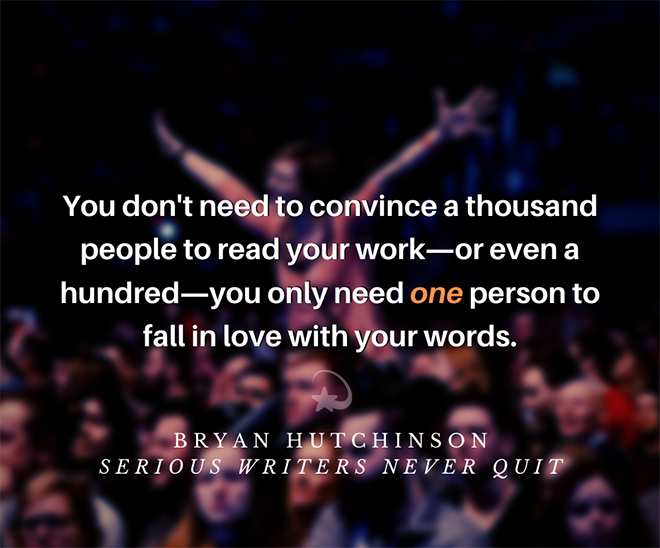
You don’t need to convince a thousand people to read your work, or even a hundred―you only need one person to fall in love with your words.

You don't need to convince a thousand people to read your work, or even a hundred―you only need one person to fall in love with your words. Click To Tweet

The Catch

But, here’s the catch, not just anyone, you need that one to be the fan that is absolutely, unashamedly, enthusiastic about your work.

You need one sincere and dedicated fan.

If there’s one, there’s a hundred, if there’s a hundred, there’s a thousand.

All you need to do is focus on the one.

But who is that one person, that one mysterious fan who matters so much? I’ll tell you.

The problem today is that the internet gives us this belief (and fear), that we can reach a million people just by showing up. Anyone who has been blogging for a while can tell you that is simply not true. It’s a lie that only seems real because you don’t need anyone’s permission to post a comment, an article or even a manifesto.

Warning: This is going to get depressing first before it gets better.

A blogger is lucky to gain 100 readers in his or her first year and even luckier if they stay.

To get a million people to visit your blog you have to do something so extraordinary that it’s too overwhelming to even contemplate. And even if you do something so brilliant, all the stars, moons and planets in the night’s sky will need to align just right, and then maybe, only maybe.

Once the new blogger realizes this reality they’re most likely to surrender, give up and quit. Indeed, according to a New York Times report, as many as 95 percent of all blogs created have been abandoned.

Frankly, if they simply up and quit the artist and temporary blogger wasn’t all that serious in the first place. My advice to any aspiring writers out there, please don’t start writing and publishing online if you’re only doing it to instantly reach millions of people. You’ll drive yourself silly and it’s unlikely to work.

You can reach the masses! Yes, that’s true. But not the way most people think.

If you start a blog right now, this minute, you likely will not be able to get a single stranger to visit it today, much less read it.

Sure, you might be able to convince a family member or a close friend to read your blog, but that’s probably where it ends.

It doesn’t matter what you post about or how awesome it is.

I know, this is depressing news, but I’m a positive writer so I promise you it gets better.

One Person. That’s What You Need.

The right person.

If you focus your writing, publishing and marketing efforts on that one ideal fan, you have a chance. A real chance to reach people who will care about your writing.

Define for yourself who your ideal fan is and what they want to read, view or listen to. Once you have that person in your mind, create only for him or her. Often, the best person to start creating for is yourself.

Once you start creating this magnificent art for your ideal fan, start visiting the places he or she would hang out online and find places where it’s acceptable for you to share and post your links. Attract one reader at a time. Those who love it will share it.

This takes time and that’s is why 95% of blogs are abandoned. Worse, you go on Facebook and you see established bloggers sharing their articles and have 12k likes, but you can’t even rub together two fans.

What a lot of people don’t realize is that many of the blogs you see going viral have already been online for a long time and for years they couldn’t attract true fans either. Sooner or later you find the sweet spot and it all changes, but no one can tell you what that sweet spot is and then when you find it everyone will act as if they knew it all along. Sure they did.

Darn those liars!

Not really, what people often miss is that creating for someone else hardly ever works outside of a 9 to 5. Writing what you love for yourself first often is where the answer is and it will seem like we knew this all along because deep inside maybe we did, but we didn’t have trust in ourselves.

Your Assignment:

This is what I want you to do, I want you to write something NEW you would show up for, something you would love to read as a reader and a fan. Something you would share if you weren’t the author.

Create something so compelling for you that you must read it over and over again because you can’t get enough of it.

Be your one true fan first, before anyone else.

Once you convince yourself, and you become the ultimate fan of your own art, the rest will follow.

Lead us by writing something you love for you, no one else. If it’s good enough for you it will be good enough for others.

When you’ve written and published such a post, do me a favor and post a link to it in the comments. Here’s the thing, don’t rush, no, don’t do that. I know you can create something quickly, but that’s not what I want, I want something you LOVE. Don’t share until you’ve written THAT article.

That’s what it takes today. All the bullshit about SEO, interlinking, Social Media and all that jazz doesn’t matter a hoot if the art doesn’t have that intangible something. Bland, SEO perfect articles don’t get shared, no one other than Google cares about them.

Don’t get blinded by algorithms. The artist, YOU, matter more than any system!

Write something that if a critic were to shred it you’d cry, but not quit. No, never quit.

Because remember, Serious Writers Never Quit!

Anyone could be lazy about this and post an old link of theirs, but wouldn’t it be amazing if you took the above advice and created something new with this specific goal in mind?

Here’s a warning, though:

If this works, things could change. Are you ready for that?

Books on Writing & More for 99¢ and $2.99

Books on Writing & More for 99¢ and $2.99

written by Bryan Hutchinson

Click each image to go to its respective promotion on Amazon.

For ‎99¢ each:

For $2.99 Each:

Take yourself and your writing to the next level.

Newer Posts
Older Posts

writers doubt book on writing

"Bryan's book, "Writer's Doubt," Will dispel any writer's doubt! Highly Recommended!" — Warren Adler, author, "The War of the Roses".
.
Writer's Doubt is an Amazon Exclusive Release.  Please note, all links to Amazon on this site are affiliate links.

Are You A Writing Warrior? If Yes, Join Us Now!

Hello! I'm Bryan Hutchinson, you might know me as the author of the bestselling book, "Writer's Doubt." On Positive Writer I help writers and bloggers do what they were born to do: Write and get attention! I'd love to keep you up to date and share my best tips with you:

Like Positive Writer on Facebook

SuperWebTricks Loading...

Become A Better Writer

Ready to improve your writing and your life?

Join The Art of Positive Journaling!


“I’m a fan!” —Jeff Goins, author of Real Artists Don’t Starve


  • Facebook
  • Twitter
  • Google +
  • Pinterest
  • RSS

Copyright © Bryan Hutchinson


Back To Top