Positive Writer
  • Inspiration
  • Writer’s Doubt
  • Free eBook Good Enough
  • Contact
    • Guest Post Guidelines for Positive Writer
  • Resources
  • Archives
  • About
    • The Wee-Jees Book Launch Team
      • Picture Files for the Book The Wee-Jees
    • Privacy Policy
    • Free Book
  • Inspiration
  • Writer’s Doubt
  • Free eBook Good Enough
  • Contact
    • Guest Post Guidelines for Positive Writer
  • Resources
  • Archives
  • About
    • The Wee-Jees Book Launch Team
      • Picture Files for the Book The Wee-Jees
    • Privacy Policy
    • Free Book

Positive Writer

Category:

Writing

3 Courageous Authors To Inspire You (One  Was Committed To An Insane Asylum)

3 Courageous Authors To Inspire You (One Was Committed To An Insane Asylum)

written by Bryan Hutchinson

Role models have a unique ability to guide and inspire us.

As authors, it’s one thing to theoretically understand what we need to do. It’s another entirely to see a writer we admire shining brightly, lighting the path for us to walk.

Special Note: This is a guest post by Chandler Bolt, he is the host of the Self Publishing School podcast & the author of 6 bestselling books including his most recent book titled “Published.” He’s also the founder & CEO of Self-Publishing School, the #1 online resource for writing your first book. 

If you’re feeling fearful, or doubtful, or like you’re not enough, you’re far from alone.

Any writer woe you’re facing has been overcome before.

When you find someone who has overcome similar challenges to those you face, you give yourself the belief that you can do the same.

Here are some examples to help you move forward.

F. Scott Fitzgerald

Have you ever doubted your academic ability? Does some part of you fear that your educational history disqualifies you from writing?

Considering the prominence F. Scott Fitzgerald’s work would go on to have in the classroom, his background is a little ironic.

Fitzgerald was a notoriously poor speller, and with hindsight, many believe he had A.D.D. Traditional academic success was not something Fitzgerald was able to attain.

In spite of that background, he became one of the most studied and loved authors in American history.

How can we draw inspiration from F. Scott Fitzgerald when facing our own fears as writers?

  • Love is more important than technical ability. For many of us, having our writing criticized, and being expelled academically, might cause us to give up. Not Fitzgerald. He persisted regardless, spending his time and energy on crafting the stories he loved. The difference? These days, we’re blessed with a lot of tools to help us overcome our technical limitations.
  • Our background doesn’t define us. Often, we’re under intense pressure from a young age to have a predefined life path in mind and an academic background that seems ideally suited to it. If there’s something in your academic past that makes people scoff at your odds of becoming a writer, don’t let it stop you.

The next time you find yourself letting a typo or spelling error knock your confidence, stop. 

Remember Fitzgerald.

Our academic ability and technical skill don’t determine if we succeed as book writers.

Only we do.  

Paulo Coelho

As writers, we know how it feels to be doubted. To be treated with a little scorn if we open up about our ideal future or express our creative side a little too strongly. 

Paulo Coelho experienced things more severely – he was committed to an insane asylum multiple times by his own family.

After attending law school, and ignoring writing for years, Coelho returned to his calling at the age of 39. 

Tens of millions of copies sold later, and countless lives touched, we can conclude that things worked out for Paulo Coelho.

But how can we apply ideas from his journey to our own writing goals?

  • We can let down our loved ones. While some of us are fortunate enough to have parents that want us to chase our dreams, many do not. While Coelho’s story is an extreme case, it’s possible that even the most painful disapproval can result in superb success. 
  • We can switch paths throughout our life. One trap a lot of writers fall into is feeling like it’s ‘too late to start’. Just peruse some writing quotes from famous authors and you’ll quickly discover that it’s never too late. Coelho’s commitment to eventually following his heart’s desire shows us we can become successful writers even after a long period of doing something else.

One of the hardest things to do in life is to admit we’re on a different road to success than people we love and respect wish for us. Or to drop a prestigious and seemingly stable career such as law to pursue something creative.

If you ever happen to find yourself in either of those scenarios, recall Paulo Coelho. Both his fiction and life story can provide you with the courage to carry on. 

Agatha Christie

Did you know Agatha Christie didn’t always seem destined for writing stardom?

Christie was known for struggling with spelling and writing in general. Even among her family group, she was not believed to be particularly intellectual.

The fact that Christie went on to sell over 2 billion copies is remarkable.

So what lessons can we take from Christie’s background and apply to our own writing lives?

  • We blossom at different times. Sometimes, we can sadly let our perceived role within the family group determine the path we later take. Christie didn’t. If being seen as less able among her own family didn’t hold her back, please don’t let it hold you back either. You can achieve your potential later in life, regardless of how your childhood seemed to set you up.
  • We use the tools we have. Christie achieved a lot of her best work by dictating it. Think about the advances in technology we have enjoyed since Christie’s era. If you are struggling to get your words down, try recording them. Hearing our writing out loud also improves it on the page. 

Try and use Christie’s story as proof that our perceived identity within our family growing up doesn’t define who we later turn out to be. Also, using technological tools doesn’t make us any less of a writer. 

We all need to do the best we can with what we have, just like Christie did.

Which Author Has Inspired You The Most?

So which author has inspired you the most throughout your writing life?

Are there any other authors you like to lean upon mentally when times get tough?

Please feel free to share some examples and takeaways from your personal favorites in the comments.

5 Ways To Overcome Your Fears of Publishing Your Writing

5 Ways To Overcome Your Fears of Publishing Your Writing

written by Bryan Hutchinson

In today’s world, you’ve got countless opportunities to express yourself in writing.

It’s fun when you’re in your safe space. The words flow. Your heart is at play. You’re free to be you – no restrictions, no outside expectations, and no worries. Yeah, right…

Special Note: This post is by Positive Writer regular contributor, Frank McKinley.

Then you get to the end.

The publish button stares at you. Should you press it? Or should you edit the piece a bit more?

The longer you hesitate, the harder it is.

In those moments of hesitation, your fears amplify and could cause you to quit.

The following are some of the worst ways you can imagine.

Writer’s Worry 101

Your mind races as you consider everything that could happen.

  • Someone will laugh at your work – in public – and tell all their Facebook friends.
  • The day after you publish you’ll think of something you could have included in the post.
  • You might make a point you deeply believe in and one of your readers will mercilessly criticize you for it.
  • Your post gets lost in a universe of countless whispers – and no one reads it, comments on it, or cares about it.

There’s no guarantee that any of this will happen, of course. It’s the possibility that scares us.

It’s enough to make your heart race, your palms sweat, and your creativity run into hiding.

So to protect ourselves from that pain, we hold back. We soften our message. Maybe we even post less frequently, or not at all.

If you’ve read this far, and felt any of these feelings, you’ve come to the right place.

You may not be able to make these fears go away. But you can manage them. You can move past them. And you can use the weight of your gifts to lean in and write something awesome.

And you’ll be able to press publish with no regrets.

Accept the fact that fear will never completely go away.

That’s good.

If you’re stretching yourself, you’ll second guess yourself. You’ll wonder if you should have said it the way you did. And you’ll feel a bit unqualified to even address the topic at this level.

It’s okay. Don’t quit. No, you don’t want to do that.

Nobody knows everything. Not Even the experts. They just know enough to appear smart. Watch them enough, and you’ll see someone throw them a curveball. Chances are, they’ve learned more about handling the unexpected than they do about their topic.

When you’re growing, you’ll always feel a bit unprepared and short of knowledge. You’re learning. Don’t let it scare you. Share your wisdom anyway. Someone will appreciate it. You just have to find the people you can serve best, and do your work for them.

Reframe your fear as enthusiasm. This is an adventure. You’re going somewhere you’ve never been before. Maybe no one has. Go. Do it. Make your mark.

If you’re persistent, fear will step aside and let you shine.

Take risks with your writing – regularly.

If you keep a journal, you’ve done this already.

Now it’s time to take that great idea and go public.

In today’s world, you can get almost instant feedback. Use it to move forward, refine your writing, and learn to deal with critics.

You can’t learn all this just by reading about it.

You learn to swim by getting in the water. You improve your speaking skills by giving speeches. You find out what your readers want by sharing your writing with them.

If a post bombs, you can write another one. Keep writing and next week no one will remember what you wrote this week. You’re only finished if you give up, so do yourself a favor. Keep writing. Hit publish. And don’t be afraid to look foolish while you’re building your career.

The key is to take a new risk every week. If you can stand it, take a risk every day. Don’t let disappointment derail you. Learn from it. Move on. Create something new.

Your risk tolerance will grow stronger with every step you take outside your comfort zone.

Prepare as well as you can.

Is there anything you need to know?

Look it up.

Are your writing skills not as good as they could be? Take some lessons.

Having a hard time coming up with ideas? Brainstorm a list.

If you’re a perfectionist, you’ll love this tip. But don’t build a nest here. Kick your children out so they can fly. In other words, set a time limit to get ready, then go.

Publishing is the goal of preparation.

Don’t stop short of the finish line.

Be a brainstormer.

Want to pull out your inner genius?

Pick your own brain. Dump your thoughts on paper.

Here are a few ways I generate and refine my own ideas.

Mind maps. This tool reflects the way your brain works. You start with a word (or picture) in the center. Then you branch to other words as they come to mind. It’s best to keep each word in its own bubble. That way you can make connections to anything that makes sense to you.

Here’s what one looks like.

Free writing. Set a timer. Use a prompt. Write until time runs out. You’ll have a draft, and maybe even uncover some new insights.

If it’s not all you wanted, just do it again.

This is also a great way to make your writing more conversational. Imagine yourself telling your thoughts to someone else. Then read it aloud. If it sounds like coffee with a friend, your readers will have more fun reading it.

Journal. My journal is a stream of consciousness. It’s a chance to explore my thoughts and feelings. And often, it’s a test drive before I share my ideas with the world.

It’s also a way to keep your writing muscles strong.

Take an observation walk. We’re so busy we don’t have time alone with our thoughts. Leave your phone at home. Walk alone. Take whatever your mind throws at you and explore the possibilities. Or maybe you pick something to look for on your walk. Things of a certain color. Rough things. Smooth things. People that catch your eye. The news you just heard.

When you’re uninterrupted, you can go places your busy life will never take you.

Set your own deadlines. Remember Parkinson’s Law? Any activity will fill the time you give it. If you want to be productive, set a deadline.

And keep it short.

If you’re doing something huge like writing a book, set a deadline for every single piece.

Writing? Figure out how long it takes to write the required number of words and add 10%.

Set a time limit on your editing, too. You don’t want to polish all the life out of your post, your book, or your poem.

Set (and meet) deadlines regularly and you’ll become the prolific writer you always dreamed you’d be.

The time to overcome your fears is now.

I know all these techniques work because I use them.

Last week, I sat in on a client meeting. The presenter asked the audience a thought-provoking question. I took the question, mind mapped the answer and wrote a short inspirational post. My total time investment? Less than one hour.

That’s the measurable time.

The intangible effort was the connections I made to things I already thought about before I heard the question.

Writing ideas are available. Now you have the tools to grab them.

When you do, fear may rear its ugly head, but it won’t be a factor working against you and you won’t quit! No, you won’t do that.

Serious Writers Never Quit: They Find The Way

A Writer’s Worst Fear (How To Use It To Your Advantage!)

A Writer’s Worst Fear (How To Use It To Your Advantage!)

written by Bryan Hutchinson

There’s a fear that is devastating. When it hits we either succumb to it (as most do) or we realize the truth and use it to our advantage. Indeed, the fear is real and it can kill your next project almost instantly. In fact, when you think about it, you will realize it’s already caused you to quit several times, even before you started.

It’s the fear of, “This might not work.”

It’s not an illusion. It’s not a shadow. It’s not a figment of your imagination. It’s the most valid fear we have.

That pile of clothes in your corner chair which looks like the boogeyman at 3am is still just a pile of clothes, but the fear of your next endeavor not working is real and the fact that it might not work means exactly that:

It. Might. Not. Work.

What if I write this book and no one cares?

What if the one person who reads it laughs at me and calls me a phony?

What if there’s a typo in it and I lose all credibility?

It is the ultimate fear for any artist because it can cause you to quit before you start and effectively keep your talents sheathed and hidden from the world, especially now when we need them so desperately in these strange times.

What if no one comes to the concert?

What if no one comes to our opening night at the gallery?

What if no one purchases a copy of my latest book (ever)?

What if this embarrasses me?

Frankly, my friend, it might not work. There’s no magic formula, no special pill, and no guarantees of any kind anyone can give you that what you’re doing will work.

And that’s okay. That’s the edge. That’s where the real art is created, in the nether between not creating and no one caring and creating, and still, no one caring.

This is an opportunity. It provides clarity. Your art is first and foremost for you.

Art is, as it should be, personal.

Since it might not work you might as well create the art you were called to create. If the masses love it, great. But the goal, and the only goal, should be to create work that matters to you. Make it personal.

Art should never be about the bottom line. It should never be about pleasing the mainstream viewers, listeners, and purchasers. Not if it’s really and truly, art. This isn’t to say it won’t do those things, but should it be intended to? That’s the question, and if we answer yes, the stakes go up and the odds increase that it won’t work.

Art has always been about creating on the edges, out on the fringes, creating something that matters to the artist first.

Art has always been about creating on the edges, out on the fringes, creating something that matters to the artist first. Click To Tweet

It doesn’t have to work.

If working means pleasing everyone, hitting the NYT’s bestseller list or making the top 100 billboard charts.

The fear that it won’t work is a good fear to have because that means you are creating art you care about and not some replica you hope to pawn.

Choose to be yourself.

If no one else gets it that’s their loss. Do it anyway. By its very definition art is something new and unique, something others might love, hate or ignore.

Art doesn’t give us guarantees, nor do we deserve them. Art needs you to fear the fear of failure, it needs you to take risks, it needs you to do it from your heart, and in the end, art in of itself matters because it simply is.

The only way to reach new heights is to risk slipping off the edge and falling. The fear of failure is real. Use it to your advantage, because it’s letting you know that you have nothing to lose.

Fear is the most powerful stimulant when used to create, it can direct you to find purpose and help you focus like a laser, or it can cause you to give up. The choice is yours. It’s always yours. That’s the edge, and the edge is serious.

Get serious.

Serious writers are warriors of the pen who leverage fear to their advantage. When perfection and fearlessness are set aside, what’s left is purpose and focus.

Once we do this, we unsheathe our talents and create the art we are called to create.

It’s your turn.

Lead us. Show us the way.

Whether your art delights or is snubbed, it’s the creating that matters. That is what is being lost in today’s world of smile-every-minute-social-media posts. Don’t let imperfection and lack of guarantees cause you to quit.

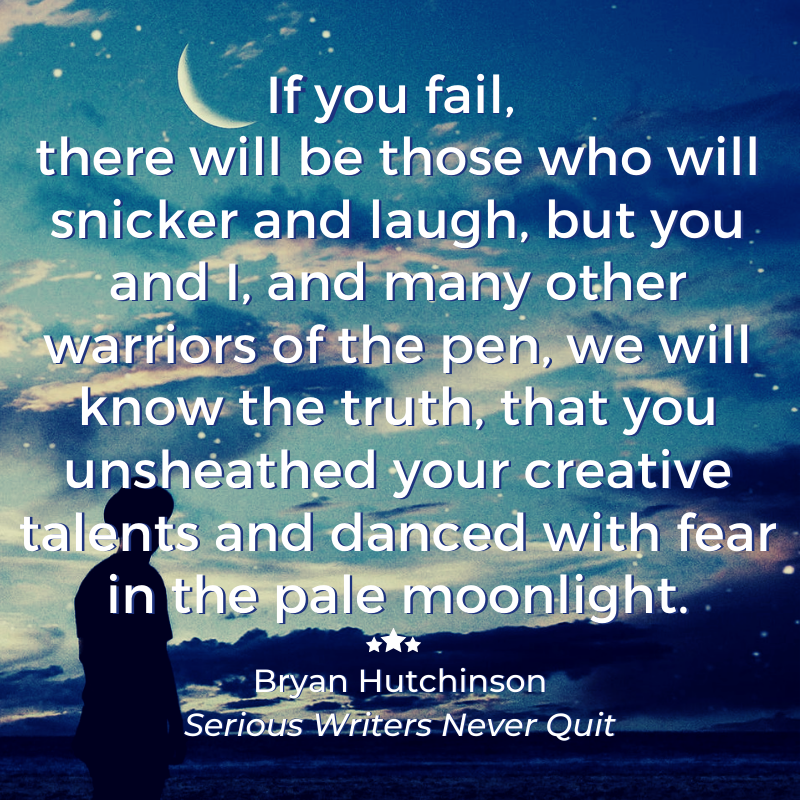
If you fail, there will be those who will snicker and laugh, but you and I, and many other warriors of the pen, we will know the truth, that you unsheathed your creative talents and danced with fear in the pale moonlight.

And you know what? Tomorrow’s efforts will benefit as you write more and more, practicing your art. So, please, whatever you do, don’t quit.

Serious Writers Never Quit

“‘This might not work’ is either a curse, something that you labor under, or it’s a blessing, a chance to fly and do work you never thought possible.” ―Seth Godin

Are Marvel Movies Art? (There’s no easy way to say this…)

Are Marvel Movies Art? (There’s no easy way to say this…)

written by Bryan Hutchinson

One of my favorite movies is The Color of Money directed by Martin Scorsese. In fact, the movie had such an influence on me that I shared what I learned from it in my latest book. (There are many life lessons in The Color of Money, especially for writers and artists, so I hope you watch it.)

Another movie I love is Bram Stoker’s Dracula directed by Francis Ford Coppola. Not as many lessons in this one, with the exception of the most common horror movie trope of all time, don’t do that, which is whatever you see the character doing on the screen that’s obviously going to get themselves killed or worse (yes, Dracula, so clearly there is worse).

Both Coppola and Scorsese have done so much for cinema

But something they stated recently really caught me, as a voracious movie viewer, off guard and took me somewhat aback.

Scorsese said that Marvel movies are not cinema and Coppola followed that up by saying they’re despicable.

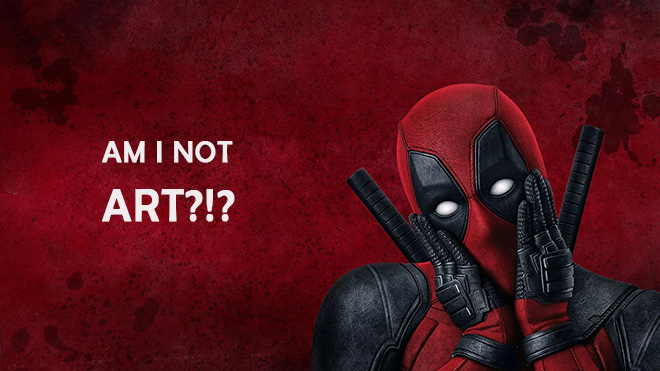
Sorry, what the holy-hell is that all about? (That’s my inner Deadpool asking.)

I mean, these guys have the right to say whatever they want, they’re movie gods for Star-Lord’s sake. So wait, what?

As much as I admire these wonderful directors, from what I’ve been reading online their comments are being seen as sour grapes. I don’t think that’s entirely fair, though.

I think they more likely mean that they consider Marvel movies to be commodities, made expressly for the purpose of making money, not for the purpose of creating art or furthering an art form or film genre as it were in classic cinematic films, such as what they created.

However, with that said, as many see it, if it wasn’t for Marvel the box office would be dying, if not dead. If you want to kill movie theaters the one thing that could be done to accomplish this goal would be to get rid of superhero movies.

Moviegoers used to love silent movies, then we loved cowboys and Indians, then it was gangsters, musicals, animation, and, oh my, horror, and where do we put Pixar? But now we love Marvel superheroes, too.

Life and film are ever-changing.

I grew up reading Stephen King and IT was one of my favorite books. I can’t tell you what a delight it was for me to see the new IT movies part 1 and 2 succeed the way they did, it was like watching my favorite team hit multiple home runs.

It wasn’t a Marvel movie, but I honestly couldn’t tell the difference in that IT has superheroes and a supervillain, just as every Marvel movie does. (Common, those kids took out Pennywise! That’s some superhero stuff right there, even if they couldn’t fly or shoot lasers out of their eyes.)

I also grew up reading Marvel comics and Spider-man was my favorite in that category of entertainment, so in 2002 when Tobey Maguire put on the suit, I went to see it and it was like a dream come true. I watched that movie a dozen times and I love the latest one, too.

I love Marvel movies, but not everyone will and some will insult and condemn them, even people I admire will do this, but I’ll tell you this, if you take away our current era of heroes and villains, the cinema complexes will die a painful and terrible death.

My living room is in many ways a thousand times better than any movie theater.

My large 4k screen and surround sound system look and sound perfectly fine compared to anything in the theaters when it comes to romance, drama, crime, comedy and other less special-effects driven cinema.

When I want to watch a “Theme Park” movie, as Scorsese calls Marvel movies, I’ve got to get out of the house. Marvel’s Avengers, DC’s Superman, or even WB’s Harry Potter for that matter, for those, I want to be dazzled in the most sophisticated IMAX theater I can find.

Marvel movies are what?

Cinema, by its very definition, is art, so when someone says Marvel movies are not cinema, what they’re really saying is that they are not art.

Wrong!

Marvel movies are works of art just as the comic book art on which they are based. They are a new type of movie-going experience that appeals to an entire generation of fans who grew up reading the stories and connecting with the characters, heroes and anti-heroes.

Maybe I’m missing the point, but I don’t think so, and I’ll tell you why.

Art of any kind, cinema, comics, novels, music, paintings―you name it, are all subjective.

The irony is that Scorsese’s latest movie, The Irishman, is a Netflix movie and I can’t wait to see it (at home). This kind of movie might not be doing all that well in cinema complexes anymore, but it’s still great art.

Besides, let’s not ignore the elephant in the room, why make such comments AFTER Stan Lee’s death? This makes it worse because the timing makes this faux ruckus seem somewhat, if not completely, cowardly.

Marvel is in great company with Vincent van Gogh

Van Gogh produced over 900 paintings during his all too short lifetime, but he only sold one, Red Vineyard at Arles. His work was shunned, described as being too dark and lacking the bright liveliness seen in Impressionist paintings. In other words, not art in the eyes of the established artists and art critics of the time.

Before Van Gogh, Impressionist art was considered a joke. Until it wasn’t.

What can we learn as writers from this?

  • Challenging the status quo can cause those entrenched in the current system to speak out against your efforts, especially if you’re successful. Remember how hard publishers fought the Amazon Kindle and then eventually embraced it?
  • Not everyone will love your work, no matter how many readers or listeners you have.  In fact, the more readers you gain will most likely cause even more disturbance and pushback.
  • Your writing matters, it’s not dependent on any big names loving it or endorsing it, but if they trash it, well, then you know you’re on to something because they noticed it enough to remark on it.
  • If you find nuggets of truth in the criticism you receive, learn and improve, and keep moving forward. No one’s perfect. This is why I recommend for all artists to read their reviews, the good, the bad and the ugly.
  • Don’t quit. No, please don’t do that. I can guarantee you Marvel isn’t going to and neither should you. (For more on not quitting, go here.)

Keep writing and making your art.

Serious Writers Never Quit

How To Prevail As A Writer

How To Prevail As A Writer

written by Bryan Hutchinson

I quit writing for more than a decade. During that time I went and did something else. No matter how good I got at that something else, I always regretted not doing what I really wanted to be doing.

What caused me to quit can cause anyone to quit, even the most talented amongst us.

It was fear. Specifically, the fear that I wasn’t good enough.

The fear of not being good enough is real. In fact, you’re feeling it right now, and so am I.

Will people laugh at my work? Will they tear down my best efforts and tear me down in the process? Will they spot all of my mistakes and realize how much of an idiot I am?

But let me ask you this question:

Will you ever truly be good enough―good enough for yourself?

It’s unlikely.

And that’s why you’re remarkable.

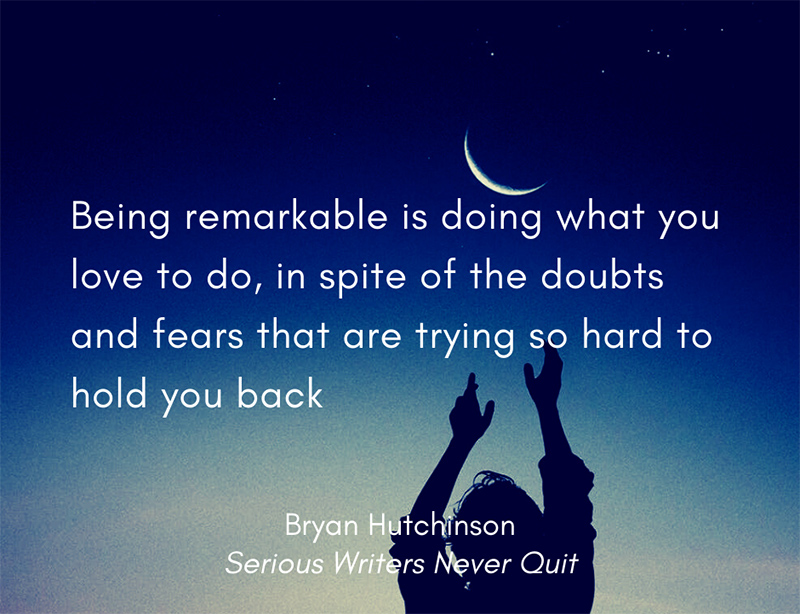
Being remarkable is doing what you love to do, in spite of the doubts and fears that are trying so hard to hold you back.

Being remarkable is doing what you love to do, in spite of the doubts and fears that are trying so hard to hold you back. Click To Tweet

They say that those who have done great things had great courage, and that’s true.

You can’t be courageous if you’re not afraid. Courage is facing your fear of doing something and doing it anyway.

Fear can cause us to quit doing what we love. When it succeeds we regret it because there will always be a longing within us, an absence of fulfillment. So, don’t quit.

Prevail instead. Because you can.

If you want to prevail over your fears you have to:

  1. Admit you have them
  2. Accept them
  3. Get down and serious
  4. Stay focused on the results you want
  5. Keep writing and keep moving forward

These steps take courage.

As long as you are alive fear of being good enough will be with you, but it doesn’t have to stop you from doing what you love and creating what matters to you.

Use fear to your advantage.

Think of it this way, the more fear you feel about something, the more doing that something means to you. Keep doing it. Focus even more on your writing.

Creating work that matters isn’t about taking the easy way. It’s about taking the hard way. It’s about not quitting and having no regrets, even if you fail to make the bestseller lists (this time or the next).

Because doing what we love isn’t about sales. It’s about living our calling and loving ourselves, and when fear tries to stop us, we look it in the eyes and say, “You won’t stop me, not today―not any day!”

And by doing this, we get dead serious and gain a laser-like focus and determination that cannot be created in any other way other than from facing our fears.

Call it the gift of fear. This is how you will prevail, by realizing fear is a gift and using it to do what you love to do, better, with more focus and determination than you could have ever mustered without it.

You are good enough! You will prevail. You’re a serious writer.

Serious Writers Never Quit

Don’t Quit. Your Writing Matters (Please Read This!)

Don’t Quit. Your Writing Matters (Please Read This!)

written by Bryan Hutchinson

You could write a great book and yet have no one ever buy it or much less, read it.

Another person could write a mediocre book and it ends up flying off of the shelves.

Which is which, is often subjective. But either way, it’s likely both authors put a lot of time and effort into their work. Both had to overcome their fears and their naysayers to take the leap and publish.

What You’re Doing Is Valuable

Just because something doesn’t seem all that great doesn’t mean a lot of work wasn’t put into it. Just because something seems simple doesn’t mean it wasn’t a challenge to create. The same goes for something that seems brilliant―it doesn’t mean the author wasn’t afraid it was total crap and would be laughed at.

Not everything we create will be a NYT’s bestseller or the next blockbuster of the summer. That doesn’t mean it’s not good. It doesn’t mean you didn’t work your ass off to create it. Sometimes it’s a timing thing, sometimes it’s not as good as you hoped it would be, and sometimes the work you do now is just practice for the better work you’re going to do later. And you know what? That’s okay. It’s still important.

I say a lot in my new book Serious Writers Never Quit and I hope the ultimate message you get from it is that what you’re doing is valuable. It means something. Even if you never read the book, I want you to know that. Don’t quit. Whatever you’re working on right now, whether it’s in contemplation or in actualization, is important.

Whatever you're working on right now, whether it's in contemplation or in actualization, is important. Click To Tweet

Everything is a process. Everything we do is about growth.

I hope what I created yesterday meant something and will stand the test of time. I hope what I create today is better than what I created yesterday. Just as I hope what I create tomorrow will mean something too. I hope everything I create means something to someone, somewhere.

We don’t always know if people will ‘get it’ before we create something. And you know what? Sometimes we won’t know afterward either. It doesn’t mean you didn’t create something valuable and it doesn’t mean you didn’t work hard. But with that said, I’ve worked hard on everything I’ve put out there. And with that said, some people still think I’m lazy and my work sucks (Hell, I’ve told myself that on more than an occasion, too).

I have no control over what other people think and, quite frankly, neither do you. We can only press on, whether people realize what we’re trying to do or not, or for that matter, how much sweat goes into it.

So please allow me to share something with you, just this morning a kind person named Will, sent me a message telling me how much my work keeps him going, no matter how much he’s wanted to give up.

Will, if you’re reading this, let me just say, back at you, my friend. Thank you.

Sometimes I’ve wanted to give up on this whole writing thing too. There are days, weeks, and even years, when the work can be all-consuming and there’s very little payoff. Sometimes people don’t realize what goes into your work. Sometimes others think what you do is effortless. And, more often than we’d like to admit, there are those who simply don’t care.

So, yes, sometimes it’s all a bit much, and I have to wonder, what am I doing it for?

And then, seemingly out of nowhere, just when I’m wondering if anyone really, truly cares, a message like Will’s comes along.

Every now and then we need to be reminded of what’s important.

Keep writing. Keep creating whatever it is you create. Never quit. You might not hear from them as often as you’d like, but there are those who truly care and appreciate you.

Your. Words. Matter.

Curl up in a blanket if you have to. Cry, if you have to. Hell, get a little drunk if you have to. But know this, when you’re done, it will be time to unsheathe your warrior’s pen and get back to creating that which only you can create!

Serious Writers Never Quit.

How To Make An Animated Book Cover That Rocks!

How To Make An Animated Book Cover That Rocks!

written by Bryan Hutchinson

I wanted to create something different―something special, a cover that tells a story in motion. You see animated images on social media all the time, so I thought why not create an animated cover for my new book? I didn’t realize it would cause such a ruckus. But hey, that’s what marketing is all about, getting people to take notice.

Here’s how I did it and you can, too!

Think about it, you work on your book for years, perhaps even decades, and yet you’re forced to do your best to sum up the entire story in one single, static image. Not anymore!

What if you could create a moving story on your book’s cover?

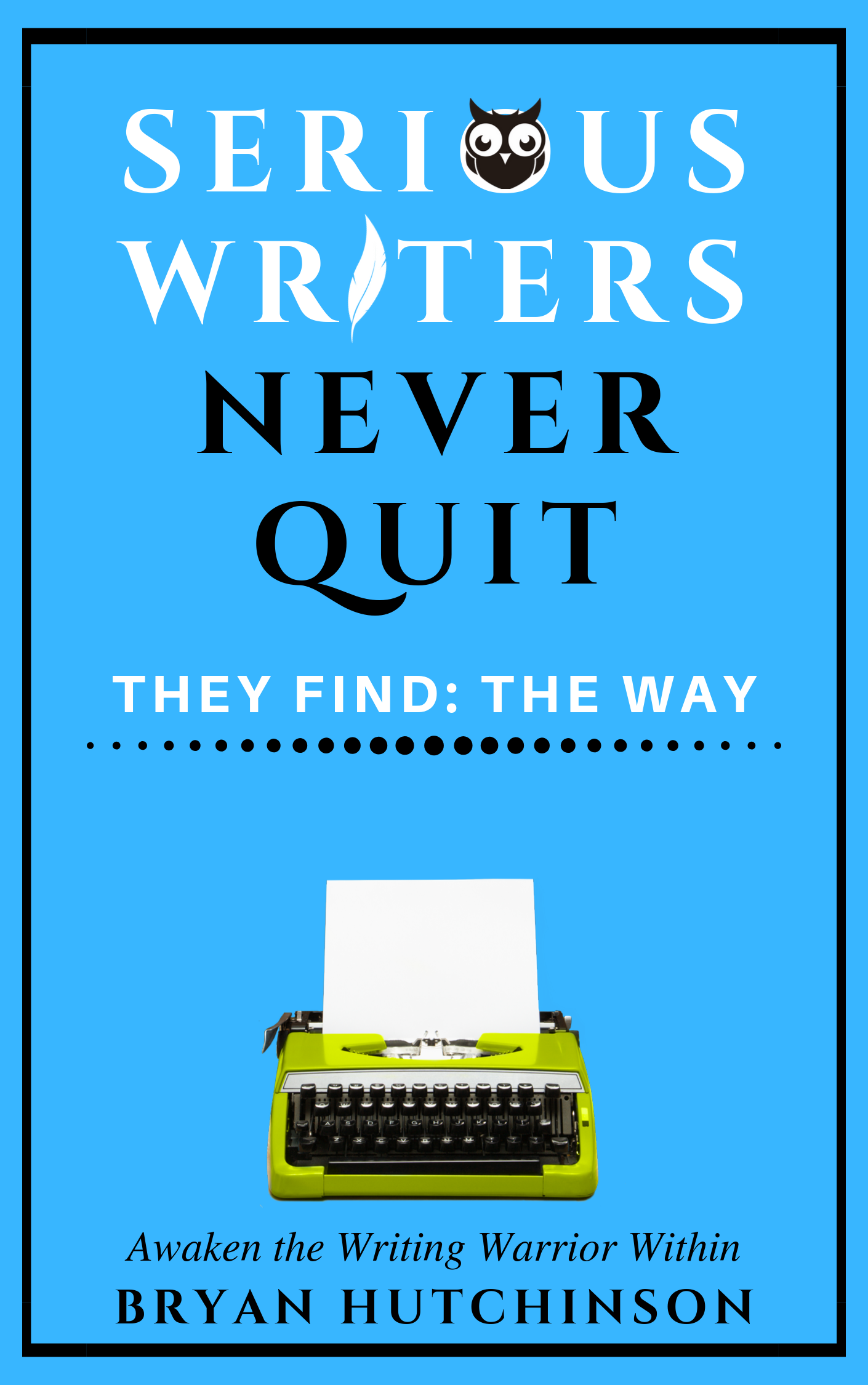
I did exactly that with my most recent book Serious Writers Never Quit, and since posting it on Facebook, and in my sidebar here on Positive Writer, I’ve received a tremendous amount of inquiries as to how I did it.

Before we get to the creation steps, here’s the result that’s causing all the ruckus:

(What’s also cool about this animated cover is that even though it’s in motion, it’s still possible to add a link to a sales page just as you would to a static image, such as a jpeg or png. Click on it to see it in action!)

Let’s Get To The Gif Of It

You see animated gifs all the time on social media, especially on Facebook. So why not make a book cover gif?

This isn’t exactly new, but almost all of the current gif book covers are gimmicky and do not take the time to tell a real story. You don’t want to create a forgettable gimmick if you can help it. I’ll explain what I did to try and avoid this problem.

First, it’s a good idea to understand how this works. A gif is basically several images on top of each other in one file that gives the perception of a single moving image. It’s like a flipbook.

In order to create an animated book cover, you’ll actually need about 5 to 10 individual covers. Don’t worry, though, it’s easier than it sounds.

The Design Steps

Usually, I hire a professional book cover designer, but for this experiment, I decided for my own sanity, and the sanity of whomever I would have hired, I should try this myself first.

1) Tell A Clear And Compelling Story

The story should be able to be told with as few images as necessary and should clearly visualize what the book is about with as little guesswork as possible on the viewer’s part. This is what separates the forgettable from the memorable.

The story I decided on is, well, what the book is about:

A writer becoming serious about (his or) her writing and in order to do that she must discover The Way to awaken the warrior within. Warriors have a mindset that drives them to achieve their goals. This book is about that mindset.

That’s a serious story and needed to be broken down into simple steps. I originally had 10 individual covers and finally got it down to 6.

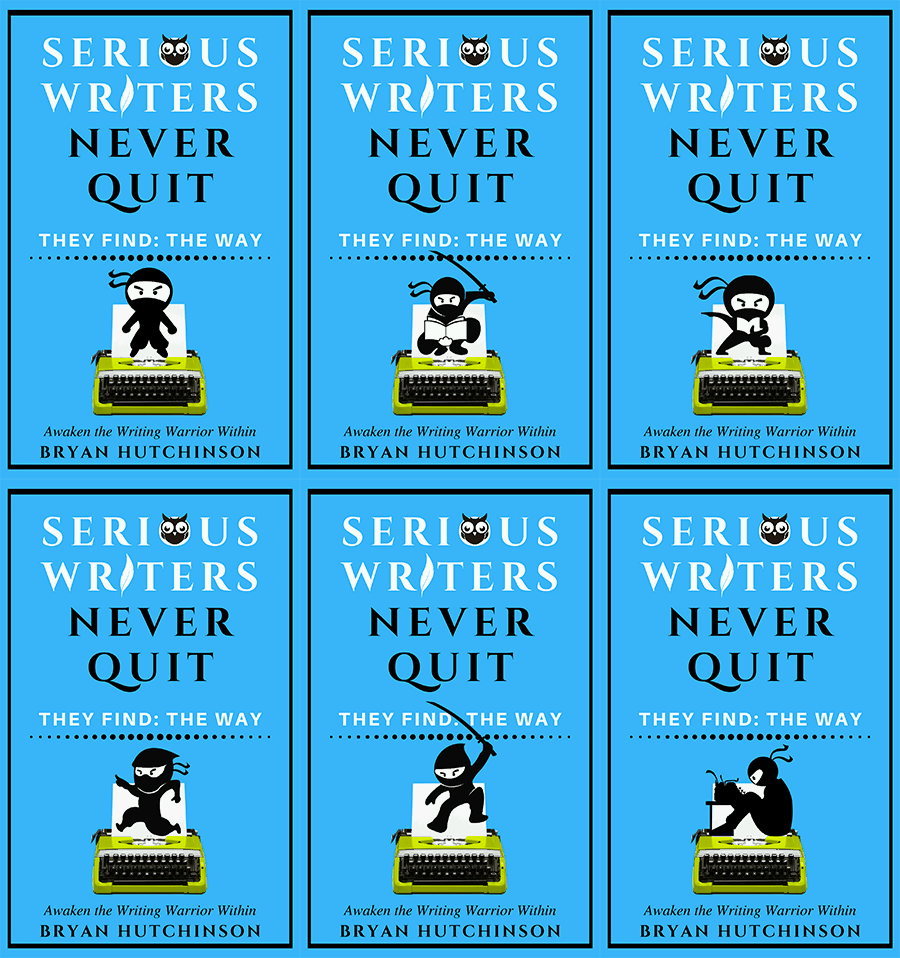
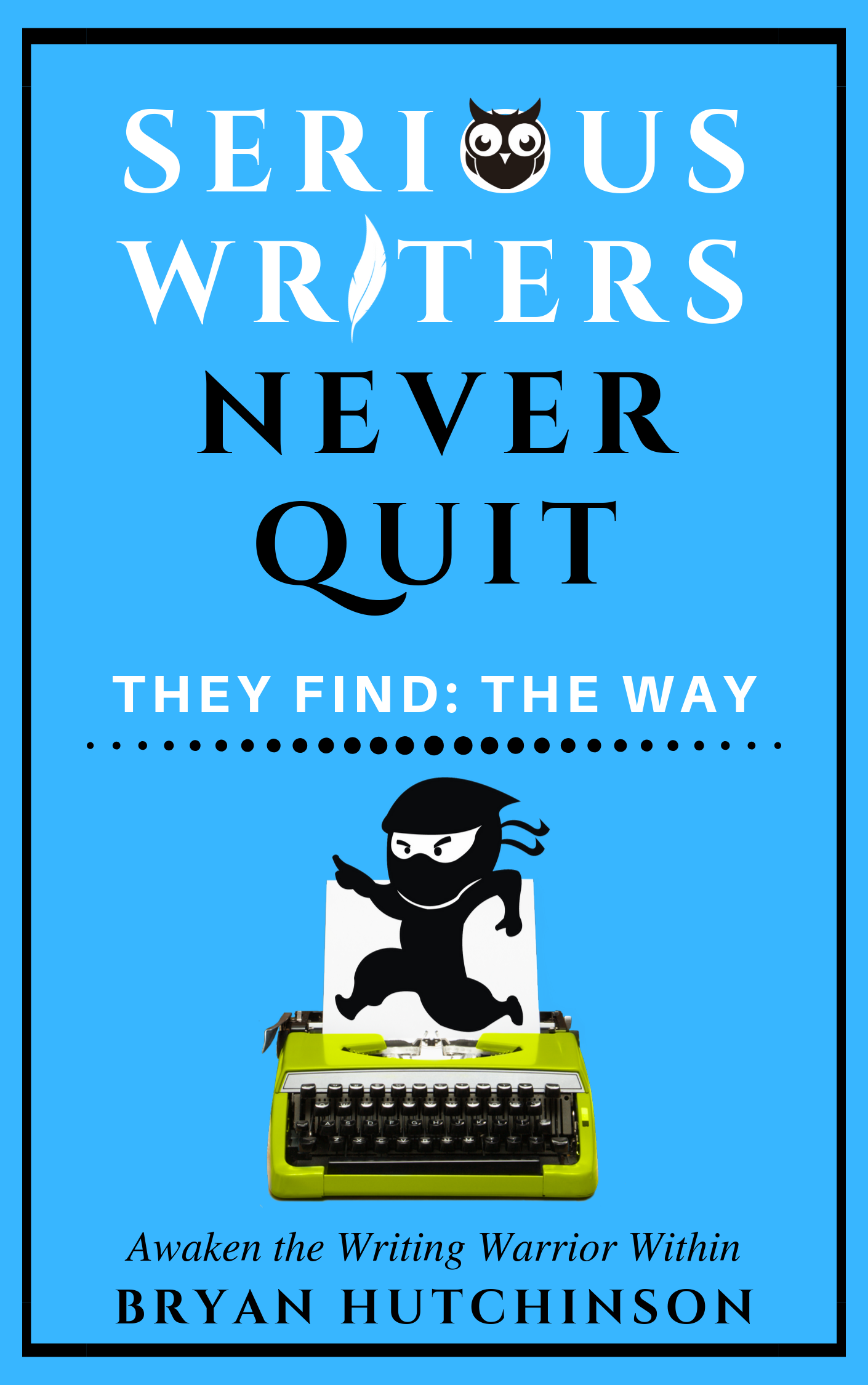
Cover 1. A writer ready to make the all-important mental shift all of us writers must eventually come to make: Quit or take our writing seriously!

(Click images to see larger versions.)

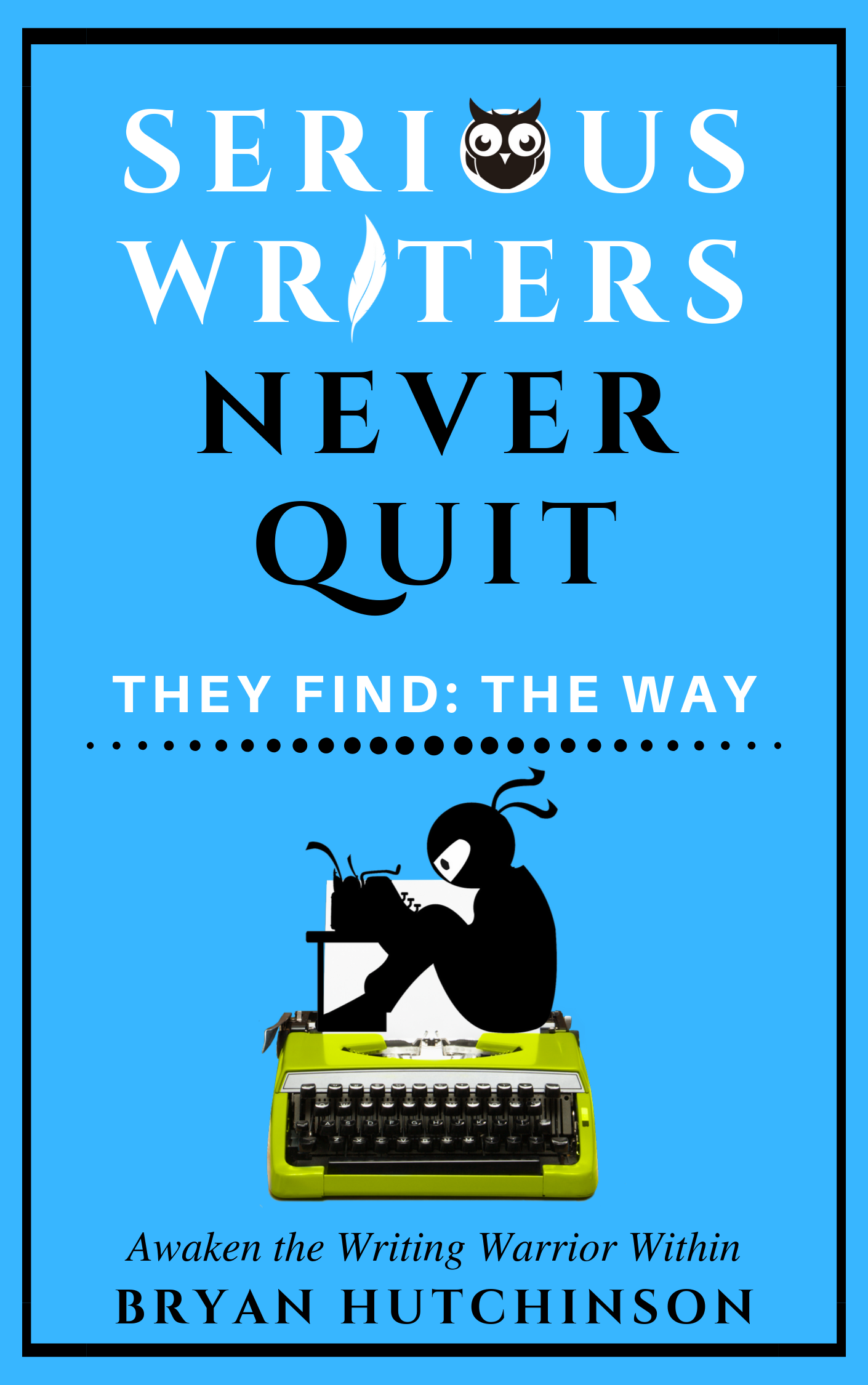
Cover 2. Again, like the rest of us, she’s not exactly sure how to go about it at first, so she finds a manual (ahem, Serious Writers Never Quit).

Cover 3. She finds The Way. (The Way isn’t too complex to learn for anyone, but what makes it scarce is that not everyone takes the time to learn what it is and how to use it. So those who do, they gain the edge and become more enthusiastic about their work.)

Cover 4. Now that she understands The Way, she chooses her new direction with great enthusiasm!

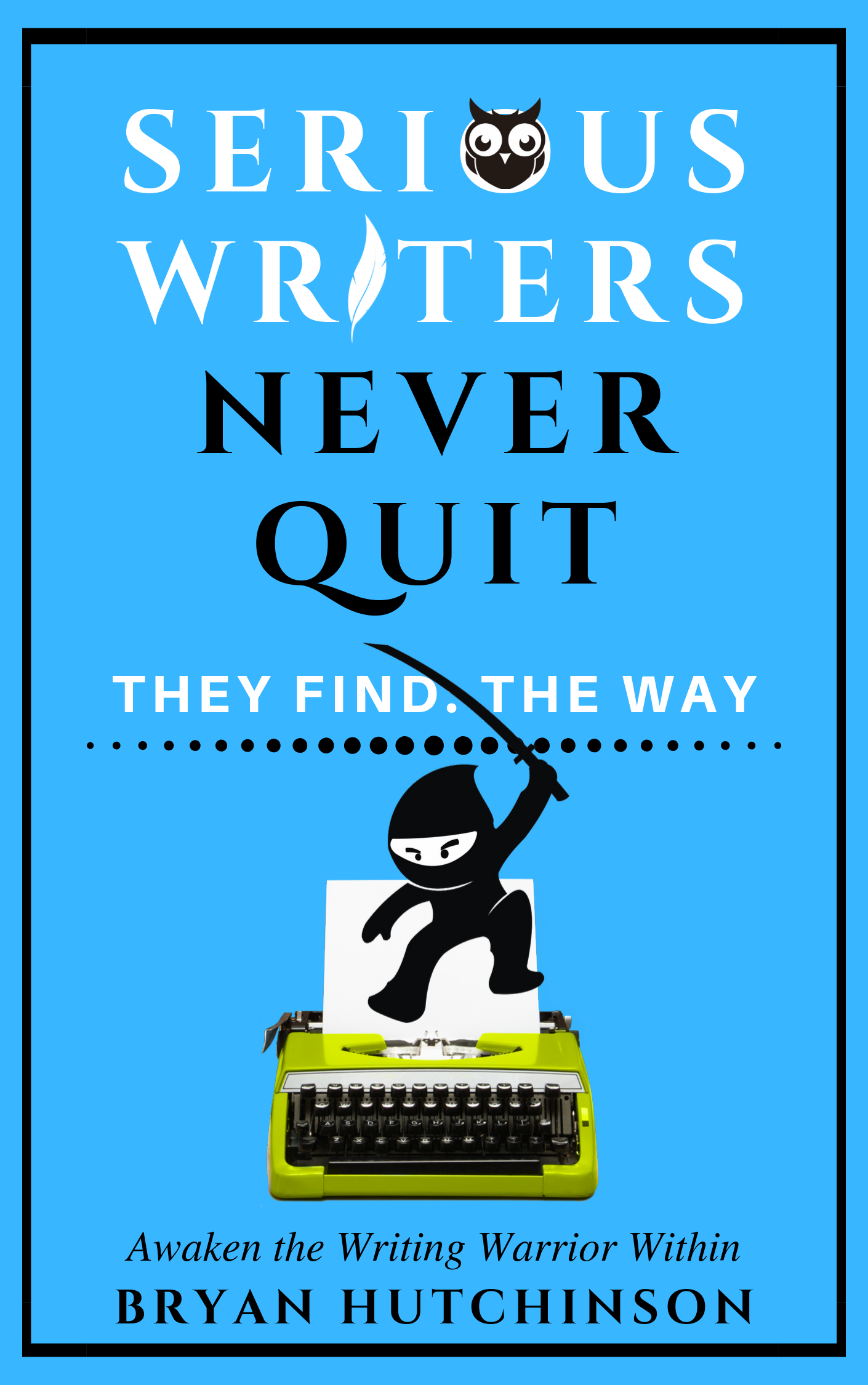
Cover 5. She’s getting very serious and will attack her writing with her newfound way of being a writer, an artist, and if I dare say, a person. She’s becoming a writing warrior and nothing and no one will stop her now!

Cover 6. She is now a serious writer, armed with The Way, who will never quit!

2) Keep It Simple

I figured if I am going to do this on my own I would need to keep it as simple as possible. Simple stories often work best. No one wants their brain fried. Better designers can get more complicated, but for a novice like me, simple was best.

3) Pick Images That Go Together, Preferably In A Series

The best option, I think, is to purchase from stock photo sites to ensure you have the licenses you need. This is an example of what I downloaded from depositphotos.com:

4) Choose The Design Tools

I used Canva.com. This design site is super easy to use and has great templates to start with. You can also easily import your own images. What I like about Canva is that I didn’t need to learn a lot because it’s straight forward and it’s not cluttered with adverts and other nonsense.

5) Create A Basic Template

If you look at the below cover, I used the same typewriter that is used in the logo for my website Positive Writer and is also used on the cover of my previous book Writer’s Doubt (did you already guess that?). Thus I have continuity between my website and my books. The text and other elements I created from within Canva.

The cover is minimalist. Indeed, it looks simple, but I assure you it cost me hours and hours of tweaking. The simpler something looks the harder it was to make. If you find you’re having a difficult time of it, don’t worry, it’s normal.

Canva has many basic designs you can start with; however, I recommend you customize, customize, customize or you’ll end up with something thousands of others are using too.

6) Create (Or Choose) The Main Book Cover

Even though we are creating an animated book cover, you will still need a main static book cover for any site that does not yet allow animated book covers. Also, if you’re going to make a print copy you’ll need a static cover.

One of the cool things about any of the static images for Serious Writers Never Quit is that any one of them could serve as the main cover!

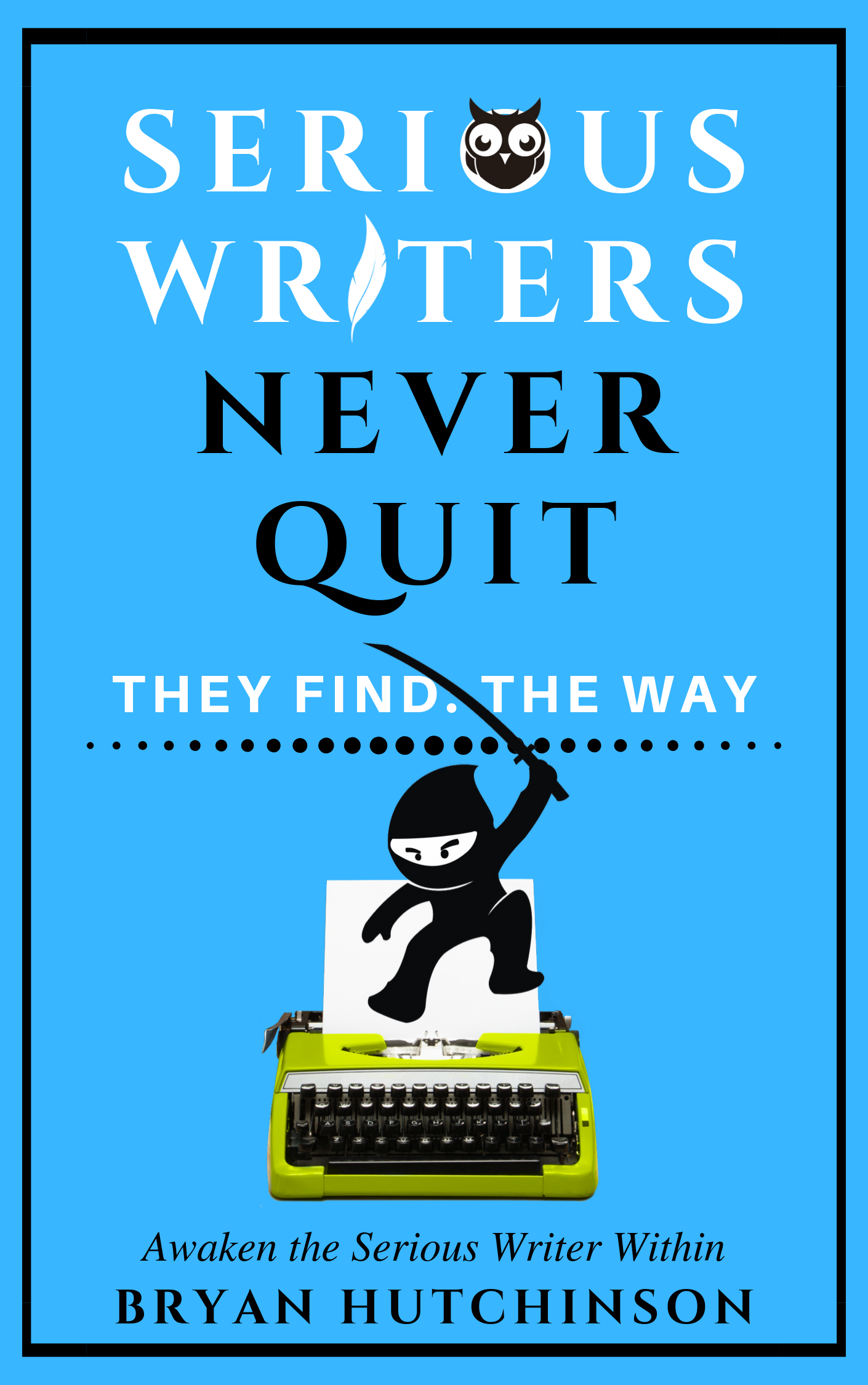
Here’s the one I chose to use on Amazon as the main cover:

7) Use A Software Program To Create A Gif

Once you have your design ready, download each individual cover and load them into a gif creation software program. Does it sound too easy? It really is that easy.

I used SSuit Gif Animator. It’s a free software program and you can download it here. SSuit Gif Animator is extremely easy to use and allows you to customize the timing between images as well, it will even resize the gif as per your needs. One recommendation I make is that you number your covers in the order you want them to be in the animation. Then load them into the software and click create, the gif animator will do the rest!

There are also several websites that specialize in creating animated gifs for you for free. However, a word of warning, some of those websites put their logo on it. I recommend creating using stand-alone software.

10) Upload It To Social Media And Your Website

Once your book is published and you’re ready to share the animated book cover, upload it to your favorite social media websites and post it on your author/book website.

The MYTHs

Don’t let any myths stop you!

There’s a myth that you should only have one book cover. And another myth that if you have multiple covers for the same book it will hurt sales. But these are simply not true!

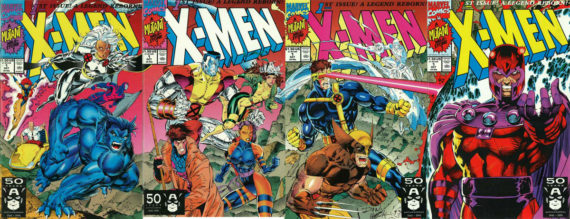
Look at what Marvel did by creating several different covers for X-Men #1 (1991) below:

X-Men #1, with multiple covers for the same issue, is in The Guinness Book of World Records for best selling comic book of all time! So, there’s that!

Or, look at studios that create several different posters for the same movie.

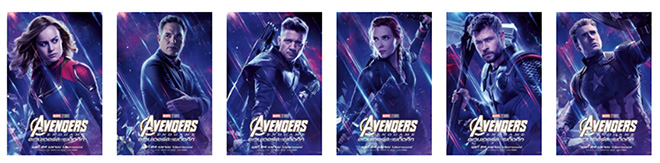
OOPS! Marvel did it again! With what now is the #1 Box office hit of all time, Avengers Endgame!

That’s It!

With a bit of luck, and hopefully a compelling design, your animated book image might even go viral!

Viral or not, it’s still a cool and fun marketing strategy. It’s cost-effective too. Aside from the images I purchased, the rest was free. If you hire someone to do this for you, it could cost hundreds, even thousands, so consider costs if you want to have a professional create it. I highly recommend trying it yourself first. Canva really is that easy. After all, I am by no means a designer!

If you find yourself getting good at creating your own covers and you’ve self-published, go ahead and get even more creative and design separate covers for holidays and other occasions, if you like. There are so many options.

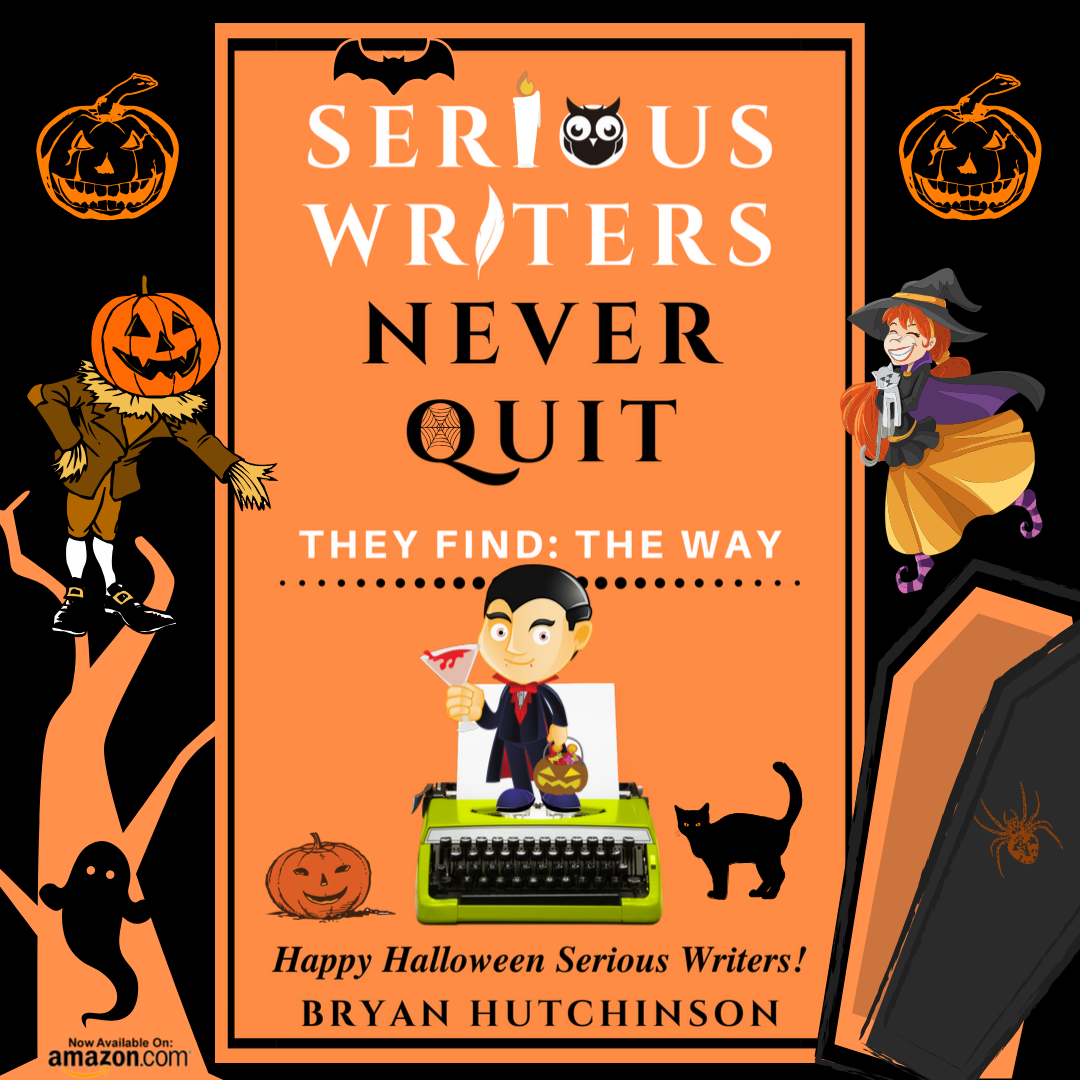
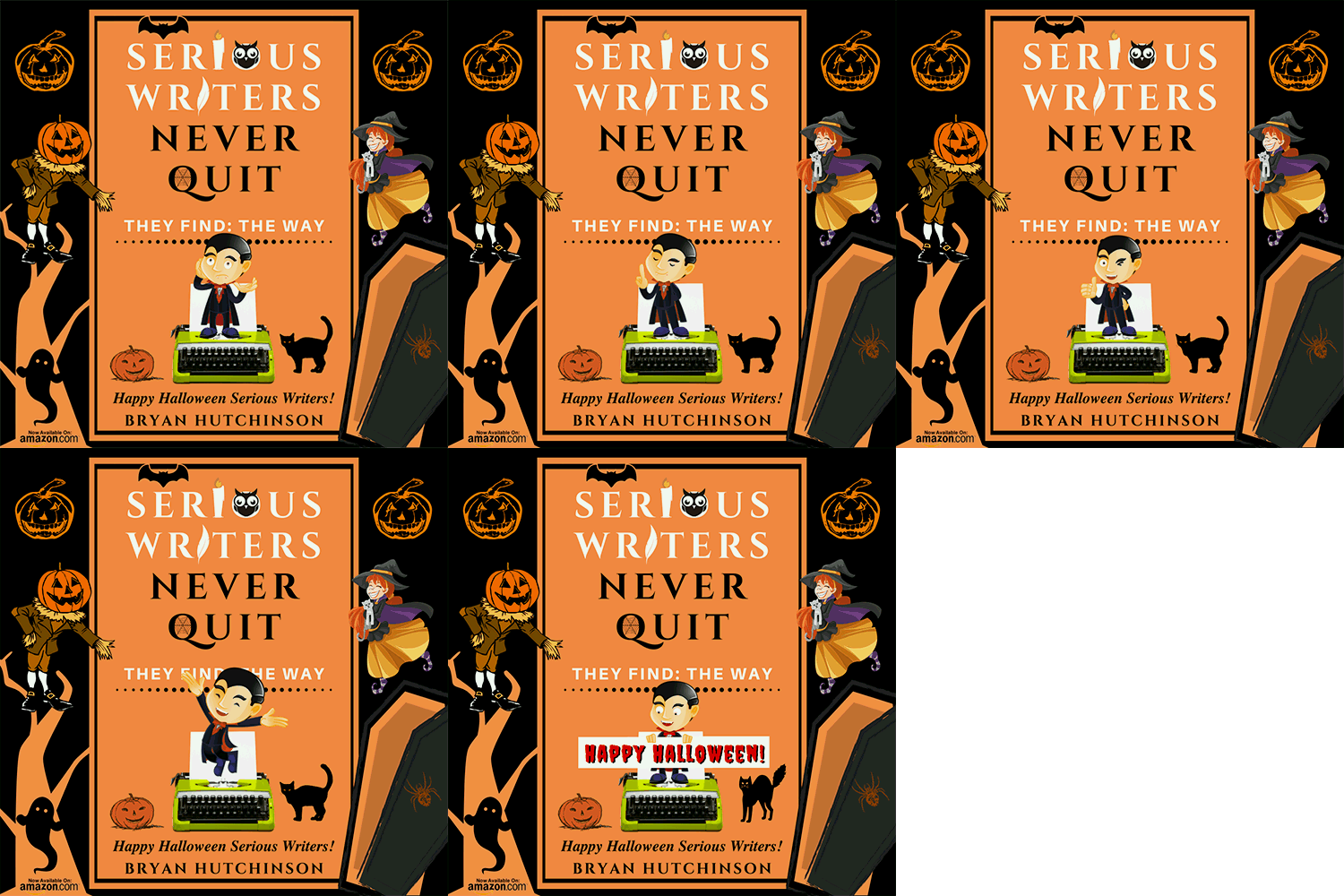
Since it’s almost Halloween, here’s a poster I created for the season:

(Click to enlarge)

And, of course, we have an animated version for Halloween as well. I can’t stop watching it because the cat totally cracks me up (every now and then I have a fun idea)! I’m already thinking up things I can do with the Christmas version.

There you go! Now go and create your own animated book cover.

If you do create your own animated cover, feel free to leave a link to it in the comments. I’d love to see it.
Chance To Win

If you haven’t read Serious Writers Never Quit yet, here’s the link to it on Amazon. Once you read it, consider reviewing it and enter a drawing I set up where you can win an Amazon Gift Card and/or an Amazon Fire Tablet!

Click here for how to enter the drawing.

Good Luck and Happy Reading!

I Want To Send My Readers To Your Blog: Get The Attention Your Writing Deserves! (Here’s How)

I Want To Send My Readers To Your Blog: Get The Attention Your Writing Deserves! (Here’s How)

written by Bryan Hutchinson

Here’s what I’d like to do, I would like to send my readers (over 200,000 monthly) to bloggers who have read and posted a review of my new book, Serious Writers Never Quit, to their blog. And, I’ll also enter those same bloggers into a giveaway drawing.

If you read it and post a review to your blog, I’ll include a link to your review in a future newsletter! Furthermore, I’ll post a link to your review in an upcoming compilation post as well (the valuable backlink every blogger needs).

This gives you direct access to Positive Writer subscribers and hundreds of thousands of monthly readers! I’m also giving away an Amazon Gift Card and an Amazon Fire Tablet!

This is how it works:

1) Read Serious Writers Never Quit.

2) Post a review about it on your blog with a direct link to the book on Amazon.

3) Place the link to your review in the comments of this post below! This is important. Please do not send me your links via email. By posting your link in the comments not only can I find it, but our readers can find it too!

That’s it. Of course, I hope you love the book! An honest review is what is most important.

  • BONUS: All the blog reviews will be entered into a random drawing for a $50.00 Amazon Gift Card and An Amazon 7inch Fire Tablet.

The drawing will take place on November 31st. (Ext)

(*This particular contest is not for any reviews on Amazon. Please do not submit any reviews in the comments from Amazon for this contest as they will not be included. The reviews can only be from your blogs.*)

Click image for large cover:

I look forward to sending Positive Writer readers to your blog!

Serious Writers Never Quit: WIN an Amazon GIFT CARD and an Amazon Fire Tablet!

Serious Writers Never Quit: WIN an Amazon GIFT CARD and an Amazon Fire Tablet!

written by Bryan Hutchinson

I am excited to announce the release of the new book, Serious Writers Never Quit: They Find The Way!

**UPDATE!!** Serious Writers Never Quit became a #1 New Release on its first day! Thank you! 

There are many human factors that stop people from becoming the writers they know they could be if they’d just keep at it and not quit. If only they could just find the way to be free of all the crap that’s holding them back. Unfortunately, most people have no idea how, so they give up or they keep dreaming but never get where they want to go.

The good news is that anyone can learn The Way and finish their work.

It’s time to unsheathe your warrior’s pen to finish your heart’s work and this book will teach you how. Use the proven strategies in Serious Writers Never Quit to stay motivated and keep writing, even when it’s harder than ever expected.

Your stories need to be told and the world needs your voice, especially now. Click To Tweet

To that end…

I am offering a review contest

**!!** Because of a specific rule by Amazon I was recently made aware of, the original contest must be canceled. I apologize for the inconvenience. However, you can enter the blog review contest here. Prizes have been added to that contest.

Click here to get a copy of the book via Amazon.

Serious Writers Never Quit: They Find the Way! Awaken the Writing Warrior Inside of You.

Write Using These Simple And Powerful Strategies

Write Using These Simple And Powerful Strategies

written by Frank McKinley

Do you constantly talk yourself out of writing?

Last week I got the most disturbing message any writing group leader can get.

“Hey, Frank. I just wanted to let you know I’m leaving your group because I’ve decided to give up writing. Your group is not the problem. I love it. I just can’t do it anymore.”

My heart sank to my feet.

What happened to this person that made them want to give up writing altogether?

I didn’t have a chance to engage him since he’d clearly made up his mind. But still, it nagged at me. Why just give up?

Why did he believe he didn’t have what it takes?

The Killer of Creative Dreams

Self-doubt kills more dreams than anything under the sun.

You might say, “No, criticism is to blame. People carelessly toss negative, hateful comments at writers trying to find their way. The pain is so great, they quit writing to avoid it.”

What criticism really does is trigger the doubts you already feel.

Let’s be honest. Who hasn’t ever wondered if they were good enough? Who hasn’t thought their work sucks? Who hasn’t thought that maybe they made the wrong choice when they decided to take up writing?

Isn’t writing supposed to be fun?

It should be.

When you get an idea and you toss it around in your mind for awhile, you get excited. It’s like a snowball rolling downhill, gaining momentum. You grab a pen and paper so the idea doesn’t get away, lost in the 70,000 other thoughts you’ll have today.

Then you take a break to eat, work, or do laundry.

When you come back, a little bit of the luster is gone. How can you get it back?

Or worse, you tell one of your critical friends about your idea. Of course, they aren’t as excited as you are, but that’s okay. You tell them anyway. You have the fervor of an evangelist, and you won’t be silenced.

Then the criticism comes.

Why do I feel this good? I haven’t even tested this idea. Maybe she’s right. Maybe it won’t change the world. Maybe it’s not the next Harry Potter. Maybe I should just give up and start doing jigsaw puzzles for fun.

And on and on it goes.

Then your book dies on the vine. Your blog post doesn’t get written. You start doing safer, more acceptable things.

And your writing tastes about as good as lukewarm milk.

Self-Doubt: The Gift That Keeps on Giving

I can’t guarantee you’ll never second guess yourself.

You will.

What I can do is help you fight back when doubt assaults you.

Here are six strategies that will keep your pen moving no matter what your heart tells you.

If people complain, you’re making a difference

People don’t complain about things they don’t pay attention to.

When you get a negative comment, you convinced someone to read your work. Further, they were so captured by what you wrote that they had to write back.

That’s powerful.

More often than not, you’ll get nothing from 99% of your readers.

Be glad.

The next strategy will show you what to do with that critical comment.

When criticism comes, evaluate it and move on

The main thing you want to know is this:

Is there anything useful in this comment that will help me grow as a writer?

If so, see how you can apply it to the next piece you write.

If not, laugh it off and move on.

One remark doesn’t have to define you. Does one blog post sum up all that’s possible? One book? You’ve got more inside. Lots more.

Keep growing. Keep showing up. And don’t you ever, ever give up.

Your work won’t fit everywhere, but it will fit somewhere

Nobody sells to everyone.

I remember getting a pair of shoes from my father-in-law. They were nice shoes, fit to wear at any fancy occasion.

I squeezed my feet into them. I thought, “They’re only one size too small. Maybe I can make this work.”

I wore them to church, and that was the longest two hours of my life.

Don’t make your writing fit somewhere it doesn’t. You have an audience out there who are dying to read your words. Your writing will fit like a pair of shoes custom made for their feet.

Spend your time courting these people, and you can have whatever you want from your writing.

Schedule some rest

I’m going through Julia Cameron’s classic book The Artist’s Way with a small group.

In week 4, she urges us to do an exercise called Reading Deprivation.

What?

Writers have to read, right? If we don’t, they say our work will suck. And we can’t have that, can we?

Actually, we can.

Here’s why. When we bury ourselves in reading, whether it be books, the news, social media updates, or email, we surrender our creativity to other people’s agendas.

We need time alone with our thoughts. So sit at your desk and stare at the wall. Go for a walk and leave your phone behind. Do something random, like listen to country music when you’d rather listen to Jazz. Find some kids to play with and watch their sense of wonder unfold before you.

Planned disconnection will feed your creativity like nothing else.

Try it.

I think you’ll be pleasantly surprised at what happens.

Did you solve a problem?

One of the first things you learn in math class is that there is often more than one way to solve a problem.

For example:

  • 2 + 2 = 4
  • 1 + 3 = 4
  • 4 + 0 = 4

Don’t even get me started on fractions.

When you wrote that post or book, did you solve a problem or meet a need?

If you did, you win.

So does your reader, at least some of them.

It would be great if you could find the one answer that will suit everyone. The problem is, that answer doesn’t exist.

So quit worrying about it.

Do what you do best, and use it to serve your readers. The ones who benefit will love you and tell their friends.

The rest will gripe and go away.

And chances are, you’ll never hear from most of them.

It’s impossible to write anything perfectly

I can’t tell you how many bestsellers have typos.

I’m not saying you shouldn’t edit. Obviously, you should. I am saying you should decide just how much editing you’ll do.

Edit enough for your work to make an impact. If it’s effective, it’s as close to perfect as it ever needs to be.

Let’s face it. You can always say more and say it better. But you only have so much paper and so much time. You have to put food on the table and keep a roof over your head. Limit your time and aim high while you write.

Then ship it.

That’s the key that will unlock the floodgates of productivity for any writer.

Now go get ‘em, tiger!

Which of these techniques can you use this week to overcome your doubts?

Pick the one that scares you the most and do it.

Then come back here and tell me how it went.

Have questions? We’re here for you. Self-doubt doesn’t have to win. There are people out there waiting to hear what you have to say. Don’t deny them the benefit of your hard-won insights.

You’ve got this!

Newer Posts
Older Posts

writers doubt book on writing

"Bryan's book, "Writer's Doubt," Will dispel any writer's doubt! Highly Recommended!" — Warren Adler, author, "The War of the Roses".
.
Writer's Doubt is an Amazon Exclusive Release.  Please note, all links to Amazon on this site are affiliate links.

Are You A Writing Warrior? If Yes, Join Us Now!

Hello! I'm Bryan Hutchinson, you might know me as the author of the bestselling book, "Writer's Doubt." On Positive Writer I help writers and bloggers do what they were born to do: Write and get attention! I'd love to keep you up to date and share my best tips with you:

Like Positive Writer on Facebook

SuperWebTricks Loading...

Become A Better Writer

Ready to improve your writing and your life?

Join The Art of Positive Journaling!


“I’m a fan!” —Jeff Goins, author of Real Artists Don’t Starve


  • Facebook
  • Twitter
  • Google +
  • Pinterest
  • RSS

Copyright © Bryan Hutchinson


Back To Top