Positive Writer
  • Inspiration
  • Writer’s Doubt
  • Free eBook Good Enough
  • Contact
    • Guest Post Guidelines for Positive Writer
  • Resources
  • Archives
  • About
    • The Wee-Jees Book Launch Team
      • Picture Files for the Book The Wee-Jees
    • Privacy Policy
    • Free Book
  • Inspiration
  • Writer’s Doubt
  • Free eBook Good Enough
  • Contact
    • Guest Post Guidelines for Positive Writer
  • Resources
  • Archives
  • About
    • The Wee-Jees Book Launch Team
      • Picture Files for the Book The Wee-Jees
    • Privacy Policy
    • Free Book

Positive Writer

Author

Bryan Hutchinson

Bryan Hutchinson

Hey there, I'm Bryan, author of "Writer's Doubt." This is my blog on Positive Writing, where I share a few thoughts and ideas—enjoy!

Walking With Van Gogh: How Visiting Auvers-sur-Oise Can Inspire Your Own Creative Breakthrough

Walking With Van Gogh: How Visiting Auvers-sur-Oise Can Inspire Your Own Creative Breakthrough

written by Bryan Hutchinson

Walking With Van Gogh: How Visiting Auvers-sur-Oise Can Inspire Your Own Creative Breakthrough

There are places in the world that don’t just speak to you, they whisper, they echo, they hum with something deeper. Auvers-sur-Oise is one of those places.

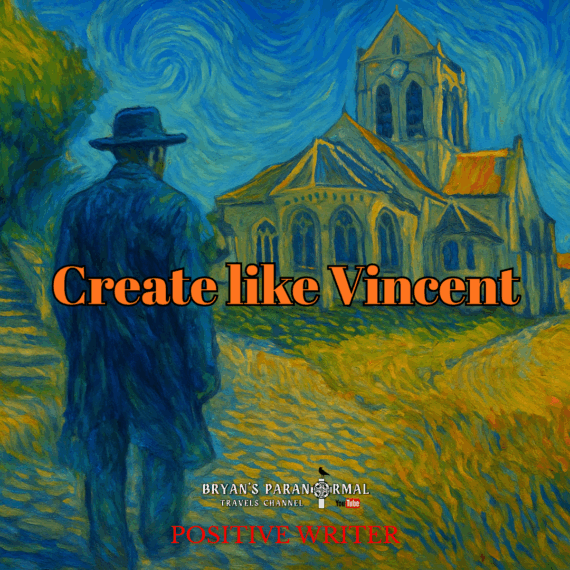
It’s where Vincent van Gogh spent his final days. But this isn’t just a village drenched in sorrow. It’s a living canvas. A place of motion, color, and stillness. And if you’re a writer, painter, or any kind of creator, it might just wake something up inside you.
Why Go? Because You Need to Feel It, Not Just Read It

You can study Van Gogh’s paintings in books or museums. You can even analyze his brushwork and letters. But until you walk the wheat fields, until you see the church with your own eyes, until the same breeze that once moved through his paintings brushes against your skin, you’re still at a distance.

Auvers-sur-Oise closes that distance. It invites you in. And it doesn’t matter if you’re an oil painter or a poet or someone scribbling ideas into your phone between meetings, the village speaks a universal language: create.

The Spirit of Vincent Is Still There (If You Let Yourself Feel It)

There’s a certain turn in the road, past the Auberge Ravoux, where the light shifts just enough to make you stop walking. It hits the fields in a way that makes the colors vibrate. You might pause to take a photo, but what you’ll really be doing is pausing to breathe.

Many who visit say they feel his presence. Some say they see it. And whether or not you believe in ghosts, there’s no denying that the energy of creation, of someone who gave everything he had to his art, still lingers in the air.

I felt it. And I know other creators will too. It’s like stepping into the tension between hope and despair, into the place where the work was made, and where it cost him everything.

Practical Tips to Soak It All In

This isn’t just a place to rush through with a camera. If you really want to draw inspiration from Auvers, treat it like a pilgrimage.

1. Stay in the village, not Paris.
Sure, you can daytrip from the city, but the real magic happens early in the morning or at dusk, when the tour groups are gone and the light gets low. The silence is part of the experience.

2. Walk his path with intention.
Start at the Auberge Ravoux, where Vincent lived and died. Then follow the route to the Church of Auvers (you’ll recognize it from his paintings), and finally out to the wheat fields and cemetery. Bring a notebook or sketchpad, even if you don’t plan to use it. You probably will.

3. Don’t just take photos. Take moments.
Notice the colors. The smell of the grass. The sounds of the birds. Try to slow down and absorb what you’re seeing. Then, let yourself respond to it later in whatever creative form you choose.

4. Visit Dr. Gachet’s house if you can.
It’s a little more hidden, but worth it. The doctor wasn’t just van Gogh’s caretaker; he was part of the emotional fabric of that time. The house has an atmosphere that feels like it’s holding memories.

5. Go alone if you can. Or be alone once you’re there.
Some places are better when shared. This isn’t one of them. Give yourself the gift of solitude and silence, and see what fills it.

6. Watch my video below and see how I did it. The paranormal might not be your artistic cup of tea, but I think it will give you ideas and inspire you nonetheless.

Let It Fuel Your Own Work

You don’t need to paint like Vincent. You don’t even need to write about him. What matters is letting the rawness and honesty of his story remind you why you create. Let it push you to go deeper. To be more vulnerable. To create even when you’re not sure anyone will care.

Auvers-sur-Oise isn’t just a historical site. It’s a reminder that our greatest art often comes from our most uncertain moments.

So walk his path. Feel his presence. And then, go home and make something only you could make.

You never know what that one trip might set in motion.

How I’m selling more books worldwide

By blending my love for exploring, storytelling, and the paranormal, I created a YouTube channel that brings all of it together. Even if the paranormal isn’t your thing, you have your own passions—and that’s the point. I want to inspire you to start a channel that shares your unique voice, not just to promote your books, but to connect with others through the stories only you can tell. That’s what I did, and not only am I loving the creative process more than ever, I’m also selling more books worldwide than I ever imagined. Watch my latest video from Auvers-sur-Oise, walk in Van Gogh’s footsteps with me, and see how this channel became something bigger than marketing. It became part of my creative life.

Now go, create something amazing!

If You Create and Publish Original Content on YouTube and Other Platforms, You Have Rights.

If You Create and Publish Original Content on YouTube and Other Platforms, You Have Rights.

written by Bryan Hutchinson

I’ve been asked to share my thoughts on paranormal reaction videos. This isn’t about calling anyone out, debating skepticism, or taking sides on paranormal claims. It’s about creator rights, based on my general observations and decades of experience protecting my own intellectual property.

For those who don’t know, I recently started a paranormal-travel vlog on YouTube. I combined my love of all things paranormal with my passion for travel, and there you have it!  Bryan’s Paranormal Travels


Disclaimer

Disclaimer: This is an opinion article and NOT legal advice. While efforts were made to ensure accuracy, no guarantee is given. This content may not be cited as legal guidance. Laws vary by jurisdiction and must be verified independently. Readers are responsible for their actions and for checking applicable laws. By continuing, you agree to these terms. Always consult a qualified attorney. If something is factually incorrect, I’ll correct it if it is supported by legal citations.


The Main Issue

The main issue I have with many paranormal reaction creators is their use of others’ work without permission. As an author, I’ve had my share of criticism, and that’s fair. But IP misuse is another matter.


First, Fair Use

First, fair use. It’s not pre-approved. It’s a LEGAL DEFENSE in U.S. courts that may allow limited use of copyrighted material if a judge agrees. “Everyone does it” isn’t a defense (remember Napster), and simply pausing to add commentary, or flipping/cropping, doesn’t automatically make a work transformative or educational. (See: U.S. Copyright Office / Fair Use.)


Defamation Risks

What sets many paranormal reaction creators apart is that they often call paranormal content creators fakers, liars, or scammers. Any kind of public accusation is legally risky, but these specific terms are recognized in defamation law as carrying especially high risk because of their potential for serious reputational harm.

Courts, including the U.S. Supreme Court in 497 U.S. 1, have ruled that publicly calling someone a liar or similar merely for disbelieving them, even just as an opinion, can be actionable as defamation.

There is no ‘public duty’ exception for private individuals who make public accusations. On the contrary, projecting false authority through a self-appointed role that has no official capacity could affect liability. Unlike hearsay cases, reaction videos provide replayable evidence. And, labels like parody don’t provide immunity either, especially when statements imply fact.


Likeness and Privacy Risks

One of the most underestimated legal risks is using someone’s likeness: name, image, voice, or other personal information in reaction videos (or any video) without consent, even thumbnails. In the U.S., likeness is protected under privacy and publicity laws, which fair use doesn’t cover. Publicly accessible online does NOT mean it’s free to use or in the public domain. That’s why smart creators use licensed content or obtain signed releases. Even famous people are not fair game. Some of the largest statutory damage awards have gone to them. Did you know likeness can even be implied? In White v. Samsung, White won $400k+ because a robot evoked her identity. In Waits v. Frito‑Lay, Waits won $2.5M for its use of a sound‑alike voice. (Legal media of people is typically licensed from Getty, other agencies, or directly from the individuals.)

U.S. fair use offers no protection for defamation, privacy, publicity, harassment, or other non-copyright claims. This is why IP holders often bring multiple claims in a lawsuit.


UK and EU Notes

Note: In the UK or EU, likeness is protected under privacy and data protection laws, especially if the use is misleading, harmful, or commercial. The EU goes even further. Always verify your local laws.

Privacy complaints are often filed with platforms first, and lawsuits can follow.


Why This Matters

This all matters because original creators invest significant time, energy, and resources into their work. When that work is misused, it can harm reputation, damage partnerships, impact sponsorships, and even affect employment opportunities. Creators are not just making videos. They’re building brands. Unauthorized use can devalue or interfere with licensing opportunities. I experienced this when one of my IPs was blocked due to unauthorized use.

The thing is, criticism does not require unauthorized use. Thousands legally post critical reviews daily.


If You Believe Your Rights Were Violated

Not all reaction videos are malicious, but if you genuinely believe your rights were violated or no copyright exception applies, and you want it removed, consider:

• It’s a legal process, so avoid responding with anger, insults, threats, or any kind of public retaliation.

• Send a polite takedown request to the reactor. Refusing to remove infringing content after being clearly notified may contribute to a finding of willful infringement, which can increase potential statutory damages.

• Document everything: videos, URLs, thumbnails, and any use of terms like “faker,” “liar,” or “scammer.” Save follow-ups, as they might show willful intent.

• Screenshot comments: They could end up as valuable evidence of reputational and market harm.

• Report infringement to platforms for removal. Under Safe Harbor provisions, platforms must remove infringing content after receiving a valid takedown notice to maintain their immunity. Safe Harbor protection applies ONLY to the platform, NOT to the person who uploaded the content. If you receive an automated fair use reply from YouTube, you may need to email the full explanation to: Copyright@youtube.com

But before you do that, know your rights. The more detailed and informed your request is, the more likely it will be honored.


Fair Use: The 4 Key Factors

FAIR USE is evaluated in court using 4 KEY FACTORS. A best practice approach in removal requests to platforms is to explain how these factors apply to the case. Here are examples of how they may affect para-content:

1 Purpose and Character of the Use:

Many para-reaction creators focus on discrediting, but in a legal context, discrediting is not the same as criticizing. Calling someone or implying that they are a liar, faker, or scammer goes beyond mere commentary on copyrighted work and becomes a personal attack on the creator’s credibility and identity. Such attacks on the creator, directly or indirectly, are generally not protected by fair use and may undermine or nullify a fair use defense. Thumbnails stamped with “Fake,” etc., tend to give away intent.

2 Nature of the Original Work:

Videos capturing alleged paranormal events often involve rare, spontaneous moments in distinctive settings, recorded in creative and original ways. This type of content may be less likely to qualify for fair use, especially when key moments, the heart of the work, are reused.

3 Amount and Substantiality Used:

Para-reaction videos often take the key scenes involving alleged paranormal activity. Even the briefest use of these key moments weighs against a fair use defense, as they represent the heart of the video and are highly protected under copyright law. In the landmark fair use case Harper & Row v. Nation Ent., the U.S. Supreme Court ruled that copying even a small portion can be infringing if it includes the most valuable parts, the heart of the work. That established an important legal standard for fair use. Alleged paranormal activity often forms the heart of videos involving paranormal content because it is the “holy grail” of this type of content. Reaction creators have no legal authority to decide what the heart of someone else’s work is. And platforms can’t know the heart UNLESS informed by the original creator.

4 Effect on the Market:

Use that harms viewership, damages reputation, or poisons audience perception is market harm. Viewer comments and sudden spikes in dislikes can be key evidence.


Jurisdiction Matters

IMPORTANT: Fair use is a legal defense ONLY under U.S. law in U.S. jurisdiction. It’s best practice to state locations in removal requests to platforms, whether the original content was uploaded outside the U.S. or if the reactor is based outside the U.S. Platforms consider jurisdiction when clearly stated. Otherwise, they often default to U.S. law. They can verify locations. If legal action is pursued in the reaction creator’s country, for example, in the UK, stricter copyright laws apply. The fair dealing provision under UK copyright law offers far less protection. To date, I have not found any UK court that has upheld fair dealing as a defense for reaction-style use. In Tixdaq Ltd v. BT, the High Court rejected a fair dealing claim for just eight seconds of footage, showing how narrow the UK standard is. In the UK, fair dealing is intended to cover critique of the work, not attacks on its creator. Across Europe, the InfoSoc Directive imposes strict limits, and so on. YouTube is a global platform, so rights holders with standing may file suit in the infringer’s country if they choose.


Reporting Effectively

Just because content isn’t removed doesn’t mean it’s legal. Platforms are not courts. But it’s important to understand that platforms rely on rights holders for what happened, so be confident, clear, and factual in your reporting. It’s not enough to click the report button and type, “copyright infringement.” Explain: How was the work used? Why is it not fair use? Does it contain the heart? What’s the context? What’s the jurisdiction? The more specific, the better. Also, I’d be cautious about taking legal advice from anyone whose own unauthorized use of other people’s content might be in dispute.


Final Thoughts

I know how upsetting it is to see your content or likeness misused. But you are not legally powerless. From what I’ve seen, many disputes fail because the original creator didn’t understand the laws involved, or how to report infringement or privacy issues properly, and/or how to respond effectively to rebuttals. As someone who instructs up-and-coming authors, I always stress the importance of learning your rights. And consider getting legal insurance because IP protection never stops.

Please don’t just take my word for any of this. Consult a qualified attorney. Statutes of limitations for copyright are usually up to 3 years, in some cases, even up to 6 in the U.K. Defamation is usually less. Always check.

~Bryan

An Editor’s Guide to Why You Don’t Suck

An Editor’s Guide to Why You Don’t Suck

written by Bryan Hutchinson

Writing is hard. Revising is hard too—in fact, often, it’s even harder. And both are so much more difficult and challenging than you ever imagine the first time you sit down to write a novel, or a short story, or a memoir. As you work and work and work in pursuit of perfection, and as you deal with feedback from beta readers and book editors like me, encountering again and again everything you’re doing wrong, you can’t keep the thought from squirming its way into your head:

Does this suck? Do I suck?

Note: This is a guest post by Developmental editor Harrison Demchick. Harrison came up in the world of small press publishing, working along the way on more than eighty published novels and memoirs. He’s also the author of 2012 literary horror novel “The Listeners” and short stories including “Tailgating” (Tales to Terrify, 2020) and “The Yesterday House” (Aurealis, 2020), and as a screenwriter his first film Ape Canyon was released in April 2021. Harrison is currently accepting new clients in fiction and memoir at the Writer’s Ally

Speaking as an editor who has worked on many, many novels and memoirs over the last fifteen years: probably not. Or at least no more than everyone else.

But whenever it should happen that you find yourself convinced of exactly the opposite, here are some important ideas to keep in mind.

First Drafts are Never Final Drafts

Ask any editor if an author has ever sent them a perfect first draft and you’ll probably get the same answer: No. Never. Not even close.

I’ve certainly never seen one. I sure as heck haven’t written one. And the very simple reason for that is that you discover the story you want to tell through the process of writing it. This is true whether you outline and plan carefully and revise as you go or fly by the seat of your pants toward a completed draft, because under any circumstances things change during the writing. It’s so hard to see the forest while you’re still planting the trees.

It’s true as well that every next draft has a considerable advantage over the first: the previous draft. Once it’s there, and you’ve written it, you can see what works and what doesn’t. You can see what you were trying to do all along and where you missed the mark. And you need that knowledge to write a truly great manuscript.

In other words: Of course the first draft isn’t perfect. You don’t have all the information yet. How could it be?

Everybody Makes Mistakes—and Usually the Same Ones

Are you struggling with overwriting? Or underwriting? Are you having trouble developing conflict and tension throughout the manuscript? Or determining your characters’ motivations? Or building effectively through the rising action toward the climax?

Well, there’s good news, and it’s good news you’ll discover anytime you find yourself surrounded by other writers: We’ve all been there. Not only do we all make mistakes in our writing, and encounter challenges while writing, but in fact they’re usually the same mistakes.

That’s the entire reason an editor like me can write posts like this. Trust me—we’ve seen it all.

Now, to be fair, no two writers are exactly the same. We all have our strengths and weaknesses. Some writers can craft setting with such effortless perfection it makes you want to toss your laptop off a cliff and take up stamp collecting. But that same author may struggle enormously with moment-to-moment continuity. Another author may have a steel trap for consistent details about their characters, but stumble when it comes to the rhythm of dialogue.

But still your failings are no worse than anyone else’s. They just happen to be yours. So if you suck for making whatever mistakes you make, so does everybody else.

Your Favorite Authors Suck Too

And I do mean everybody.

The thing about chasing perfection in our writing is that we’re not usually comparing ourselves to the electricians, government bureaucrats, and stay-at-home parents writing their first draft of their first novel. Instead we compare ourselves to authors we know and books we love. A fantasy novelist compares himself to J. R. R. Tolkien. A middle grade author tries to be Beverly Cleary. A magical realist holds up their work beside the novels of Salman Rushdie.

And that’s not fair—not because they’re necessarily better than we are, but because we’re comparing our early drafts to their final drafts. These books have undergone revision after revision after revision. They’ve been battered by editors. They’ve been rejected by publishers. And the authors who wrote them have struggled to overcome their own weaknesses, and to push themselves to make it through the revision process. They’ve stayed awake deep into the night questioning their life choices. They’ve doubted themselves.

In other words, they thought they sucked.

If your first draft doesn’t resemble your favorite author’s final draft, it doesn’t mean you suck. It means you’re human. And so are they.

Writing is Learning

I say sometimes to aspiring writers that the difference between a writer and an author is the revision process. What I mean by that is that it’s the act of developing a draft—of taking criticism, and responding to it, and improving your work and your skills in the process—that leads your manuscript to the very best version of itself.

The reason is that writing, fundamentally, is learning. It’s learning to be a better writer. It’s learning to craft a great story. The more you work, the more you grow.

Does that mean that everyone has a genuine literary masterpiece in them? No, I wouldn’t say that. I aim to encourage, but talent does exist. Some have more of it than others, in the same way I could never have been Lebron James even if I trained and practiced slam dunks and three-pointers every day from the time I was a toddler.

Not everyone is a genius. But everyone can be a better writer than they are today. Everyone can craft a better manuscript than they have so far. You just have to be willing to put in the work and develop as an author through the experience.

If you do, the book you wind up with will not suck. In fact, it might just be the most satisfying thing you’ve ever done.

And all that self-doubt? Well, it’s just one more thing nearly all authors have in common. Those thoughts never go away entirely, but as long as you don’t let them stop you, you will create something amazing.

4 Questions to Ask When You’re Thinking of Quitting Writing

4 Questions to Ask When You’re Thinking of Quitting Writing

written by Bryan Hutchinson

Have you ever thought you may quit writing?

Most writers have at one point or another, usually when facing some sort of difficulty. Maybe you’re struggling with writer’s block, you’re unhappy with your progress, or you received some negative feedback that has you doubting yourself.

Note: This is a guest post by Colleen M. Story. In her new release, Your Writing Matters, she helps writers determine whether writing is part of their life’s purpose. Her other books for writers have been recognized in the Reader’s Favorite Book Awards and Reader Views Literary Awards, and her last novel was a Foreword Reviews’ INDIES Book of the Year Awards winner. Find more at her author website.

Whatever may have caused you to question writing’s place in your future, it’s not an easy decision to keep writing. The practice takes up a lot of time, for one thing, that you may feel would be better suited doing something else. The writing journey can also be frustrating, discouraging, and disheartening, and there’s no guarantee you’ll reach the success you hope for in the end.

If you’re caught in the middle and unsure what is the best choice for you, it can help to imagine the regrets you may have in the future if you quit writing now. Imagine for a moment that you’re 90 years old and looking back on your life. Consider two scenarios: in one, you kept writing. In the other, you left it behind and went on to do something else.

Which decision would you be more likely to regret? These four questions should help you determine the answer.

1. Will I Regret Not Going After My Dream?

One of the most common regrets at the end of life is not going after your dreams. The reasons are many, from trying to be practical to not believing you can do it to wanting to live up to someone else’s expectations of who you should be. In all cases, dreams are put on the back burner until it’s too late.

For a study published in 2018, Dr. Shai Davidai from the New School for Social Research and Professor Thomas Gilovich of Cornell University conducted six experiments examining what’s behind our deepest regrets. Their results showed that “people are haunted more by regrets about failing to fulfill their hopes, goals, and aspirations than by regrets about failing to fulfill their duties, obligations, and responsibilities.”

In other words, we regret more not pursuing our dreams and letting ourselves down than we do failing to live up to others’ expectations.

Will you regret it? Do you dream of being a writer? Will you feel bad if you let this dream go? Or is there another dream you should be pursuing instead?

2. Am I Too Worried About What Others Think?

Most of us worry about what others think of us at least on some level, particularly when we’re starting out as writers.

“One of the surest ways to find unhappiness and limit your creativity is worrying about what others think of you or your work,” writes author Bryan Hutchinson over at Positive Writer. “It’s true, and I am guilty of it. But it doesn’t have to be that way.”

When you sit down to write, do you hear someone else’s voice in your head questioning or discouraging you? Be careful. Placing too much importance on what others think and not enough on what you think is one of the common regrets people have as they get older. Sure, in the moment, the opinions of others may seem important to your success and happiness, but at the end of life, what will matter most is whether you stayed true to yourself.

Will you regret it? As you look back on your life, discounting everyone else’s opinion, do you think you will regret not pursuing your writing dreams? Or will you regret, instead, spending so much time on writing when your heart is somewhere else?

3. Am I Too Focused on Being Practical?

We all make practical choices most of the time, but sometimes, practicalities can hold us back from what’s most important in life.

If you are the one who foregoes a beach vacation to save money for your child’s braces, stays in a job you don’t like to put your kids through college, or puts off retirement to fix the roof, you’re being practical, which is usually a good thing. But on occasion, making the practical choice may be something you regret, particularly if that practical decision means quitting writing.

Sometimes it pays to ignore practicalities. Cutting back on your hours (and your paycheck) for more time to devote to writing may tighten your budget, but imagine how you’ll feel within a year or so when you have a novel to show for it.

Will you regret it? Divide a sheet of paper into three vertical columns. In the first one, write down at least five decisions you’ve made concerning your writing. Examples may include whether you decided to write today, whether you made a change in your life to allow more time to write, or whether you decided to take a risk and attend a writing conference even though your budget didn’t really allow for it.

In the second column, write whether each decision was practical or impractical. In the third column, write what your 90-year-old self would think of that decision. Finally, ask yourself, “If I quit writing now for practical reasons, will I regret it 20, 30, or 40 years from now?”

4. Am I Playing It Too Safe?

Most humans prefer to play it safe most of the time. But on their deathbeds, they regret not taking more risks. This is an important regret for writers to consider because in living the writing life, pretty much everything involves risk, including:

  • Thinking you may have writing potential. What if you’re wrong?
  • Spending so much time writing. What if, in the end, the results disappoint you?
  • Showing others your writing. What if they don’t like it?
  • Publishing your writing. What if you get bad reviews?

What we can learn from the older generation is that the feeling of never having tried can gnaw at a person like a wound that won’t heal, whereas failure can be confronted and overcome. In the end, taking risks teaches us much more than playing it safe.

Will you regret it? Think back on your experience as a writer. Try to recall at least three risks you’ve taken. They can be simple risks, like showing your work to a family member or friend or attending a writing workshop. How did taking each risk turn out? Looking back, are you glad you took the chance, or do you wish you had chosen to take the safer route? What does this tell you about your future as a writer?

What Do Your Answers Tell You?

Now look back at your answers to these four questions and see if you can gather from them an overall feeling about your writing. They should help you determine whether you’re ready to quit and try something else, or if other concerns are interfering with your true desire to continue writing.

In the end, what matters are your dreams and expectations for yourself. Other, smaller concerns will fade away with time, but these will remain with you until your dying day. Remember that when deciding whether to continue writing.

Note: For more on overcoming self-doubt and deciding to be a writer no matter what, see Colleen’s new book, Your Writing Matters: How to Banish Self-Doubt, Trust Yourself, and Go the Distance. Get your free chapter here!

References

Davidai, S., & Gilovich, T. (2018). The ideal road not taken: The self-discrepancies involved in people’s most enduring regrets. Emotion, 18(3), 439-452. https://doi.org/10.1037/emo0000326

Kelley, S. (2018, May 24). Woulda, coulda, shoulda: The haunting regret of failing our ideal selves. Cornell Chronicle. https://news.cornell.edu/stories/2018/05/woulda-coulda-shoulda-haunting-regret-failing-our-ideal-selves

Pinkstone, J. (2018, May 11). People regret not following our dreams MORE than cheating. Mail Online. https://www.dailymail.co.uk/sciencetech/article-5687725/Scientists-discover-regret-not-following-dreams-cheating-partner.html

Stop worrying about what people think and create anyway. (2017, April 16). Positive Writer. https://positivewriter.com/stop-worrying-about-what-people-think-and-create-anyway/

13 Limiting Beliefs That Hold Writers Back

13 Limiting Beliefs That Hold Writers Back

written by Bryan Hutchinson

In the Spring of 2016, my book, Align Your Writing Habits to Success, hit #1 in my category on Amazon and I became a bestselling author. That same year, two more of my books also hit #1. It happened again the next year and again two years later. 

Now, it’s pretty common for me to release a new book and have it hit #1 in my category.

But before that, being an Amazon Bestselling author was a pipe dream. Something I knew was possible for other people, but I didn’t think it was for me.

NOTE: This is a guest post by Jennifer Blanchard, a multi-passionate author of both fiction and nonfiction, and the Feel-Good Life + Mindset Coach who helps writers, creatives, and dreamers shift their mindset and own their worth so they can achieve their dreams. If you have big dreams, but always get caught up on How to make them happen, be sure to download her FREE training: F*ck the How. 

Why did I think it was a pipe dream? Two reasons:

  • I didn’t know How to make it happen 
  • I had a limiting belief that said it wasn’t possible for me

Then in February of 2016, I met an author who had written and published 47 books, 46 of which hit #1 in her category on Amazon. Meeting her got me thinking: if she could hit #1 that many times, surely I could do it once. 

That thought shifted everything for me, and less than four months later, I joined the ranks of Amazon Bestselling authors. 

Limiting beliefs run rampant in your subconscious mind, and these beliefs stop you from pursuing your desires and believing your dreams are not only possible, but inevitable. And if you don’t deal with your limiting beliefs, they will hold you back from ever having the writing career and the life you truly want.

First, what is a limiting belief? It’s a belief that limits what’s possible and available for you. 

Limiting beliefs are rooted in misperception, and everyone has them. It’s your job to figure out what yours are, then deal with them, and let them go. 

To get you started, here are 13 of the most common limiting beliefs I see from writers and creatives (and why they’re not actually true): 

Writers are broke

This one has been said so many times it plays like a broken record in many writers’ minds. 

Not only does this limiting belief stop you from making money as a writer, but it also stops you from even doing your writing or putting it out into the world. If you think from the get-go that being a writer means you’ll be broke, why would you ever allow yourself to be a writer? 

But the truth is, not all writers are broke. I’d argue the only writers who are broke are the writers who aren’t resourceful, who haven’t done the due diligence to learn what it takes to make money from being a writer, and who haven’t consistently implemented what they’ve learned.

And I would argue this because if you are resourceful, you do learn what it takes to make money as a writer, and you implement it consistently, you will make money eventually. That’s how it works. 

You’re only a published author if your book was traditionally published 

Let’s look at the very basic definition of published: to prepare and issue a piece of work for readership or sale to the public. With this definition, a blog post–much like this one–makes you a published author. 

Same goes for self-publishing your book(s). 

If you’ve prepared your book and issued it for readership or sale to the public–congratulations, you’re a published author. If someone can find your book on Amazon and read it and/or buy it, you’re a published author. It really is that simple.

The problem is when you allow someone else’s limiting beliefs around what it means to be a published author affect you and the way you think about yourself and your writing.

I shouldn’t have to spend money to be successful as an author 

You’ve probably heard the old saying, “you have to spend money to make money.” You’ve maybe even said that yourself or believed it at some point. 

But that doesn’t mean it’s ultimately true for everyone. It is possible to make money without spending money. 

The real question is: do you want to be a hobbyist or a professional? 

A hobbyist writer doesn’t see the value of investing in their writing career. A professional writer knows that allowing yourself to be supported by investing your money in whatever you need for your career–be that an editor, a coach, a cover designer, a how-to book or course, or something else entirely–is a win-win. 

That doesn’t mean you have to spend a ton of money to be a professional. This is more about making a mindset shift from not seeing the value in investing in your writing career to seeing that when you invest in your career, that investment returns to you in multiple ways, money included.

Writing isn’t a career with longevity

Ugh, I hate this one! And I get it. I really do.

As a writer who was told many times that writing “isn’t a real job,” I can tell you with absolute certainty writing is a career with longevity. I’ve been getting paid for my writing since 2001. All these years later, still getting paid.

The issue at hand here is two-fold: 

  • Are you willing to stay the course? 
  • Are you willing to pivot and learn new things as the industry and marketplace shifts and changes? 

While being a writer is still the same thing as it has always been–sit down and put words on the page–the way writers sell their books and make money from their writing has shifted over the years, and will continue to. 

If you’re a writer who wants to have a long career, you have to be willing to stick with it and change and grow as the industry and marketplace does.

It’s hard to make money as a writer

This is one of the most common limiting beliefs, and it’s deeply rooted in misperception. 

It’s not that it’s hard to make money as a writer. There are plenty of authors out there making five and six figures a year and even a month from their writing.

A coach-friend of mine sold 7,000 copies of her book at $4.99 a copy when it first came out. At a 70 percent royalty, she gets about $3.49 per book. Now multiple $3.49 times 7,000 and you’ll see that she made around $24k. It was not hard for her to make this money. She just sent out a few emails and put a few posts up on social media.

So the misperception here is that it’s hard to make money as a writer, and clearly, that is not the ultimate truth. 

For the writers who have had the experience of it being hard to make money, there were most likely other things at play, such as not having the right audience or a big enough following to sell books to, or having a limiting belief that said it’s hard so it became a self-fulfilling prophecy 🙂 

I’m not good at marketing 

When you think about marketing as this big hairy-scary thing, yes, it can be intimidating and it might make you think you’re not good at it. 

But when you break it all down and look at marketing for what it actually is, you’ll see how easy it can be to be good at it. And here’s a breakdown: marketing is simply showing your audience who you are, telling them about your book, and giving them a specific action you want them to take.

When you look at marketing from that lens, it feels less scary, right? 

Here’s a simple example of what that could look like: you write a post on Facebook sharing your opinion about a topic you’re passionate about. You add a P.S. at the end of the post telling people about your new book, then write “buy my book here” and give them the link. 

Online marketers overcomplicate marketing and it doesn’t need to be. Keep it simple and you’ll actually show up and do the work.

Selling is sleazy

When I hear the phrase “selling is sleazy,” I picture those door-to-door salesmen who come to your house and try to sell you a vacuum or a magazine subscription. That kind of selling is dripping in desperation and you can feel the “ick” energy of it. 

But that doesn’t mean that selling, in general, is sleazy. You have to separate “selling” from “sleazy” in your mind because they’re not one and the same. 

“Sleazy” is a specific approach that can be taken to anything, not just selling. And selling is simply telling someone about your book/offer. 

I think the other part of what makes this limiting belief so popular among writers is the idea that you’ll have to “convince” someone to do something, like buy your book. But it’s a choice to see it that way.

You could choose to view selling as being of service, and as you getting your book into the hands of the people who need it the most. Nothing sleazy about that. 

You can also decide that you’re not going to put energy into trying to “convince” anyone of anything. That’s not your job. 

Your job is to share with people who you are, what you have to offer–aka your book–and to let them know why it’s of value and how to get their hands on it. 

I don’t want to annoy people by promoting my books all of the time 

Do you think Amazon or Apple or Starbucks gets up in the morning and thinks, “I shouldn’t sell today because I don’t want to annoy people?” No way! 

They just send you a hundred emails a day and think nothing of it. 

Not saying you have to do the same thing to your audience, but in this day and age, people are used to businesses selling all day every day. If you’re an author, you also own a business, so you get to do the same. 

And if someone is “annoyed” by you selling, they can unfollow you or unsubscribe from your emails. You don’t want people like that in your audience anyhow.

Self-promotion is egotistical 

Here’s a new thought for you to try on: it’s egotistical not to promote yourself.

The limiting belief that self-promotion is egotistical is, again, rooted in misperception. The misperception is that your “ego” wants you to be out in the world being all loud and proud and self-promote-y, and that couldn’t be further from the truth.

Your ego wants to keep you playing small. It wants to keep you “safe” in your comfort zone. 

The last thing it wants is for you to be out in the world every day promoting yourself and telling people about your books. 

So it’s actually not egotistical to promote yourself. It’s confidence. It’s bravery. It’s putting the ego in its place.

You came to this world with gifts to be shared, and it’s egotistical of you to not share them.

Building an audience is hard 

This one goes hand-in-hand with “it’s hard to make money as a writer.” While building an audience does take time and consistency, it doesn’t have to be hard. 

You can choose to see it as fun, as something you get to do, as something you enjoy doing because it allows you to connect with your fans and the people who follow you and your work. 

And yes, there will be things you may need to learn in order to build your audience, but that doesn’t have to be hard either. You can set aside 30 minutes a day to learn, and then when you’re ready, 30 minutes a day doing activities to grow your following. 

How you choose to view building an audience is really what makes it hard or not. 

Self-publishing isn’t taken seriously 

Nonsense. Yes, maybe that used to be true, but it’s not anymore. Self-publishing has grown in popularity so much that many traditionally published authors are leaving their publishers, or becoming a hybrid author and adding self-publishing into the mix. 

Now that doesn’t mean you should just write whatever the heck you want and then slap it up on Amazon. Self-publishing doesn’t mean you don’t have standards. 

When you self-publish, you should do as good of a job, if not better, than a traditional publisher would. And that means doing things, like hiring an editor, a cover designer, a copywriter to write your Amazon copy, or whatever you need to self-publish your book in as professional a way as possible. 

There’s a wide variety of self-publishing options available these days, some of which are almost exactly like working with a traditional publisher, except for you foot the bill and get to keep more of the royalties.

I don’t have the money/resources/time to sell my books 

We’ve already covered the money part (see above), but this limiting belief is rooted in the misperception that selling books requires a lot of time, money and/or resources. That is not at all true.

The truth is, you can sell books organically in 30 minutes a day if you’re consistent with it and have the right mindset, energy, and strategy. You can also sell books using an automated book sales funnel and only have to spend the time once to get the result over and over again. 

Don’t allow the fear of marketing or the fear of not being able to sell books make you believe limiting things like selling books requires a lot of money/resources/time. 

Selling books requires whatever you’re willing to give to it. Period.

I can’t write nonfiction and fiction 

So many fiction writers think they can’t write nonfiction. So many nonfiction writers think they can’t write fiction. But it is only their thinking that makes it so.

I used to feel the same way. I’ve been writing fiction since I was 11, and I never, ever thought I’d write a nonfiction book. Then in 2010, I had an idea for a nonfiction book that I wanted to write.

I wrote it, published it, and the rest is history. Now, I have a collection of nonfiction books, and I’m beginning to increase the number of fiction books I’ve published as well.

The real issue here isn’t whether you can or can’t write fiction and nonfiction. The issue is whether or not you want to.

It is absolutely possible for a fiction writer to write nonfiction, or for a nonfiction writer to write fiction. But you have to want to. You have to be willing to learn the differences and practice implementing them in your own writing. 

If that’s not something you want to do, that’s perfectly okay. Just don’t limit what’s possible for your writing career by believing something as silly and limiting as “I can’t write fiction and nonfiction.” 

How To Deal With Limiting Beliefs:

I could keep going with this list of limiting beliefs and showing you why they’re not actually true, but the whole point is this: you get to decide. You get to decide what is and isn’t true for you. 

And unless what you’re coming up against is Ultimate Truth–as in it’s true for every single person on the planet, like gravity–you’re just dealing with a limiting belief and there’s always another option available. 

Here’s my process for looking at and clearing out any limiting beliefs that come up: 

1. Write down what’s currently present for you

Before you can deal with anything, you first have to get clear on what’s coming up for you. I like to get my journal, sit somewhere quiet, and then ask myself: “what’s coming up for me right now?” Another way to ask this is, “why don’t I believe I get to have X” with “X” being whatever you desire that you don’t believe you can have.

Whatever comes up, write it down. No judgment.

2. Is this ultimately true?

Now, go through each limiting belief that you wrote down and ask yourself, “is this ultimately true?”

As I mentioned above, ultimate truth means something is true for everyone, like gravity. If it’s not the ultimate truth, that means there’s another option available.

So, is it ultimately true that “it’s hard to make money as a writer” or that “people get annoyed by self-promotion,” or that you’re “not good at marketing,” or whatever other limiting belief is coming up for you? Of course not.

And if it’s not ultimately true, you get to choose something else.

3. What could be true instead?

This is where you get to now disprove the limiting belief, by telling yourself what you actually want to believe as true, and then finding examples to back it up.

For example, if your limiting belief is “it’s hard to make money as a writer” or “writers are broke,” find examples of self-published authors who make bank. There are a lot of them out there if you do your research.

Someone to check out right now would be Amanda Frances, a business and money coach who just self-published a book and sold more than 10,000 copies, outranking all of the books in both the Self-Help and the Women and Business categories on Amazon, including big-name traditionally published authors.

4. Claim what you actually want as if it’s already yours

Write down the new belief you’re now claiming for yourself. Something that is in opposition to the limiting belief.

If your limiting belief says “writing isn’t a career with longevity,” you now write down and choose to believe “writing is a career that grows and expands as the years go on,” or whatever belief would feel good to you.

The most important part is that you come up with a new belief that feels good when you say it and think it.

5. Repeat this process daily and/or whenever a limiting belief comes up

Repetition is required when reprogramming your mindset and beliefs. So stick with this, do it every day, and your life will begin to change in ways you can’t even imagine right now.

Which of these 13 limiting beliefs most resonates for you, and what are you going to do about it? Share in the comments.

This is How to Create a Blog THAT Matters

This is How to Create a Blog THAT Matters

written by Bryan Hutchinson

Over the years I’ve been asked a version of the same question when it comes to starting a personal blog:

What should I write about that will become popular?

What should I write about that will go viral?

What should I write about that will make me money?

Okay, that’s three questions, but really, it’s just one question asked differently. What most everyone wants to know is:

What should I blog about that will succeed to make money?

The answer is as simple as it is complicated and has two parts:

1) Create a blog that matters

2) And forget about the money

You read that right.

You may have noticed that I recently started a new blog. It’s not about a popular topic with a lot of potential for going viral, or for that matter, making money. But I can tell you this, it’s the most excited I have been about starting a new blog and sharing something I’ve been interested in since I was a kid.

Considering my enthusiasm for the subject (I’ll get to that in a moment), I believe I can and will maintain the blog for a long time to come without the need for a financial incentive.

However, the vast majority of personal blogs are abandoned.

Up to 95%, in fact.

The #1 reason why so many blogs are abandoned is that people started them for the wrong reasons.

It’s a sad reality but most personal bloggers start their blog because they think they can make loads of money doing it via advertising, or launching a book, or promoting some other product. Sorry, not sorry, but that’s a terrible reason to start a blog and none of the above brings in much more than a few bucks, if any–anyway.

The odds of actually making good money with a blog are extremely low.

Out of the personal blogs that are not abandoned less than a fraction make money via blogging alone. I don’t care who tries to sell you on the idea you can get rich from blogging, all I can say is, run. It’s very unlikely to happen.

Indulge me, here. Forget about starting a blog for money for a moment.

Whether you are an introvert or a charismatic rock star, the best personal blog to create for you should be about something you care about—something that matters to you! The more you care, the better.

In fact, that’s the prime way even an introvert like me can become a charismatic rock star online! By blogging about something you’re into, something you care about more than anything else in the world, and from your own education and experience, you know your topic to the nth degree.

If you’re thinking of starting a personal blog and you’re looking for a topic to write about, you’ve already failed!

I mean it.

You already know what you should be sharing, trust me. More importantly, trust yourself.

Listen, look inward and write about what you care about the most, I don’t care if it is newborn kittens, visiting Disneyland, climbing redwood trees, or traveling to haunted locations around the world. It will matter because you genuinely care about it.

There’s something about talking about, writing about, and sharing something one really, truly cares about and enjoys enthusiastically that supersedes everything else.

It’s folly to find a popular topic where others are having success and simply start a blog to try to copy someone else’s success in a genre you care very little or nothing about. This happens more often than you might realize. In fact, you might even be caught up in it right now.

I’ve had a lot of success with Positive Writer because I care about writing and I enjoy talking about what has helped me become a prolific writer. I was successful with my previous blog, ADDer World, about ADHD, for the same reason. I cared about it. I’m very passionate about the topics.

Now, I’m creating a new blog about something I’m even more passionate about and have been interested in longer than anything else. And frankly, I’m really not interested in making money from it and although I have a book that mixes well with the subject, it’s not for the book. Actually, I hope the opposite is true and the book attracts people to the blog.

You read that right.

It’s not about creating a popular blog or about making money. It’s strictly about my passion for travel and visiting ruins across Europe, which I have been doing for dozens of years, with the twist that I also share the evidence I’ve gathered about rare, unexplainable experiences I’ve had visiting some of those places, potentially paranormal.

Nothing has fascinated me more. So now, it’s time I take my own advice and share my experiences on my new blog.

The new blog is so non-mainstream that it has very little chance to become a popular, viral type of blog. But I don’t care. And, that my friends, is probably why it will attract interested readers anyway. Because I sincerely care about the experiences and stories I’m sharing, first and foremost.

If you want to create a personal blog that matters, consider doing it for the same reasons.

Did You Know: Seth Godin created his blog to share his thoughts daily, he accepts no guest posts, no ads, and any affiliate Amazon funds he generates are donated? He writes every word. He doesn’t do it to make money. Oh, and, it’s also considered the #1 blog on the planet.

If you’re someone who doesn’t have an overwhelming personality, that’s okay.

It’s probably even better that way, you can create an alternate blogger identity online and be a rock star IF you share what you truly care about! But ONLY if you care about it.

It’s hard to fake passion, if not impossible.

Create a personal blog about what you care about and enjoy it for what it is, nothing more and nothing less, and that my friends, is what matters.

Here’s the thing, if you follow this simple advice and not give up even when it really doesn’t seem like anyone else cares or will care, that’s when you can learn and improve your skills as a writer and blogger without worry about making mistakes.

Sooner or later, if you keep at it and you have a unique point of view, readers and viewers will find you. When that happens maybe you can monetize, but if it’s a personal blog, I beg you don’t worry about that. Do it for you, first. See what happens.

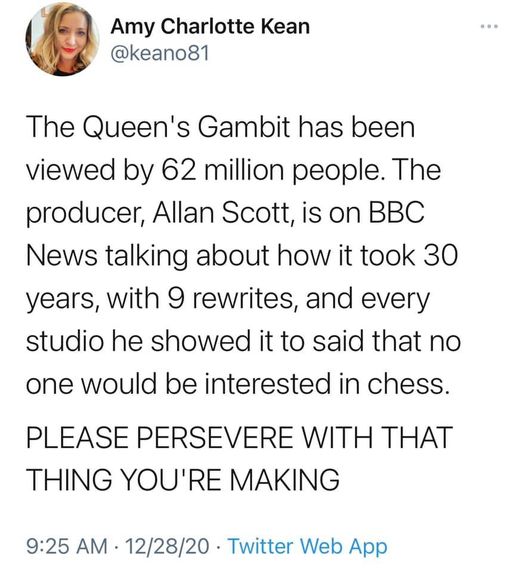
There’s a tweet making the rounds for good reasons, it states:

The Queen’s Gambit has been viewed by 62 Million people. The producer, Allan Scott, is on BBC News talking about how it took 30 years, with 9 rewrites, and every studio he showed it to said that no one would be interested in chess. PLEASE PERSEVERE WITH THAT THING YOU’RE MAKING
@Keano81

Amy Charlotte Kean Tweet Allan Scott Queen's Gambit

So, you know what to do. Create a blog that matters to YOU.

If you would like to take a gander at my new blog, it’s:

Bryan’s Paranormal Travel Blog

What’s your blog? Link to it in the comments. Or, if you’re still thinking of the blog you want to create, tell me about it in the comments.

Reimagining Writers’ Responses to Rejections: Merely Paper Cuts

Reimagining Writers’ Responses to Rejections: Merely Paper Cuts

written by Bryan Hutchinson

There is always room for your writing in the world. If you seek it out with determination, your work will reach places beyond your wildest dreams.

NOTE: This is a guest post by Margaret Moore, she is a 2020 Magna Cum Laude graduate of Fairfield University with a Bachelor of Arts degree in English/Creative Writing in May of 2020.  Her work has appeared in Kairos: A Journal of Rhetoric, Technology, and Pedagogy, Brevity’s Nonfiction Blog, and Independent Catholic News among other publications.  She is now pursuing her MFA in Fairfield University’s Master of Fine Arts in Creative Writing Program.

In July 2020, I had a poem published by Independent Catholic News. I think of myself as both a poet and a prose writer, but I am more experienced with publishing nonfiction prose. This was my first time attempting to publish poetry professionally.

Through the lens of faith, my poem, “A Prayer to Shine Through,” responds to the monumental issues our world has been facing this year. Following Saint Ignatius of Loyola’s Examen prayer, the first part acknowledges that people are profoundly struggling. Inspired by the Ignatian idea of finding God in all things, the second part highlights how faith and God can still be found. The piece concludes with a prayer that we continue to see signs of hope.

Though I plan to further my study of poetry as I pursue my MFA in Creative Writing, I have only taken one undergraduate poetry course. I knew that my work required more revision and craft elements to be a literary piece. I wanted to publish it anyway as it may be a source of hope for others. I also knew that literary publications typically release new issues quite some time after the work is submitted.

My poem seemed like it would help people if printed during these times, not months after. News outlets appeared to be the best option. I submitted to local and national publications that printed pieces addressing faith and current events. Most depicted faith positively but hinted at struggles—a major factor influencing my decision to submit.

I remember reading through the submission guidelines and cringing at the maximum accepted length—twenty lines for one magazine, forty for another. As my piece was over one hundred lines, I decided against attempting to condense to twenty—too much would be lost.  I did, however, condense to forty lines. The magazine that I was submitting to is one that I admire. I knew that, if I did not submit it, I would always wonder whether it would have been accepted.

Trying to cut and move over eighty lines was a major challenge. Reading some articles helped. One discussed how line breaks emphasize ideas. I had learned this in class, but having a reminder gave a fresh perspective. Did I really need certain articles like ‘the’ and ‘a’ on their own lines? No, it seemed more effective to break a line on actual keywords, so I revised accordingly. Some stanzas mirrored others, depicting the same idea in different wording. I cut the duplicates and reworked those remaining to have the keen details of the discarded ones.

Although I was pleased with my submission, I felt a faint tug of disappointment afterwards. Many revisions were for the best, but some did not do the piece justice. The editors would not see the power of the unique line breaks and repetition that had originally been there. Part of me felt like I sent a synopsis rather than the poem itself.

When the rejections came, it was naturally disappointing, but it was not the end of the world. In my twenty-three years, I have seen my father die of cancer and my mother overcome the obstacles of single parenthood. I am physically disabled and rely on a motorized wheelchair and an Assistive and Augmentative Communication device. Looking at our struggles and at the world now, the rejections do not even compare.

Rejections are just like paper cuts. We all must endure them regardless of age or level of experience. They appear when the writer is finally seeing the rhythm of the work—when the thought comes that this piece could actually be a page-turner. As soon as the writer moves in a direction that goes against the angle sought by editors, the rejections appear, tearing the skin of the writer.

It is important to note the size and magnitude of the paper cut of rejection. It is tiny. The cut stings at first, but the sensation lasts for a matter of moments. Pain may remain in the following days, but the cut will heal, dissipating into nothing but tough skin.

Too many writers mistake rejections as a sign that they do not have what it takes to succeed. Rejections do not mean that the writing is bad. Editors may love the piece and see its potential to touch readers. If its content or style is beyond the publication’s scope, they are simply not at liberty to take it.

I knew I needed to keep pursuing the poem’s publication. The words, raw and honest, had flowed just right, braiding together emotion, hard truths, and bright insights. This was a piece to be shared widely. I just had to find the right avenue. I began to think more strategically than I had in previous submissions.

Remembering my undergraduate publishing courses at Fairfield University, it dawned on me that it may not be a piece for mainstream publications. I knew that my poetry was not yet at that polished, literary quality that editors seek—I just did not have enough background in craft yet. I knew, too, that mainstream publications look for very specific angles and that mine did not quite fit.

At Fairfield, I learned that independent publications are typically more willing to accept work that is from emerging writers and unconventional in its content, style, and form. I began researching faith-based and Catholic-based independent news outlets and discovered Independent Catholic News, a global outlet based in London, England. Its website features a poetry section showcasing the work of famous poets—Seamus Heaney, to name a personal favorite—along with emerging or lesser-known poets. The poetry focuses on celebrating faith as well as depicting the trials faced by saints, martyrs, and believers.

I decided to write to the editor, sending my poem and asking if she would consider publishing it. I revised my poem so that it was the version that I would like the world to read, taking my original version and working in new wording that the condensed versions helped me discover.

The site did not display submission guidelines, though, and I had no idea if the editor was seeking new works. I decided to take a risk, choosing not to write the typical query letter. I instead wrote an email explaining who I was, what had inspired the work, and my hope that it would help people. My email seemed to adequately explain my poem in a way that query letters had not.

I admit that I paused quite a few times before I finished and sent it. I could not help but ponder what on Earth I thought I was doing. I was a twenty-three-year-old new college graduate and incoming graduate student in the United States, and here I was asking some editor on another continent to consider publishing my amateur poem. The chances that she would even read and respond to my note, I thought, were almost nonexistent. Yet something inside me made me continue, and I sent the email as soon as it was finished. It only took the editor a day to respond with an acceptance and a week for the poem to be published.

Following its publication, I spent many days writing and responding to loved ones and acquaintances who had read the poem. I could not believe how it was spreading—just when I thought I had replied to all who had written to me, more conversations began. What strikes me is not the quantity of people. It is the words that they have shared on how the poem has brightened their days and how they have shared the piece with others. These are just the people that I know. It is astonishing to think that people across the world could be reading and reacting to my poem.

When reflecting on the poem’s journey, I am astounded. I had hoped that the poem would be printed in a local or national publication. If I had not been rejected, it never would have reached the international publication. The rejections gave me an opportunity to discover and fine-tune the poem’s most effective wording and form. If I had not pursued publication after the rejection, the poem would not be where it is today.

I will not urge other writers to follow the same steps I took. Every writer must have their own unique process. I will simply offer this advice: be bold. Be brave. Be fearless in your writing. Dare to explore that unfamiliar genre. Dare to use unconventional forms and themes to illustrate what the world needs to hear. Dare to seek out new avenues to get your work out there, even if it means writing to an editor on another side of the planet. Dare to manipulate the pages even after the paper cuts of rejection attempt to derail your plans.

Verified Evidence of the Paranormal in the Haunted Forest (Part 2)

Verified Evidence of the Paranormal in the Haunted Forest (Part 2)

written by Bryan Hutchinson

This is the follow-up post to the article (part 1) about the mysterious anomalies we captured in our photographs when we went to the locations where the events took place in my book, The Wee-Jees.

For those reading about this for the first time, The Wee-Jees is based on true events that took place in the haunted forest behind my childhood home. The forest was a scary place back when I was a kid, and, as Allison (photographer) and I recently discovered, it still very much is.

The Edge of the Forest

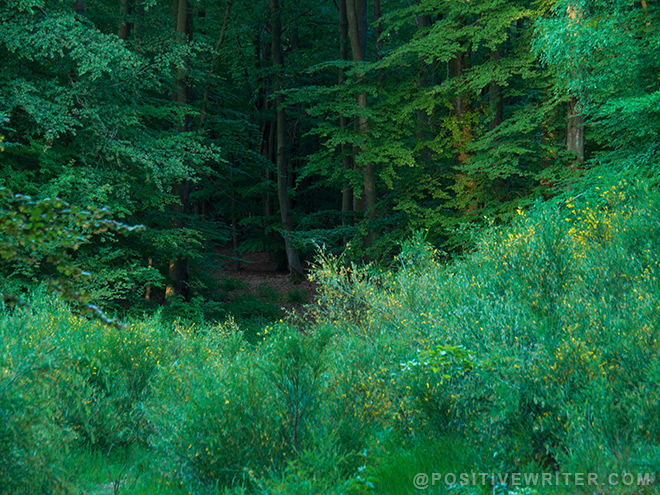
All photos in this post are actual shots from our trip to the haunted forest.

For Allison to verify the claims I wrote about in the book, which she hadn’t even read yet, is heartening because she was very skeptical about the events as I had explained them to her. It means a lot to me when someone who was so dubious ends up confirming the story with her own experiences and photographic evidence. It wasn’t part of the plan, but I’m grateful it happened if only to once again confirm that the forest is haunted and the Wee-Jees do exist!

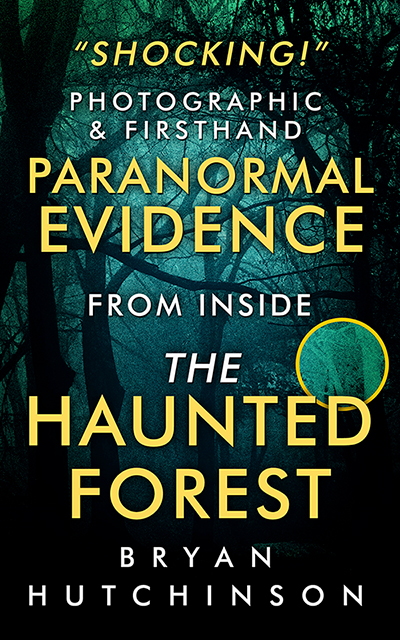
I will warn you that this new book might be unnerving for some, so if you do not like reading and viewing anything about haunted locations with evidence, this book isn’t for you.

Click here to get your copy on Amazon!

How to Make Your Story So Compelling Everyone Will Want to Read It

How to Make Your Story So Compelling Everyone Will Want to Read It

written by Bryan Hutchinson

Everyone wants to know the answer to the kazillion-dollar question:

How do you get readers to show up, read your work, and become so invested in it that they can’t help but talk about it for days, weeks, and perhaps even years after they’ve read it?

*Near the end of this post, I issue a fun challenge to win an Amazon Gift Card.* 🙂

The first thing first is the most obvious, tell a good story.

Here’s the thing, though, lots of writers tell good stories, whether it’s a 2000-word article, a catchline, or even a book (especially a book).

And yet, a good story in of itself is not always enough.

After all, you’ve written good stories, and so have I, and yet we’ve both struggled to get readers to care enough to tell their friends and neighbors about what they’ve read.

What was missing?

What’s the special ingredient that gets readers to keep coming back, rereading it so often that even they are astounded as to why they can’t put your story down.

The Secret Sauce

You need a good hook: An Enticing Mystery, or Two, or Three.

It seems simple enough, right? Create a mystery—I mean, everyone loves a good mystery. And yet, it’s not that simple at all.

In fact, there is a mystery genre in writing, but if you’re like me writing a mystery story itself isn’t your cup of tea, and not all readers want to read a who-done-it. Then again, many love to read and write in the genre, just ask Watson!

That’s okay, if you don’t, your story could be a romantic thriller, or a romcom, or an epic fantasy story, or you could simply be trying to come up with the best slogan for a company that hired you.

All of these types of stories have room for a good mystery in them, questions the reader wants to answer, and when those questions are finally solved the reader receives such a powerful dopamine kick that it keeps them coming back to find out if they missed anything.

A good mystery or mysteries within your story is one of the key ingredients that make your writing must-read material. Readers love to question things. We, you and I, we are both readers too, we love to be fascinated and wonder about what was the meaning of this or that, and did that really happen the way you read it?

If you have a good story that the reader becomes invested in, you want to pull them in even further with mysteries they can solve (or think they can solve) and, more importantly, want to solve.

The Best Way to do This

One of the best ways I’ve found to create a good mystery readers are compelled to solve is to not make the hook so obvious. Sometimes this happens as a natural occurrence due to the story itself and sometimes you have to get creative and purposely add the elements of mystery.

Some Examples:

In my new book, The Wee-Jees, there are several mysteries tied into the story, some are obvious, and others are obscure, which when done right makes the story even more compelling.

Let’s start with the title: The Wee-Jees.

What are Wee-Jees? It’s a unique title because it sounds familiar yet is still so unfamiliar. What is it—where’d it come from? It’s a mystery, and I only reveal the answers within the story (or do I?).

This question of what the Wee-Jees are is even more compelling thanks to the subtitle of the book, A Ghost Story Based on True Events. 

Are they ghosts?

You’ll have to read the book to find out! So, already with the title, we have a mystery hook. But the title alone is not enough.

The Unintentional

There are many mysteries within the story itself, I am already receiving a ton of messages about chapter twelve, The Two Jakes. Some say what’s in that chapter is the spookiest thing they’ve read in a long time (in the best way possible).

But most people are emailing me a certain question about another event in another chapter, which I won’t reveal here. The answer, after all, is in the book, and in this case, like all good hooks, the answer itself is shrouded in mystery, too. It’s a great discussion starter when the book becomes the choice read in reader groups.

Several of the inquiries I’ve received have been unanticipated and have caught me by surprise, so parts of the mysteries were unintentional and are a natural part of the story. Good stories, especially those based on true events, will always have mysteries that develop within themselves. Some questions will never be answered.

Coming of Age and Love Story Questions

The story in my mind for 30 years wasn’t just about the strange events. My friends, and a young boy and girl’s first budding relationship, those stories get told because in order to give context to the otherworldly events I had to tell you, the reader, about everything that happened before, during, and after the events themselves.

It’s the context that makes this book so special and allows the already strange events to stand out in their absurdity. It’s also this coming of age story that really connects and raises questions within readers, especially those who see glimpses of their own childhood within my story.

These questions I could not anticipate as everyone sees a part of themselves somewhere in this story. So beware, memories can be triggered, much as Stephen King’s Stand by Me did for audiences in the 80’s.

How Many Are There?

A fun mystery in The Wee-Jees, which requires perhaps several rereads to solve, is:

How many ghosts are there?

How many ghosts are in the story? I’ll give you a hint, not all the ghosts in the book are obvious. There’s some sixth sense stuff going on that not everyone figures out after the first read-through, or the second, for that matter. Don’t worry, that’s not as big a giveaway as you might think–or is it? However, one Amazon reviewer (this is a clue) revealed some of the ghosts in her spoiler review (she guessing and she could be right).

Let’s have fun with this.

Enter to Win:

I tell you what, for anyone who has read The Wee-Jees, I’ll send you a gift if you solve the following mystery:

  • If you send me an email to bryanpositivewriter (at) gmail (dot) com correctly naming and/or describing all of the ghosts in the story, I will reply to you with a $50.00 Amazon gift card! You must name and/or describe ALL of the ghosts.

I’ll update this post here when the mystery has been solved! Send your answer to:

Take your time and read the book a few times before sending me your answer because I will only accept one entry per reader and only the first person who gets it right will win! The cut off to send your answer to me is Halloween, Oct 31, 2020!

The best part is that the book is just 99cents on Amazon until Midnight, 31 October! So it’s a small investment to read a nice little spooky story and have fun doing it. I recommend reading this one in bed, in the dark, with a flashlight the first time (if you dare).

It’s a short book, so surely you can read it several times before the 31st! Keep a pencil and notepad with you while you read it during the second (or third) time.

Conclusion:

All great stories do this, they have a good mystery, or several mysteries, layered within them.

Have you created intriguing mysteries within your stories? I’d love to hear about them in the comments!

Photographic Evidence of the Paranormal in the Haunted Forest

Photographic Evidence of the Paranormal in the Haunted Forest

written by Bryan Hutchinson

UPDATE: I have created a new blog based on my travels throughout Europe and the Paranormal Evidence I have gathered, it’s, Bryan’s Paranormal Travel Blog.

I never expected to capture what we captured in our photographs, and I am beyond astounded.

In a very real sense, I feel validated.

Not long ago, when taking photos of the actual locations where the events took place in my book, The Wee-Jees, we captured some very strange things in our pictures. We don’t know for certain what the anomalies are but we have our suspicions, and in the following video, I share a couple of the photos that went viral across social media, especially “THE” Orb shot.

Please note, the follow-up posts and photos will be published on https://paranormal-evidence.com/ so feel free to subscribe and stay up to date on publication there. The photos from our docu-trips are amazing and show something else is out there, including a photo of the shadow figure standing by a tree (which you can briefly see in the video).

You should also follow my Facebook page because I post announcements, photos, and new videos there on a regular basis.

All 13 (of course, it just had to be 13!) of the photos will soon be published AVAILABLE NOW in the new book for everyone to view with all of the evidence to make up your own minds! The photographs are genuine and are welcome to scrutiny.

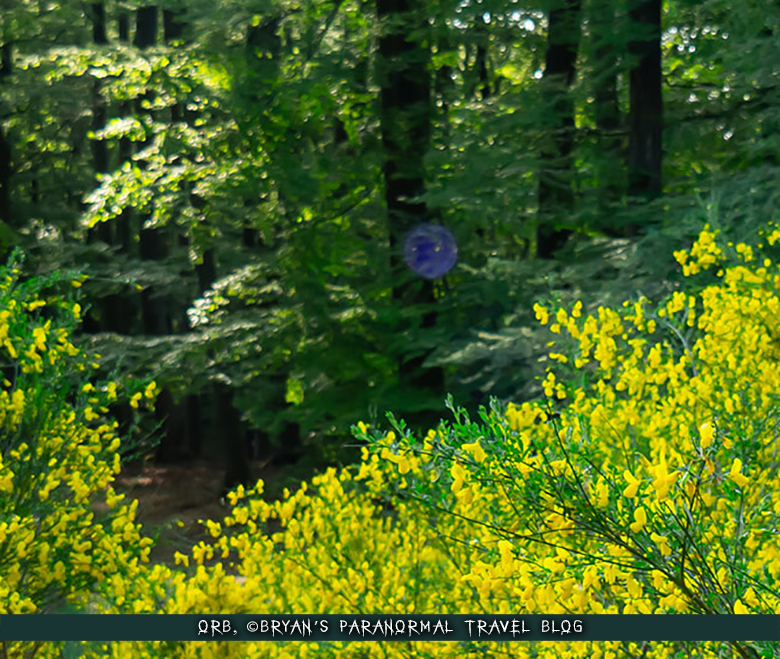
Here’s the infamous first photo:

For some background, my book, The Wee-Jees, is based on true events from my youth that took place in the haunted forest behind my childhood home.

Based on our photographic and firsthand evidence, the forest is still very haunted.

Professionals in the paranormal field have said such anomalies as what we have captured in our photos can be residual, or even intelligent, hauntings and are typically found in exceptionally haunted locations. We also experienced audible events but we cannot prove what they were; however, we are sure the majority were normal forest/animal noises, but do listen to the ‘groan’ sound in the video just before I leave the cave and I fall down the side of the mountain.

Why We Took Photos

After I finally finished The Wee-Jees and it was with the editor, I became restless and came up with the idea that I should get pictures of the actual locations in the book for readers to see and have a better idea of what the surroundings look like there. However, we never expected to capture anything more than the landscape.

The forest blew our collective minds!

Now, here’s the thing, I had not been back to that forest in years, and considering the events took place some 30 plus years ago, I kind of forgot how haunted it really is.

Don’t misunderstand me, I was able to write about the events in detail, I remember the events all too well, but there’s a HUGE difference between sitting in the comfort of your home writing, and actually, physically, walking those old haunted paths.

And those woods are absolutely haunted, let there be no doubt about that. For me, the photos collected in the new book, prove it.

WHEN?

The new book is available now. Click here to get it exclusively on Amazon!

Photo of the orb in the flowers © Diana Palacios. All photos are authentic and have not been manipulated, other than some cropping and zooming. Professionals interested in investigating the original photos, or the actual location, please contact me directly.

Read and see more of my paranormal evidence here: Bryan’s Paranormal Travel Blog.

Newer Posts
Older Posts

Trending

  • How to Write Your Story in 6 Steps

  • Top 25 Writing Blogs

  • Top 50 Writing Blogs

  • How and Why You Should Start a Daily Positive Journal

  • Writing Contest: You Are Enough

Ready to improve your writing and your life?

Join The Art of Positive Journaling!


“I’m a fan!” —Jeff Goins, author of Real Artists Don’t Starve


  • Facebook
  • Twitter
  • Google +
  • Pinterest
  • RSS

Copyright © Bryan Hutchinson


Back To Top